[Become an Insurance Insider] Rapidly Growing Dollar Insurance... Are You Aware of the Principal Loss Risk?
[Editor's Note] Difficult insurance, a clear explanation of insurance that remains confusing even after listening to explanations. There is no bad insurance in the world, only insurance that does not suit me. Following easy-to-understand insurance explanations, the path to becoming an 'insurance insider' is not far away.
![[Become an Insurance Insider] Rapidly Growing Dollar Insurance... Are You Aware of the Principal Loss Risk?](http://www.asiae.co.kr/news/img_view.htm?img=2020092618270214823_1601112422.jpg)
[Asia Economy Reporter Oh Hyungil] As interest rates remain low and interest in foreign currency insurance as an alternative investment increases, financial authorities have warned consumers that losses may occur due to exchange rate fluctuations.
When consumer issues arose in Japan and Taiwan, where the foreign currency insurance craze preceded us, supplementary measures were introduced to improve the situation.
According to the report "Growth of Overseas Foreign Currency Insurance Market, Policy Responses, and Domestic Implications" released by the Korea Insurance Research Institute on the 31st, the cumulative sales volume of foreign currency insurance by life insurance companies reached 3.2 trillion KRW by the first half of last year, with an average annual growth rate of 73.2% over the past three years.
The cumulative sales volume of savings-type foreign currency insurance accounts for 85% of all foreign currency insurance products.
In particular, personal foreign currency deposits, which can gauge changes in individual foreign currency asset demand, reached a record high of 19.8 billion USD as of December last year.
Foreign currency insurance is a product where the policyholder pays premiums in foreign currency, which are then managed mainly through overseas bonds, and at maturity, the insurance payout is converted into the local currency. Exchange rate changes at maturity may cause exchange losses.
![[Image source=Yonhap News]](http://www.asiae.co.kr/news/img_view.htm?img=2021010606045511307_1609880695.jpg)
In Japan, due to prolonged low interest rates, widening domestic and foreign interest rate differentials, and demand for diversified asset allocation, foreign currency insurance sales increased significantly after 2016. Taiwan also launched foreign currency insurance products, recording high sales growth rates in 2017-2018.
As foreign currency insurance sales increased, related complaints also rose. In Japan, as of 2019, there were 2,822 complaints related to foreign currency insurance, a 4.7-fold increase over the past eight years. Among all complaints, 67% were due to insufficient explanations about principal loss risks during the sales process.
To address consumer protection issues that may arise during the foreign currency insurance sales process, measures such as protection for elderly policyholders, management of sales qualifications, improvement of subscription procedures, review of commission systems, and enhancement of disclosure systems were implemented.
The Taiwan Life Insurance Association also introduced a foreign currency insurance sales qualification exam and established self-regulatory rules to strengthen product explanation obligations during the sales process. The Financial Supervisory Commission (FSC) announced sales qualification requirements and operational precautions to ensure sound foreign currency insurance business operations.
Hot Picks Today
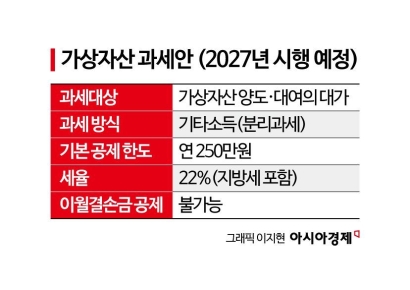 "Stocks Are Not Taxed, but Annual Crypto Gains Over 2.5 Million Won to Be Taxed Next Year... Investors Push Back"
- "Not Jealous of Winning the Lottery"... Entire Village Stunned as 200 Million Won Jackpot of Wild Ginseng Cluster Discovered at Jirisan
- "Rather Than Endure a 1.5 Million KRW Stipend, I'd Rather Earn 500 Million in the U.S." Top Talent from SNU and KAIST Are Leaving [Scientists Are Disappearing] ①
- "How Did an Employee Who Loved Samsung End Up Like This?"... Past Video of Samsung Electronics Union Chairman Resurfaces
- "Even With a 90 Million Won Salary and Bonuses, It Doesn’t Feel Like Much"... A Latecomer Rookie Who Beat 70 to 1 Odds [Scientists Are Disappearing] ③
Byun Hyewon, a research fellow at the Korea Insurance Research Institute, urged, "To establish foreign currency insurance as a useful product for both consumers and insurers, it is necessary to consider appropriate measures suitable for the domestic situation by referring to problems and policy responses observed overseas."
© The Asia Business Daily(www.asiae.co.kr). All rights reserved.







