Last Year's Economic Growth Rate -1%... First Contraction Since the Foreign Exchange Crisis (Comprehensive Report 2)
Bank of Korea Announces Q4 and Annual GDP
Q2 COVID Shock Severe at -3.2%
Private Consumption Fell 5.0% Last Year Despite Fiscal Stimulus
Per Capita National Income Expected to Drop to Around $31,000

[Asia Economy Reporters Eunbyeol Kim and Sehee Jang] South Korea's economy recorded a growth rate of -1.0% last year, marking the first contraction in 22 years since the 1998 foreign exchange crisis (-5.1%). This was due to the prolonged impact of the novel coronavirus disease (COVID-19) throughout the year. Consequently, the gross national income (GNI) per capita is expected to fall to the mid-$31,000 range.
According to the '2020 Q4 and Annual Gross Domestic Product (Preliminary)' report released by the Bank of Korea on the 26th, last year's real gross domestic product (GDP) was KRW 1,830.5802 trillion (in nominal terms), a 1.0% decrease compared to the previous year. By quarter, the COVID-19 shock was significant, with Q1 and Q2 contracting by -1.3% and -3.2% respectively, marking two consecutive quarters of negative growth, followed by rebounds of 2.1% in Q3 and 1.1% in Q4.
Although the government loosened fiscal policy to overcome the COVID-19 economic crisis, export shocks were severe in the first half of the year. Exports in Q1 and Q2 last year sharply declined by -1.4% and -16.1% quarter-on-quarter, respectively. Overall exports decreased by 2.5%, the largest drop since 1989 (-3.7%). With the repeated tightening and easing of social distancing measures, private consumption fell by 5.0%, marking the largest decline since the foreign exchange crisis. Conversely, government consumption increased by 5.0%. According to the 'Monthly Fiscal Trends' published by the government last January, government spending reached KRW 501.1 trillion by November last year, an increase of KRW 57.8 trillion compared to the previous year. Notably, in May and September last year, the government disbursed KRW 14.3 trillion and KRW 7.8 trillion respectively as disaster relief funds.
Although the economy contracted last year, the actual figure (-1.0%) slightly exceeded the initial forecast (-1.1%). Park Yang-su, Director of the Economic Statistics Bureau at the Bank of Korea, explained, "Exports in Q4 showed better-than-expected performance, centered on semiconductors and chemical products," adding, "Government and private construction investments also increased significantly, resulting in a better-than-expected Q4 growth rate." Last year, facility investment increased by 6.8%, mainly driven by semiconductors and displays.
Hot Picks Today
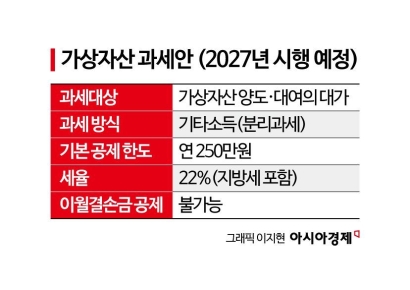 "Stocks Are Not Taxed, but Annual Crypto Gains Over 2.5 Million Won to Be Taxed Next Year... Investors Push Back"
- "Not Jealous of Winning the Lottery"... Entire Village Stunned as 200 Million Won Jackpot of Wild Ginseng Cluster Discovered at Jirisan
- General Strike D-1: Final Negotiations Between Samsung Electronics Labor and Management Over One Key Issue
- "How Did an Employee Who Loved Samsung End Up Like This?"... Past Video of Samsung Electronics Union Chairman Resurfaces
- "Even With a 90 Million Won Salary and Bonuses, It Doesn’t Feel Like Much"... A Latecomer Rookie Who Beat 70 to 1 Odds [Scientists Are Disappearing] ③
Hong Nam-ki, Deputy Prime Minister and Minister of Economy and Finance, positively evaluated the situation, stating, "Compared to advanced economies within the top 10 in economic size, which are expected to contract by -3% to -10% last year, our contraction was much smaller." He added, "We swiftly implemented bold support measures amounting to KRW 310 trillion, including four supplementary budgets in 59 years, with fiscal policy contributing 1.0 percentage point to growth last year, cushioning the contraction."
© The Asia Business Daily(www.asiae.co.kr). All rights reserved.