US-China Tensions Over COVID Origin Investigation at WHO... 'China Responsibility Theory' Resurfaces
IPPR Points Out "WHO and China's Inadequate Early COVID-19 Response"
China Responds "Coordination and Cooperation Needed... Political Pressure Must Stop"
![[Image source=AP Yonhap News]](http://www.asiae.co.kr/news/img_view.htm?img=2021011908292432770_1611012564.jpg)
[Asia Economy Reporter Hyunwoo Lee] It has been reported that a tense exchange occurred between the WHO representatives of the United States and China regarding the dispatch of the World Health Organization (WHO) team to investigate the origin of the novel coronavirus infection (COVID-19). An independent panel report on WHO's COVID-19 response also criticized the initial response of WHO and China as inadequate, which is expected to reignite the theory of China's responsibility for COVID-19. China is opposing this, but the international community's offensive is expected to intensify.
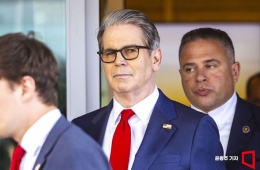
According to foreign media such as CNBC, at the WHO Board meeting that day, Garrett Griesby, the US representative to WHO from the US Department of Health and Human Services, targeted China, stating, "The COVID-19 origin investigation team should be able to interview caregivers, previously infected patients, and laboratory workers in Wuhan," and "The investigation team should have access to all medical data and samples related to the outbreak." This was an indirect attack on China for systematically obstructing the activities of the WHO COVID-19 origin investigation team. The Australian WHO representative also supported the US position, saying the investigation team should have access to data, information, and key locations.
On the same day, the WHO's independent monitoring body, the Independent Panel for Pandemic Preparedness and Response (IPPR), strongly criticized the early response of China and WHO to COVID-19 in its report. The IPPR pointed out that WHO did not convene the COVID-19 Emergency Committee until January 22 of last year and hesitated to declare a Public Health Emergency of International Concern (PHEIC).
The IPPR stated, "It is unclear why the Emergency Committee was not convened until the third week of January and why consensus on declaring a PHEIC could not be reached at the first emergency meeting." It further strongly criticized China, saying, "It is clear that local and national health authorities in China could have applied public health measures more rigorously in January of last year."
Regarding this theory of China's responsibility, Sun Yang, China's WHO representative from the National Health Commission of China, responded, "Research on the virus origin is scientific in nature. It requires coordination and cooperation," and "Political pressure must stop." Although the Chinese government claims that the theory of China's responsibility is a unilateral political offensive by the United States and Western countries, the theory of China's responsibility is becoming stronger in the international community.
Hot Picks Today
 "We Can't Just Let Them Be Damaged Inside"... Samsung Electronics Removes 360,000 Wafers in Preparation for Strike
- No Bacteria Detected in Arisu After 24 Hours of Repeated Drinking from a Tumbler
- "Up to 100 Trillion Won in Damages Feared" Industry Minister Warns: "It's Not About Second Place, It's Ruin... 'Emergency Adjustment' Unavoidable if Samsung Strike Proceeds"
- Wife in $6.7 Million Debt Took Out $3 Million in Husband's Life Insurance, Poisoned Him... US Court: "She Can Never Be Released"
- "He's Handsome, It's Such a Pity?"... Lawyer Responds to Bizarre 'Appearance Evaluation' of High School Girl Murder Suspect
Previously, the Chinese government caused international criticism by blocking the entry of the WHO origin investigation team. Initially, WHO planned to send a multinational expert team to China in early this month, but the schedule was disrupted as Chinese authorities hesitated citing visa issues and other reasons.
© The Asia Business Daily(www.asiae.co.kr). All rights reserved.