Real Estate Policy by Byeon Chang-heum, Difficult to Resolve Jeonse Crisis
[Asia Economy Reporter Yoo In-ho] Minister of Land, Infrastructure and Transport Byeon Chang-heum has promised to stabilize housing prices in the new year, but there are concerns that the market situation is not favorable. This is because Minister Byeon's housing supply measures are not significantly different from previous ones, making it difficult to achieve effectiveness.

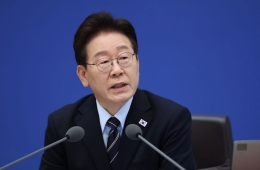
Minister of Land, Infrastructure and Transport Byeon Chang-heum is giving his inaugural speech at the National Assembly plenary session on the 8th. Photo by Yoon Dong-joo doso7@
View original imageIn his New Year's address, Minister Byeon stated, "There are many challenges ahead of us this year, including alleviating the worries of the people struggling with housing prices and rental issues," and added, "I believe that by coming together with one heart, we will take steady steps to give the people new dreams and hope."
He continued, "Please pour your abilities and passion into ensuring that the policies we create together are reflected in the field, fundamentally improving the quality of life for the people, and further realizing universal human values and principles."
![[Image source=Yonhap News]](http://www.asiae.co.kr/news/img_view.htm?img=2020122912072590221_1609211244.jpg)
Minister Byeon's housing supply measures have been somewhat revealed. Earlier, in his inauguration speech last month, Minister Byeon announced that he would prepare urban housing supply plans to resolve the housing shortage and announce them before the Lunar New Year holiday.
As part of this, he proposed high-density development plans targeting areas such as Seoul's station areas, semi-industrial zones, and low-rise residential areas, and the Ministry of Land, Infrastructure and Transport is reviewing specific housing supply plans for these areas.
However, the market situation remains difficult. According to the Korea Real Estate Board, in December, the nationwide comprehensive housing sale prices and rental prices rose by 0.90% and 0.97%, respectively, which are increases of 0.36 percentage points and 0.31 percentage points compared to the previous month.
In the metropolitan area (0.49%→0.66%), the rise is attributed to low-interest liquidity, a decrease in move-in volumes, and increases in relatively undervalued complexes, while in the provinces (0.58%→1.12%), the rise is driven by areas such as Ulsan with good educational environments and Busan, where there is anticipation for development projects near station areas.
The market also expresses skepticism about Minister Byeon's alternatives. This is because the high-density development of low-rise residential areas such as station areas and semi-industrial zones, incentives provided through floor area ratio regulation relaxation, and securing public rental housing through public development, as announced by Minister Byeon, are not significantly different from existing measures.
Hot Picks Today
 "Stocks Are Not Taxed, but Annual Crypto Gains Over 2.5 Million Won to Be Taxed Next Year... Investors Push Back"
- "Don't Throw Away Coffee Grounds" Transformed into 'High-Grade Fuel' in Just 90 Seconds [Reading Science]
- KEPCO Three-Year Bond Yield Surpasses 4%... Warning Signs of Liquidity Crunch in Bond Market
- "Groups of 5 or More Now Restricted"... Unrelenting Running Craze Leaves Citizens and Police Exhausted
- "Even With a 90 Million Won Salary and Bonuses, It Doesn’t Feel Like Much"... A Latecomer Rookie Who Beat 70 to 1 Odds [Scientists Are Disappearing] ③
An expert pointed out, "Even though the real estate policy direction proposed at the beginning of the current government needs to be completely revised, the government is maintaining regulations while only calling for increased supply," adding, "As long as the government maintains its stance on strengthening regulations, it will be difficult for supply expansion measures to be effective."
© The Asia Business Daily(www.asiae.co.kr). All rights reserved.