A Government Harsher on Small and Medium Enterprises
Two Safety Managers Unable to Cope, CEO Must Take Full Responsibility
Concerns Over Serious Accident Punishment Act: "Neglect of SMEs... Bankruptcy Surge Amid Sanctions Bombardment"

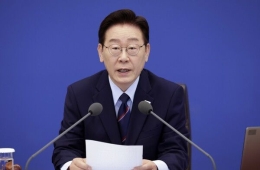
Over the past year marked by the COVID-19 pandemic, the industry believes that regulations tightening restrictions on small and medium-sized enterprises have been continuously strengthened under the current administration, from the Chemical Substances Control Act (Chemicals Control Act) to the 52-hour workweek system, and most recently, the enactment of the Serious Accidents Punishment Act. Photo by Asia Economy DB
View original image[Asia Economy Reporters Jonghwa Kim, Chulhyun Kim, Heeyoon Kim] "We will firmly establish small and medium-sized enterprises (SMEs) and venture companies as the core of economic recovery in the COVID-19 era and as the main players of the digital economy in the post-COVID era." This was stated by President Moon Jae-in while presiding over a Cabinet meeting at the Blue House on October 6 last year. It emphasized the determination to not only overcome the economic crisis caused by the novel coronavirus infection (COVID-19) centered on SMEs but also to prepare for the future. However, the sentiment surrounding the SME sector is quite different from the president’s enthusiasm. According to industry opinions, during the past year dominated by COVID-19, regulations tightening SMEs?from the Chemical Substances Control Act (Chemicals Control Act), the 52-hour workweek system, to the recent enactment of the Serious Accidents Punishment Act?have been continuously strengthened. This is why there are many complaints that the government, which claims to support SMEs, is actually harsher on them.
SMEs Hit Hard as They Cannot Appoint Separate Safety Managers
According to the bipartisan agreement on the Serious Accidents Punishment Act, which is scheduled to pass the National Assembly plenary session on the 8th, if an industrial accident resulting in a worker’s death occurs in a company, the 'management responsible person' who neglected safety measures will face imprisonment of at least one year or a fine of up to 1 billion KRW. Here, the management responsible person refers to the representative who effectively controls and oversees the business or the director in charge of safety and health. In other words, SMEs that cannot afford to appoint a separate director for safety and health must have the management bear all responsibility.
Large corporations can hire experts and operate safety management systems separately, but the reality for SMEs is different. Due to COVID-19 and the recession, they have no choice but to lay off employees, so ultimately the company owner and manager, the representative, must also take on the role of safety manager and bear all responsibility. Yang Choong-saeng, CEO of Inhyang, a shipbuilding subcontractor based in Ulsan, lamented, "They say they will punish only the representative without any opportunity or preparation to prevent serious accidents on site," adding, "Every time laws that tighten SMEs while ignoring the voices from the field are passed one after another, I feel like they are telling us not to do business in Korea."
Professor Jung Jin-woo of the Department of Safety Engineering at Seoul National University of Science and Technology said, "The current bill requires all problems to be prepared for by the company representative, but realistically, with fines, criminal penalties for business owners, administrative sanctions, and punitive damages, many SMEs will face a barrage of sanctions that could lead to bankruptcy if a serious accident occurs," and added, "The Serious Accidents Punishment Act currently under discussion is solely focused on punishment, so along with strengthening legal compliance requirements, the government’s administrative system for industrial accident prevention must be supplemented first. The current bill, which shifts all responsibility to companies, is a bad law that no country in the world can comply with."

Government Harsher on SMEs, Increasing Corporate Burdens
The government policies threatening SME management are not limited to the Serious Accidents Punishment Act. There are also the proposed Collective Litigation Act and the amendment to the Commercial Act introducing punitive damages. The SME industry expects that with the collective litigation system, the number of lawsuits and the proportion of corporate losses will increase, making it highly likely that SMEs without financial capacity will go bankrupt if targeted by lawsuits. Moreover, if punitive damages are introduced into the Commercial Act, the scope of application will be too broadly expanded, leading to potential abuse and excessive corporate burdens.
The 'Electricity Rate System Reform Plan' finalized and announced on the 17th of last month is also a burden for SMEs. Especially in root industries such as casting and heat treatment, electricity costs account for more than 12% of manufacturing costs, so an increase in electricity rates is expected to cause significant damage. Regarding the 52-hour workweek system, whose grace period has ended, the industry appeals that 39% of SMEs were not prepared for its implementation due to COVID-19, and 83.9% of companies working beyond 52 hours were not ready.
Although withdrawn, the policy to tax excess retained earnings of small corporations, which did not consider the reality that corporate SMEs inevitably have high shares held by representatives and related parties, also heightened industry concerns. The Fair Trade Commission’s abolition of exclusive prosecution rights under the Fair Trade Act was criticized for potentially shrinking business activities as anyone could report to the prosecution. Although the exclusive prosecution rights were maintained, the industry had to be extremely anxious, saying that even just being investigated by the prosecution due to rampant lawsuits and accusations would cause significant management difficulties.
Hot Picks Today
 "Stocks Are Not Taxed, but Annual Crypto Gains Over 2.5 Million Won to Be Taxed Next Year... Investors Push Back"
- "Don't Throw Away Coffee Grounds" Transformed into 'High-Grade Fuel' in Just 90 Seconds [Reading Science]
- Despite Warnings of "Do Not Enter, You May Not Make It Out Alive"... Foreign Tourist Stranded After Unauthorized Climb on Jeju Sanbangsan
- Signed Without Viewing for 1.6 Billion Won... Jamsil and Seongbuk Jeonse Prices Jump 200 Million Won in a Month [Real Estate AtoZ]
- "Even With a 90 Million Won Salary and Bonuses, It Doesn’t Feel Like Much"... A Latecomer Rookie Who Beat 70 to 1 Odds [Scientists Are Disappearing] ③
Given this situation, with the recession caused by COVID-19 compounded by increasingly stringent regulations, many SMEs are going bankrupt. According to the Korea Small Business Institute, from January to November last year, corporate bankruptcies numbered 984, a 16.0% increase compared to the same period the previous year. Also, as of November last year, the number of corporate enterprises was 8,188, a decrease of 11.2% compared to the previous year.
© The Asia Business Daily(www.asiae.co.kr). All rights reserved.