Disease Control Agency Hesitates to Improve Quarantine Despite Delays in Test Results
Local Government's First 'Rapid PCR Test' Plays Role in Preventing COVID-19 Spread in Yeoju
"Even Temporary Approval for Rapid PCR Testing..."
"Urgent Need for Measures on Insufficient Hospital Beds and Medical Staff"
![[Image source=Yonhap News]](http://www.asiae.co.kr/news/img_view.htm?img=2020102911250972230_1603938308.jpg)
[Asia Economy Reporter Ra Young-cheol] It takes an average of about 6 hours from sending collected specimens to the testing agency to receiving the 'COVID-19' test results.
Recently, as local governments have increased the operation of temporary screening clinics, the number of tests has surged, causing frequent delays of more than a day in obtaining test results.
Given this situation, there are growing calls for the government’s COVID-19 response guidelines to be improved promptly so that local governments can conduct 'Rapid PCR (Emergency Screening)' tests, which facilitate easier infection spread prevention and proactive response.
As of the 3rd, a total of about 15,000 people have been diagnosed with COVID-19 through the 'Rapid PCR (Emergency Screening)' test, first introduced by Yeoju City, Gyeonggi Province, among local governments nationwide in December last year, with 6 of them testing positive.
Starting with about 600 people on the first day (December 23), proactive response effects were seen as test results for 2,421 people were confirmed within just four days.
A Yeoju City official explained on the 5th, "'Rapid PCR' testing can determine COVID-19 positivity within about an hour, making it effective in preemptively blocking community spread," describing the reason for its introduction.
According to city and health officials, the 'Rapid PCR' test combines the high diagnostic accuracy of the 'confirmatory test (conventional PCR)' with the quick result confirmation of the 'rapid antigen test.'
The 'Rapid PCR' test is classified as a PCR test, with no difference in diagnostic reagents, but is distinguished from the 'confirmatory test' based on the government’s approval purpose.
One of the biggest advantages of the 'Rapid PCR' test is that results can be confirmed on-site without sending collected specimens to a testing agency.
Recently, Yeoju Prison conducted 'Rapid PCR' testing and confirmed that all 1,800 inmates and correctional officers tested negative within two days.
![Operation of Nightingale (Rapid PCR Test) in Yeoju City [Provided by Yeoju City]](http://www.asiae.co.kr/news/img_view.htm?img=2020122219282980480_1608632909.jpg)
Operation of Nightingale (Rapid PCR Test) in Yeoju City [Provided by Yeoju City]
View original imageHowever, the expansion of 'Rapid PCR' testing is limited due to guidelines stating it applies only to emergency room patients who have no COVID-19 symptoms but are critically ill and may die within 6 hours.
Currently, the 'rapid antigen test' is still used for COVID-19 screening, with over 10,000 people tested in the metropolitan area, but there have been considerable false positive diagnoses reported.
With verification results showing the sensitivity of the 'rapid antigen test' is only 41.5%, the quarantine authorities and the Ministry of Food and Drug Safety belatedly declared it a 'supplementary measure,' drawing criticism.
Earlier, on December 7 last year, President Moon Jae-in instructed, "Actively promote the use of 'rapid antigen tests,' which have recently improved accuracy and provide immediate results."
However, medical experts generally have a negative evaluation of the 'rapid antigen test.'
Professor Shin So-yeon of the Department of Infectious Diseases at Catholic Kwandong University International St. Mary’s Hospital pointed out in an interview with this paper, "In the current situation, the 'rapid antigen test' cannot replace PCR testing."
She added, "While it is important to identify infected patients in the community, there is also a severe shortage of hospital beds needed for treatment and limited medical personnel, so urgent consideration and measures are needed."
Professor Kim Woo-joo of the Department of Infectious Diseases at Korea University Guro Hospital also stated, "'Rapid PCR' testing can confirm results within 1 to 2 hours and has higher sensitivity, making it better than the currently used 'rapid antigen test.'"
Although the Ministry of Food and Drug Safety can grant emergency use approval in urgent situations like now, local governments relying only on 'rapid antigen tests' or the conventional PCR method for confirmatory testing urgently need the faster and more accurate 'Rapid PCR' test due to quarantine guidelines.
A health official from a local government in the Gyeonggi area emphasized, "Currently, the government’s quarantine guidelines have reached their limit in preventing infection spread," and added, "The central government should approve the use of 'Rapid PCR' even temporarily to enable proactive response."
Hot Picks Today
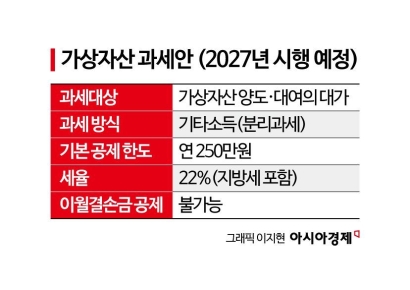 "Stocks Are Not Taxed, but Annual Crypto Gains Over 2.5 Million Won to Be Taxed Next Year... Investors Push Back"
- "Not Jealous of Winning the Lottery"... Entire Village Stunned as 200 Million Won Jackpot of Wild Ginseng Cluster Discovered at Jirisan
- "Rather Than Endure a 1.5 Million KRW Stipend, I'd Rather Earn 500 Million in the U.S." Top Talent from SNU and KAIST Are Leaving [Scientists Are Disappearing] ①
- "How Did an Employee Who Loved Samsung End Up Like This?"... Past Video of Samsung Electronics Union Chairman Resurfaces
- "Even With a 90 Million Won Salary and Bonuses, It Doesn’t Feel Like Much"... A Latecomer Rookie Who Beat 70 to 1 Odds [Scientists Are Disappearing] ③
Meanwhile, after a cluster infection occurred at a facility for severely disabled people in October last year, Yeoju City, unable to conduct epidemiological investigations and concerned about 'n-th' infections, persistently requested the central government to adopt the 'Rapid PCR' testing method, becoming the only city nationwide authorized to conduct 'Rapid PCR' testing.
© The Asia Business Daily(www.asiae.co.kr). All rights reserved.