'High School Exam System' Gyeongju City Holds Public Forum, "60% Support Standardization"
Some Parents Escape Ulsan and Pohang's 'High School Equalization Zones'...
Concerns Over Under-enrollment, Downward Equalization, and Loss of School Choice Rights

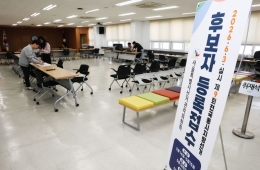
On the 21st, a 100-person roundtable meeting for high school equalization is being held online at Alcheon Hall, Gyeongju City Hall.
View original image[Asia Economy Yeongnam Reporting Headquarters Reporter Choi Jae-ho] Since the introduction of the high school equalization system starting in Seoul and Busan in 1974, 46 years have passed, yet Gyeongju City in Gyeongbuk Province still cannot escape the culture of high school hierarchy.
While parents preparing for high school entrance have moved to equalization areas such as Ulsan and Pohang, which is considered a major factor in the population decline in the Gyeongju area, the entrenched high school entrance exam system remains firmly in place.
Amid this, a "public debate" to hear citizens' voices regarding high school equalization was organized by Gyeongju City. The "How Should We Approach High School Equalization?" themed "Gyeongju Citizens' Roundtable Conference," held at Alcheon Hall in Gyeongju City Hall at 2 p.m. on the 21st, was conducted online, but many citizens participated through the official Gyeongju City live broadcast, showing great interest.
Previously, to increase participation, Gyeongju City publicly recruited 100 participants from the 3rd to the 11th. The debate was conducted with detailed topics titled "Expectations and Concerns about High School Equalization" and "Conditions That Must Precede High School Equalization."
Participants first agreed on the basic recognition that the hierarchy of specific schools and discord among peers should be eliminated, and that customized future career education should be strengthened instead of exam-oriented education.
However, according to Gyeongju City, there were also many voices expressing concerns about ▲ under-enrollment due to declining school-age population ▲ academic decline ▲ deprivation of opportunities for school choice and high school specialization.
Additionally, as essential conditions that must precede high school equalization, ▲ elimination of educational environment disparities between schools ▲ strengthening of career-customized education suited to aptitudes were identified as key issues. As a result of voting after the discussion, 60% of participants responded that "high school equalization is necessary."
Hot Picks Today
 "Suspicious Timing?"...Trump Traded Stocks After Praising Wartime Capabilities
- "Even If I Lose My Investment, the Government Will Cover It"... The Fund Attracting Retail Investors' Attention [Weekend Money]
- There Is a Distinct Age When Physical Abilities Decline Rapidly... From What Age Do Strength and Endurance Drop?
- "I Went to 10 Convenience Stores and Still Couldn't Buy It": The Bread Sensation That Sold 100 Million Units Already [The Way We Shop Now]
- "Contact Me First If Houses Are Built": Wealthy Clients Eyeing... Will Ultra-High-End Residences Worth 20 Billion Won Be Developed? [Real Estate AtoZ]
Mayor Ju Nak-young said, "I understand that there have been demands for high school equalization for a long time," adding, "Since both opposition and support come from the desire for our children to grow up in a better educational environment, I hope this debate will be a time to understand each other's thoughts on high school equalization."
© The Asia Business Daily(www.asiae.co.kr). All rights reserved.