[Click eStock] "Samsung Electronics, Semiconductor Strong Despite Unfavorable Exchange Rates"
DB Financial Investment, Investment Opinion 'Buy' and Target Price of 95,000 Won Presented... Closing Price on 9th at 73,900 Won
![[Click eStock] "Samsung Electronics, Semiconductor Strong Despite Unfavorable Exchange Rates"](http://www.asiae.co.kr/news/img_view.htm?img=2019102215375738805_1571726278.jpg)
[Asia Economy Reporter Kum Boryeong] Although Samsung Electronics will be affected by the sharp decline in the won-dollar exchange rate, it is analyzed that there will be no significant impact on its performance thanks to semiconductors.
On the 10th, DB Financial Investment gave Samsung Electronics a 'Buy' rating with a target price of 95,000 won. The target price was revised upward from the previous 72,000 won. The closing price on the 9th was 73,900 won.
DB Financial Investment estimated Samsung Electronics' Q4 performance at sales of 60.8 trillion won and operating profit of 9.5 trillion won. This represents an 8.4% increase in sales and a 32.5% increase in operating profit compared to the previous year.
Researcher Oh Gyu-jin of DB Financial Investment said, "Samsung Electronics' Q4 performance is expected to slightly miss the market expectation (10 trillion won). Although memory shipments, mainly for mobile including China's OVX, exceed expectations, sales of sets, which surged in Q3, are somewhat slowing down with 62 million smartphones and 14.2 million TVs in Q4, making profitability in the IT & Mobile (IM) and Consumer Electronics (CE) divisions inevitably weak. Additionally, the sharp decline in the won-dollar exchange rate is expected to negatively impact operating profit, mainly in the components division."
Hot Picks Today
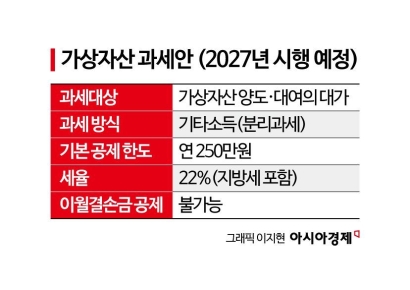 "Stocks Are Not Taxed, but Annual Crypto Gains Over 2.5 Million Won to Be Taxed Next Year... Investors Push Back"
- "Not Jealous of Winning the Lottery"... Entire Village Stunned as 200 Million Won Jackpot of Wild Ginseng Cluster Discovered at Jirisan
- "Rather Than Endure a 1.5 Million KRW Stipend, I'd Rather Earn 500 Million in the U.S." Top Talent from SNU and KAIST Are Leaving [Scientists Are Disappearing] ①
- "How Did an Employee Who Loved Samsung End Up Like This?"... Past Video of Samsung Electronics Union Chairman Resurfaces
- "Even With a 90 Million Won Salary and Bonuses, It Doesn’t Feel Like Much"... A Latecomer Rookie Who Beat 70 to 1 Odds [Scientists Are Disappearing] ③
Short-term performance concerns due to the resurgence of COVID-19 and the decline in the won-dollar exchange rate still exist. Researcher Oh said, "However, Samsung Electronics' current DRAM and NAND inventory is tight, below the historical average. Amid the overall investment reduction in the memory market caused by this year's COVID-19 issues, short-term factors such as Micron's power outage and SK Hynix's partial acquisition of Intel's NAND limit supply increases. Furthermore, next year, memory demand recovery centered on servers is expected to accelerate, leading to a rebound in memory prices. The memory market recovery has now entered its initial stage," he analyzed.
© The Asia Business Daily(www.asiae.co.kr). All rights reserved.