KOSPI Holds 2700 Level but Faces Surge Fatigue, "Short-Term Correction Possible"
Focus on Events like Four Witches Day
Profit Taking and Ongoing Corona Situation
Ants Waiting for Correction in Leveraged Inverse ETFs
Net Purchase of 800 Billion Won Last Month
Low Volatility Calls for Cautious Investment
[Asia Economy Reporter Oh Joo-yeon] The KOSPI, which had surged relentlessly from the 2300 level in early last month to the 2750 level during this month’s trading session, experienced volatility on the 8th as profit-taking sales emerged. Although the sharply falling index reversed to an upward trend on the 9th and successfully defended the 2700 level, upcoming events such as the options expiration on the 10th, the U.S. Electoral College vote on the 14th, and the Federal Open Market Committee (FOMC) meeting on the 16th are drawing attention. In particular, given the accumulated fatigue from the recent one-month stock market rally, the securities industry is placing more weight on the possibility of a short-term correction.

According to the Korea Exchange on the 9th, as of 9:55 a.m., the KOSPI recorded 2725.67, up 0.89% from the previous trading day, partially recovering from the 1.6% decline the day before. This is because foreign investors, who have been leading the market since November, began realizing profits mainly on stocks that had surged, and the prolonged resurgence of COVID-19 is also a factor. The domestic COVID-19 confirmed cases reached 686 on the previous day, the highest since late February and the second-largest ever recorded. Additionally, uncertainties such as delays in discussions over additional U.S. economic stimulus measures have weakened the buying strength of foreign investors, who had net purchased about 7.4 trillion won (excluding the MSCI index change day on the 30th) in the previous month.
The securities industry agrees that while the bullish trend for next year’s stock market remains unchanged, short-term fluctuations are possible. According to Daishin Securities, the Relative Strength Index (RSI), a technical indicator, is generally considered to indicate an overbought condition when it exceeds 70%. On the 7th, when the KOSPI broke through the 2750 level intraday, the RSI reached 78.91%. Since the 13th of last month, the KOSPI has been above 2500, with the RSI exceeding 70%. In June, when the KOSPI RSI dropped from 80.7% to 49.81%, the KOSPI fell by 4.66%, and in August, when the RSI fell from 82.04% to 46.98%, the index dropped by 6.7%. Lee Kyung-min, a researcher at Daishin Securities, analyzed, "We should also be cautious of price adjustments similar to previous patterns." Seo Jung-hoon, a researcher at Samsung Securities, also diagnosed, "The domestic stock market has been exposed to fatigue from continuous rises," adding, "Some profit-taking is necessary to relieve overheating."
In this atmosphere, some individual investors seem to be waiting for a correction. Since last month, individuals have been buying about 800 billion won worth of so-called 'Gopbus' and have ranked second in net purchases this month following Samsung Electronics preferred shares. The top net purchase item for individuals in November was the KODEX 200 Futures Inverse 2X Exchange-Traded Fund (ETF), with purchases totaling 688.1 billion won, and in December, the Gopbus buying continued with an additional 163 billion won purchased. The total amount bought from early November to this day exceeds 850 billion won.
While the possibility of a short-term correction is open, the volatility may not be large, foreign selling is not yet solidified as a trend, and individual funds are likely to support the downside, so caution is advised regarding Gopbus investments.
Lee Jin-woo, a researcher at Meritz Securities, explained, "If the current improvement trend in corporate earnings forecasts stagnates or reverses into a downward trend, the market will enter a full-fledged correction phase, but it is still too early for that," adding, "Currently, it is more likely to be a breathing space to relieve overheating rather than a trend reversal."
In particular, individuals have been continuously investing in inverse products not only in November but since March, and it is estimated that losses from long-term holdings are significant. Despite large losses from the continued market rise, analysis suggests that it is better to quickly liquidate rather than hold.
Hot Picks Today
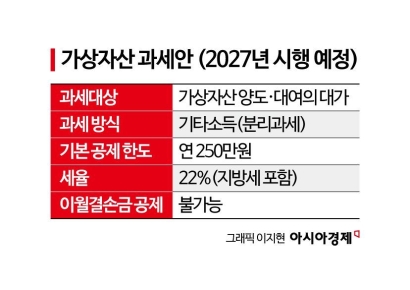 "Stocks Are Not Taxed, but Annual Crypto Gains Over 2.5 Million Won to Be Taxed Next Year... Investors Push Back"
- "Not Jealous of Winning the Lottery"... Entire Village Stunned as 200 Million Won Jackpot of Wild Ginseng Cluster Discovered at Jirisan
- "Even With a 90 Million Won Salary and Bonuses, It Doesn’t Feel Like Much"... A Latecomer Rookie Who Beat 70 to 1 Odds [Scientists Are Disappearing] ③
- "Rather Than Endure a 1.5 Million KRW Stipend, I'd Rather Earn 500 Million in the U.S." Top Talent from SNU and KAIST Are Leaving [Scientists Are Disappearing] ①
- "How Did an Employee Who Loved Samsung End Up Like This?"... Past Video of Samsung Electronics Union Chairman Resurfaces
Han Dae-hoon, a researcher at SK Securities, explained, "The KODEX 200 Futures Inverse 2X tracks twice the inverse (-2x) of the daily rate of change of the underlying KOSPI 200 Futures Index, so even if the market falls during the holding period, if volatility has been high, the leverage effect on cumulative returns may be reduced." He added, "Long-term holding is disadvantageous and risky, so caution is needed for Gopbus investments," and said, "From a short-term perspective as well, rather than investing in Gopbus, which requires caution, stocks with seasonal dividend appeal toward the year-end are considered safer."
© The Asia Business Daily(www.asiae.co.kr). All rights reserved.







