[Insta Walk] Eco Slow - If You Can't Avoid Eco-Friendly, Then 'Must Be Eco-Friendly'
Posters Catch the Eye Throughout the Bookstore
Environmental and Vegan Themes Reveal Space Identity
Over 500 Books on Climate and Vegetarianism Available
Reading Groups on Various Topics Including Animal Rights
Fostering Customer Bonds Through Discussions
Popular Laozi 'Tao Te Ching' Reading Program Also Offered

A poster attached to the back of the bookstore entrance door. The striking phrase "If you can't avoid it, go green" catches the eye. Photo by Heo Midam damdam@asiae.co.kr
View original image[Asia Economy Reporter Heo Midam] Beyond being ‘eco-friendly,’ we are now in an era where being ‘eco-essential’ is a must. Signals are being sent urgently from all corners of the Earth that such awareness is necessary. Due to climate change, polar bears have lost their habitats, and the island nation of Maldives in the Indian Ocean, once called a ‘paradise on earth,’ is facing the threat of submersion, among many other examples signaling the planet’s crisis. Amid this, more people are willingly accepting minor inconveniences as an expression of their determination to save the Earth. They use tumblers instead of disposable cups and carry eco-bags instead of plastic bags. Instagrammers with eco-essential awareness tend to head to bookstores with unique themes like ‘ecological humanities,’ which are unpopular otherwise. This is because bookstores are not just places that sell books but spaces that share consciousness and values. ‘Eco Slow,’ located about a five-minute walk from Exit 4 of Sangsu Station on Seoul Subway Line 6, is exactly such a place.
When you open the bookstore’s door, you notice neatly organized bookshelves and posters pasted here and there. Posters related to the environment and veganism, including a striking photo with the phrase ‘If you can’t avoid it, go green,’ reveal the identity of this place. The bookshelves also reflect the bookstore’s unique character. About 500 diverse books on topics such as climate crisis, animal rights, vegetarianism, and eco-feminism fill the shelves. In the middle of the bookstore, there is a large table where people can gather and chat comfortably.

On one side of the store's wall, various photos and environmental posters are displayed. Photo by Heo Midam damdam@asiae.co.kr
View original imageThis space is operated by CEO Lim Hyeyoung (43) and manager Kim Hakyoung (29) with the thematic consciousness of an ‘ecological humanities bookstore.’ CEO Lim said, “I knew nothing about environmental issues until I heard a lecture by Monk Dobop 7 to 8 years ago and learned about the concept of ‘Indra’s Net.’ It means ‘all life is interconnected,’ and after realizing that human problems are not limited to humans but are connected to animals and nature, I naturally became interested in environmental issues.”
As expected from the spatial nature of a bookstore, the notable activity here is the reading club. Reading clubs on various topics such as animal rights, vegetarianism, eco-feminism, and waste are one of the factors that attract visitors. CEO Lim said, “Because environmental issues are sensitive, some people do not receive emotional support from acquaintances,” adding, “Many visitors here are interested in the environment. Since there is a common ground called ‘environment,’ visitors often gain small but psychological comfort here.” It can be said that through books, people exchange opinions with various others and gain emotional solidarity, achieving two benefits at once. Especially, visitors who become close through the reading club share stories about their lives beyond just books.
Besides selling ecological and humanities books and holding reading discussions, another characteristic is that they provide various opportunities for visitors to think directly about the environment. For example, through workshops, they make ‘sochang napkins’?reusable cloth napkins?instead of paper napkins, and produce reusable ‘beeswax wraps’ instead of plastic wrap. During this process, visitors talk with others about sustainable living and have a chance to reconsider environmental issues. The bookstore thus plays a significant role not only as a ‘space that sells books’ but also as a ‘cultural community center’ where many people communicate and empathize.

Inside the 'Ecoslow' bookstore. Along with books on various topics, a vegan-related poster attached to one wall catches the eye. Photo by Heo Midam damdam@asiae.co.kr
View original imageThe ‘Dao De Jing’ reading program by Laozi is also one of the unique activities. The ‘Dao De Jing’ is a book containing messages from Laozi, a thinker from China’s Spring and Autumn and Warring States period, and participants read the original Chinese text while discussing ‘sharing life.’ CEO Lim said, “Interpretations of the ‘Dao De Jing’ vary, but it has many points connected to nature,” adding, “We study the ‘Dao De Jing’ from the perspective that nature and humans are connected.”
Manager Kim is a unique case who first stepped in as a visitor and then became deeply attracted to this place and settled in. Kim first participated in a workshop last December, then joined various activities at the bookstore such as writing groups, and this connection led to officially joining the store this spring. CEO Lim said, “Since I often met Kim, who was a visitor, through various activities and found our interests similar, I thought it would be good to work together,” adding, “We are still having fun together.” Manager Kim also said with a laugh, “I started visiting the bookstore frequently after the winter workshop last year,” and “I naturally blended into the store as if a snake slipped over a wall.”
CEO Lim and manager Kim said that the various activities at the bookstore hold meaningful value. Manager Kim explained, “There are many ways to help with environmental issues. You can actively provide direct help, or like us, there can be efforts to address environmental problems in a fun way through cultural content as a medium.”
Hot Picks Today
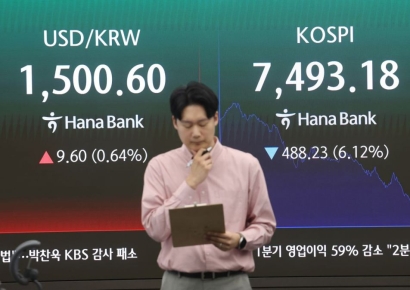 After Topping 8,000 Instead of Hitting 10,000... KOSPI Plunges—When Will It Rebound?
- "Samsung and Hynix Were Once for the Underachievers"... Hyundai Motor Employee's Lament
- [Breaking] Court Rules Against Samsung Electronics Union...1 Billion Won per Day Penalty for Exceeding Strike Scope
- Court Partially Grants Samsung Electronics' Injunction to Prohibit Industrial Action... 100 Million Won Penalty Per Day for Violations
- "That? It's Already Stashed" Nightlife Scene Crosses the Line [ChwiYak Nation] ③
They hoped Eco Slow would become a space free of prejudice. Manager Kim expressed, “I hope it becomes a space without boundaries,” and “I wish it to be a natural space where everyone feels comfortable, free from the particularities of gender, race, age, and other personal characteristics.”
© The Asia Business Daily(www.asiae.co.kr). All rights reserved.







