[Inside Chodong] How to Sustain the Cinema Complex Era

On the 26th, CJ CGV suspended operations at seven locations: Daehakro, Myeongdong Station Cine Library, Deungchon, Yeonsu Station, Hongseong, Daegu Academy, and Gwangju Geumnam-ro. CGV explained that it was unavoidable to halt operations at some theaters in order to overcome the business difficulties caused by the prolonged COVID-19 pandemic. The photo shows CGV Myeongdong Station Cine Library on that day. Photo by Moon Honam munonam@
View original imageCinemas are facing their greatest crisis in 125 years since their inception. As concerns over the spread of the novel coronavirus infection (COVID-19) have increased, cinemas have become spaces to avoid. The number of visitors to cinemas this year reached 54,489,624 by last month, which is only 29.3% of the 185,613,478 visitors during the same period last year.
The sharp decline in sales has caused severe management difficulties. In the case of CGV, the largest multiplex in Korea, seven branches were closed on the 27th of last month. About 30% of directly operated stores will be closed over the next three years. A company official stated, "We plan to implement changes across operations, including rent reductions, reducing the number of screening rooms, flexible operation systems, and reviewing inefficient businesses to break away from the high fixed cost structure."
This is not the first time the position of cinemas has shrunk. In 1960, when TVs became widespread, the issue of whether cinemas would survive was even raised. Many cinemas closed, and the number of films produced also sharply decreased. Filmmakers turned their attention to blockbusters, which require huge investments in production and promotion but promise high returns.
The cinema complex, which emerged in response to these changes, is a large-scale theater with multiple screening rooms in one building. It increases operational efficiency by placing blockbusters in screening rooms with large seating capacities.
Cinema complexes quickly settled in, even changing existing rules. Previously, cinemas were graded based on exterior, seating capacity, and location conditions. Based on this, screening times, screening periods, and admission fees were differentiated. For example, if you wanted to see a new release early, you had to pay a high admission fee at a large downtown theater.
After cinema complexes were established, simultaneous nationwide screenings became possible, and admission fees were unified. Various partnership products were created, and with TV used as a promotional tool, blockbuster screenings themselves became events.

On the 26th, CJ CGV suspended operations at seven locations: Daehakro, Myeongdong Station Cine Library, Deungchon, Yeonsu Station, Hongseong, Daegu Academy, and Gwangju Geumnam-ro. CGV explained that it was unavoidable to halt operations at some theaters in order to overcome the business difficulties caused by the prolonged COVID-19 pandemic. The photo shows CGV Myeongdong Station Cine Library on that day. Photo by Moon Honam munonam@
View original imageThe trend maintained for 45 years since director Steven Spielberg's 'Jaws' (1975) was halted by the COVID-19 pandemic. Blockbusters are gradually leaving cinemas, where high profits can no longer be expected. Their new settlement place is online video services (OTT). Major films like the new '007' series 'No Time to Die' are negotiating with Apple, Netflix, and others to reduce losses caused by postponed releases.
The domestic situation is no different. Director Lee Chung-hyun's 'Call' is being released on Netflix without a theatrical release, following 'Time to Hunt.' Director Cho Sung-hee's 'Space Sweepers,' which had a production budget of 24 billion won, is also effectively set for a Netflix release.
If blockbusters continue to leave, cinema complexes will lose their reason for existence. Serious consideration must be given to operating in other forms because it is difficult to differentiate with films alone. Films are inherently repetitive media guaranteed to be identical in principle. Watching a film in a theater and via OTT is clearly different, but people express both experiences with the same language: "I watched a movie."
More people are preferring nonlinear and repetitive active viewing over linear and one-time passive viewing. They use it as an opportunity to interpret and find new meanings in films without being constrained by time and place.
Cinemas, by their nature, cannot compensate for these weaknesses. However, if they only hope for the happy past to return, they will inevitably perish during this economic transition. They must prove for themselves that even the same film can be a different experience. They need to enhance qualitative differences in the viewing environment, give preferential treatment to viewers, and develop beyond being just a mediating space for film distribution. To the extent that blockbusters that have left cannot help but return...
Hot Picks Today
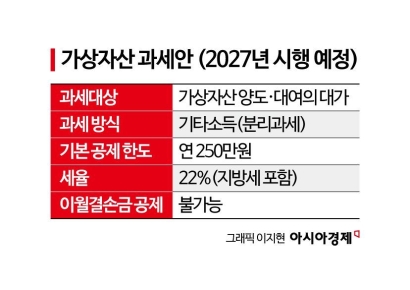 "Stocks Are Not Taxed, but Annual Crypto Gains Over 2.5 Million Won to Be Taxed Next Year... Investors Push Back"
- "Not Jealous of Winning the Lottery"... Entire Village Stunned as 200 Million Won Jackpot of Wild Ginseng Cluster Discovered at Jirisan
- "Rather Than Endure a 1.5 Million KRW Stipend, I'd Rather Earn 500 Million in the U.S." Top Talent from SNU and KAIST Are Leaving [Scientists Are Disappearing] ①
- "How Did an Employee Who Loved Samsung End Up Like This?"... Past Video of Samsung Electronics Union Chairman Resurfaces
- "Even With a 90 Million Won Salary and Bonuses, It Doesn’t Feel Like Much"... A Latecomer Rookie Who Beat 70 to 1 Odds [Scientists Are Disappearing] ③
© The Asia Business Daily(www.asiae.co.kr). All rights reserved.