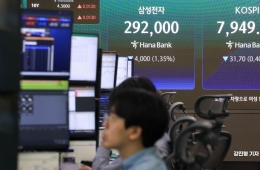
KCCI "44% Voting Rights Restricted for Major Shareholders under Commercial Act Amendment... KRW 377 Trillion at Stake"
Report on the Impact and Issues of Separate Appointment of Audit Committee Members and Strengthening of the 3% Rule Regulation
[Asia Economy Reporter Kim Ji-hee] It has been revealed that under the major contentious issue of the pending amendment to the Commercial Act in the National Assembly, which regulates the appointment of audit committee members, 44% of the voting rights out of an average 47% shareholding by major shareholders and related parties are restricted. The market capitalization of the restricted voting rights amounts to approximately 377 trillion won.
The Korea Employers Federation (KEF) released a report titled "The Impact and Problems of Strengthening the Regulation on Separate Appointment of Audit Committee Members and the 3% Rule" on the 1st, containing this analysis. The key points of the amendment are ▲at least one audit committee member must be appointed separately from directors and as a separate agenda item ▲when appointing audit committee members, the voting rights of the largest shareholder and related parties are combined and limited to a total of 3%. This report investigated the actual impact and ripple effects on companies by analyzing the shareholding ratios of 500 listed companies that have established audit committees.
Examining the changes in voting rights of major shareholders and related parties under the amendment, only 3% of the average 47% shareholding of major shareholders can be exercised when audit committee members are appointed separately, and 44% of voting rights are restricted. The market capitalization of the restricted voting rights is about 377 trillion won, exceeding 90% of the 416 trillion won market capitalization of the shares held by major shareholders and related parties of regulated companies.

The proportion of voting rights restricted for major shareholders and related parties due to the audit committee member appointment regulation was higher in companies that voluntarily adopted audit committees, such as mid-sized and small listed companies (45.5%), than in companies required to adopt audit committees (39.4%). Under Korean Commercial Act, large-scale businesses with assets over 2 trillion won are required to establish audit committees, but businesses with assets between 100 billion and 2 trillion won (377 companies) can choose to establish and operate them voluntarily.
This survey analyzed that listed companies with assets under 2 trillion won, which voluntarily established and operated audit committees to enhance accounting transparency, would be directly regulated upon the introduction of the amendment. The regulation on appointing audit committee members could act as a factor discouraging voluntary adoption incentives for audit committees.
In particular, more than half of the companies subject to the audit committee member appointment regulation are small and medium-sized enterprises with assets between 100 billion and 500 billion won. Also, the shareholding ratio with restricted voting rights among major shareholders was highest at 49.1% in companies with assets between 500 billion and 1 trillion won.
Furthermore, the report argued that three major negative ripple effects could arise from the regulation on appointing audit committee members. First, the separate appointment of audit committee members and the strengthening of the 3% rule on related parties are criticized as a system benefiting only institutional investors such as foreign speculative capital rather than protecting minority shareholders’ rights. This is because recommending and actually appointing audit committee members in major companies requires funds ranging from several hundred billion to trillions of won, which minority shareholders cannot afford.

Even to recommend an audit committee candidate, a minimum of 0.5% shareholding is required for listed companies. For example, Samsung Electronics requires about 1.8 trillion won, and SK Hynix about 320 billion won, costing several hundred billion won or more. To secure the minimum 3% shareholding required for appointing audit committee members, Samsung Electronics requires 10.7 trillion won and SK Hynix 1.9 trillion won.
Also, the amendment limits the exercise of voting rights of major shareholders and related parties to a combined total of 3% when exercising their voting rights, which is advantageous only to foreign funds that can split shares and distribute them among multiple institutions. While major shareholders face direct voting restrictions due to the combined 3% rule, other shareholders such as foreign funds can use all their shares, causing unfairness. This raises concerns that foreign funds will be strongly incentivized to split their shares below 3% to approach domestic companies.
The KEF also expressed concern that the minimum cost for appointing audit committee members will significantly decrease, potentially increasing attempts by speculative funds or competing forces to enter boards of directors. If hostile forces such as foreign speculative funds enter the boards of domestic companies due to the amendment, it could not only disrupt normal management activities but also cause side effects such as technology leakage and pursuit of short-term dividend policies by leveraging the high authority of directors.
Ha Sang-woo, head of the KEF Economic Research Department, said, “The regulation on appointing audit committee members in the Commercial Act amendment results in strengthening the influence of foreign and other funds rather than protecting minority shareholders’ rights, and significantly restricts the voting rights of small and medium-sized enterprises. Also, limiting the voting rights of major shareholders to a combined 3% constitutes excessive reverse discrimination compared to the fact that the combined voting rights rule does not apply to the second and third largest shareholders, including foreign funds.”
Hot Picks Today
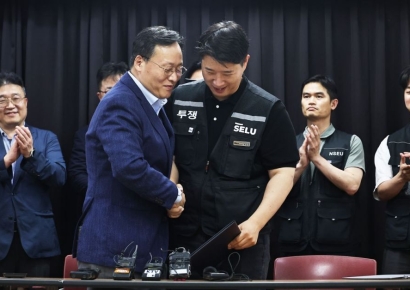 Up to 600 Million Won for Semiconductors, 160 Million Won Bonus for Loss-Making Non-Memory… Samsung Electronics Labor and Management Reach Tentative Deal on Unprecedented Performance Compensation (Comprehensive)
- "Could I Also Receive 370 Billion Won?"... No Limit on 'Stock Manipulation Whistleblower Rewards' Starting the 26th
- "From a 70 Million Won Loss to a 350 Million Won Profit with Samsung and SK hynix"... 'Stock Jackpot' Grandfather Gains Attention
- [Current State of K-Finance for Foreign Nationals]①From Niche to Core... Banks Go All-In on First-Mover Competition
- "Who Is Visiting Japan These Days?" The Once-Crowded Tourist Spots Empty Out... What's Happening?
He added, “There have been clear cases in the past where foreign funds exploited weaknesses in the 3% rule by splitting shares to attempt entry into domestic company boards. During that process, various tactics such as foreign shareholder coordination and exercising information rights were used to pressure domestic companies. We hope the National Assembly will review these experiences once again.”
© The Asia Business Daily(www.asiae.co.kr). All rights reserved.