[Good Morning Stock Market] Earnings Expectations Remain Valid Despite Changing Supply and Demand... "Stock-Specific Response"
[Asia Economy Reporter Oh Ju-yeon] There is an analysis that market supply and demand have changed since October. The government is pushing to expand the tax base by adjusting the criteria for individual major shareholders from the existing 1 billion KRW to 300 million KRW starting in 2021, which is said to be weakening the supply and demand strength of individuals. It is diagnosed that stocks with a high proportion of individual investors may have relatively higher volatility. In addition, although domestic and international uncertainties are increasing due to the US presidential election and the resurgence of COVID-19, expectations for earnings improvement remain, so it is necessary to pay attention to stocks that fall under this category.
◆ Seo Sang-young, Kiwoom Securities Researcher = The US stock market declined as selling pressure emerged due to the resurgence of COVID-19 and uncertainties over additional stimulus measures. In particular, it is notable that the profit-taking desire in non-face-to-face (untact) related stocks increased under this pretext, resulting in a larger drop. Furthermore, some in the market forecast that the number of new COVID-19 cases will further spread after the presidential election, raising the possibility of targeted lockdowns, which weakened the preference for risky assets.
Ultimately, despite large-scale liquidity supply and active policies, the resurgence of COVID-19 may delay or slow economic recovery, which acted as a factor dampening investor sentiment. This could negatively affect foreign investors' supply and demand, posing a burden on the Korean stock market.
Meanwhile, considering reports that Intel will sell its NAND division to SK Hynix, attention should also be paid to changes in domestic semiconductor-related stocks. Additionally, some stocks with positive news showed strength despite the expanded decline in the US stock market. Considering this, the Korean stock market is expected to inevitably adjust mainly in stocks that have had large gains like other global markets, but changes in individual stocks with positive news are also anticipated.
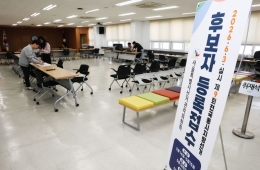
◆ Lee Jae-sun, Hana Financial Investment Researcher = Since the beginning of the year, individuals who had continuously strengthened buying in the KOSPI market showed a net selling dominance of about 1 trillion KRW this month, while foreigners absorbed the individuals' volume and switched to net buying for the first time since the beginning of the year. Market liquidity remains abundant. Customer deposits, which can gauge individual liquidity, remain in the 50 trillion KRW range. Nevertheless, the weakening of individual supply and demand is likely due to the issue of capital gains tax for individual major shareholders.
This is not the first time the major shareholder criteria have changed. Including this amendment, the criteria have been changed five times since 2010, and each time, selling pressure from individual investors trying to avoid being designated as major shareholders at year-end intensified. Looking at the individual buying trends in the fourth quarter of the year before the amendment was applied, individuals showed an average net selling dominance of 4.5 trillion KRW in the KOSPI and about 200 billion KRW in the KOSDAQ. However, this year, the possibility of stronger year-end selling by individuals compared to the past should be considered because the scope of taxable subjects has greatly expanded compared to before.
Since foreign and institutional supply and demand support the market, the impact of individual selling volume on the overall index level is likely to be limited. However, as seen in past major shareholder change periods, it is time to pay attention to the relative underperformance and stock-specific volatility of small and mid-cap stocks with a high proportion of individual investors.
By sector, attention should be paid to the volatility of sectors with a high proportion of individual net buying or high returns since the beginning of the year. In the KOSPI, healthcare and software sectors fall under this category, and in the KOSDAQ, healthcare is similarly included.
◆ Lee Jae-yoon, SK Securities Researcher = The third-quarter operating profit estimates have been on a downward trend since March this year but have been rebounding since September. The current third-quarter operating profit estimate is 40.3 trillion KRW, up 4.8% from the previous month and 9.9% from the beginning of the year. Expectations for earnings improvement are increasing. So far, seven companies in the KOSPI have announced their earnings (accounting for 27.3% of market capitalization).
In a situation where stock market volatility is high due to external uncertainties, it is necessary to focus on sectors where expectations for earnings improvement can continue. Additionally, ahead of year-end, preference for large-cap stocks for dividend-related investments is likely to increase.
Hot Picks Today
 "Suspicious Timing?"...Trump Traded Stocks After Praising Wartime Capabilities
- "Even If I Lose My Investment, the Government Will Cover It"... The Fund Attracting Retail Investors' Attention [Weekend Money]
- There Is a Distinct Age When Physical Abilities Decline Rapidly... From What Age Do Strength and Endurance Drop?
- "I Went to 10 Convenience Stores and Still Couldn't Buy It": The Bread Sensation That Sold 100 Million Units Already [The Way We Shop Now]
- "Contact Me First If Houses Are Built": Wealthy Clients Eyeing... Will Ultra-High-End Residences Worth 20 Billion Won Be Developed? [Real Estate AtoZ]
The sectors with significant upward revisions in operating profit estimates over the past month for the third quarter, fourth quarter, and next year are automobile, display, and chemical sectors.
© The Asia Business Daily(www.asiae.co.kr). All rights reserved.