Following Pyeongchang, Anticipation for the 'Tokyo Peace Olympics'... Focus on Kim Yo-jong's Moves

Seo Hoon, Director of the National Security Office at the Blue House, visited the United States last week and met with his counterpart, Robert O'Brien, the White House National Security Advisor. On the 14th (local time), Advisor O'Brien posted a photo taken with Director Seo at the White House on the National Security Council (NSC) Twitter account and announced the meeting, saying, "It was a pleasure to meet my friend and colleague Director Seo today."
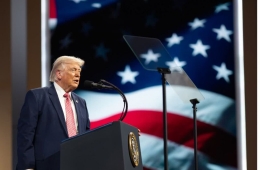
Robert O'Brien, the U.S. National Security Advisor at the White House (pictured), is scheduled to visit South Korea in November. He also hinted at the possibility of resuming talks with North Korea around the time of the Tokyo Olympics next year, raising expectations for the reactivation of the Korean Peninsula peace process. It is unusual for the U.S. side to publicly disclose both the timing of the visit to South Korea and the hoped-for timing of future talks with North Korea. This is interpreted as a message signaling the intention to lay the groundwork in earnest from next year, requesting restraint from provocations by the North and managing the situation.
On the 16th (local time), during a virtual discussion hosted by the Aspen Institute, a private organization in Washington, O'Brien referred to his recent meeting with Suh Hoon, the South Korean National Security Office Director who recently visited the U.S., saying, "We really want to see some progress with North Korea," and added, "There may be an opportunity next year." He further mentioned that there "might be an opportunity" around the time of the Tokyo Olympics held in Japan next year.
In particular, there is analysis that the actions of Kim Yo-jong, the first deputy director of the Workers' Party, could serve as a signal for the resumption of South-North-U.S. talks. The North Korea-U.S. relationship, which escalated to 'fire and fury' in 2017, experienced a dramatic turnaround in early 2018, triggered by Kim Yo-jong's visit to South Korea related to the PyeongChang Olympics. As the younger sister of Kim Jong-un, Chairman of the State Affairs Commission of North Korea, she visited South Korea as a special envoy ahead of the 2018 PyeongChang Winter Olympics in February. It was the first time that a member of the so-called 'Baekdu bloodline,' referring to the Kim family, visited South Korea. Kim Yo-jong had lunch with President Moon Jae-in at the Blue House, delivering a personal letter from Kim Jong-un, and warmly watched the first preliminary game of the unified women's ice hockey team. On the last day, at an unofficial farewell dinner with then-Chief Presidential Secretary Im Jong-seok and others, she left a hopeful message, saying, "I hope to bring forward the day of unification and meet our dear friends again in Pyongyang."
The South Korean government has already planned to replicate the experience of the 'PyeongChang Peace Olympics' in Tokyo. Despite calls to boycott the Tokyo Olympics in response to Japan's economic retaliation, President Moon has shown strong enthusiasm for the joint participation of South and North Korea in the Tokyo Olympics. In his New Year's press conference in January, he emphasized, "The Tokyo Olympics is a venue where South and North Korea have agreed on some joint unified teams and can also be used to promote peace on the Korean Peninsula through joint entry of the delegations." The Ministry of Unification also announced plans to expand social and cultural exchange cooperation between South and North Korea around the Tokyo Olympics during this year's New Year's work report.
However, it seems unlikely that any messages related to Korean Peninsula issues will be delivered at the Blue House senior secretaries and advisors meeting chaired by President Moon on the afternoon of the 19th. Suh Hoon, who recently visited the U.S. and met with Secretary of State Mike Pompeo, is currently working from home under 'self-quarantine.' President Moon has received a verbal report from Suh on the results of his U.S. visit. Blue House spokesperson Kang Min-seok said regarding the discussions between the South Korean and U.S. national security advisors, "They had in-depth discussions on ways to resume North Korea-U.S. talks and achieve substantive progress."
The Korean Peninsula faces a critical juncture from November, when the U.S. presidential election takes place, until January next year, when the elected president begins the term. Suh's visit to the U.S. was arranged at the invitation of the U.S. government during this important period. Although there was interest in whether President Moon would deliver a message regarding the results of Suh's visit, the 19th senior secretaries meeting is focused on economic messages such as smart cities. This is also related to President Moon's future course. Despite many issues including the U.S. presidential election and various domestic political matters, the Blue House is placing emphasis on the economy and adjusting the timeline accordingly.
Hot Picks Today
!["Rather Than Endure a 1.5 Million KRW Stipend, I'd Rather Earn 500 Million in the U.S." Top Talent from SNU and KAIST Are Leaving [Scientists Are Disappearing] ①](https://cwcontent.asiae.co.kr/asiaresize/93/2026051914165468840_1779167814.png) "Rather Than Endure a 1.5 Million KRW Stipend, I'd Rather Earn 500 Million in the U.S." Top Talent from SNU and KAIST Are Leaving [Scientists Are Disappearing] ①
"Rather Than Endure a 1.5 Million KRW Stipend, I'd Rather Earn 500 Million in the U.S." Top Talent from SNU and KAIST Are Leaving [Scientists Are Disappearing] ①
- "Not Jealous of Winning the Lottery"... Entire Village Stunned as 200 Million Won Jackpot of Wild Ginseng Cluster Discovered at Jirisan
- "I'll Stop by Starbucks Tomorrow": People Power Chungbuk Committee and Geoje Mayoral Candidate Face Criticism for Alleged 5·18 Demeaning Remarks
- [New York Stock Exchange] All Major Indices Close Lower as U.S. Treasury Yields Surge
- "How Did an Employee Who Loved Samsung End Up Like This?"... Past Video of Samsung Electronics Union Chairman Resurfaces
© The Asia Business Daily(www.asiae.co.kr). All rights reserved.