Fiscal Scholar Allen Shick Questions the Usefulness of Fiscal Rules in the COVID Era
[Asia Economy Reporter Kim Hye-min] Allen Schick, a world-renowned scholar in the field of public finance at the University of Maryland, USA, has expressed a negative view on operating fiscal rules in the era of the novel coronavirus infection (COVID-19).
He pointed out that fiscal rules, as a means to pressure the adoption of austerity measures, could rather delay a full recovery. On the 7th, Park Hong-geun, a member of the Democratic Party of Korea, introduced this content and said, "It completely overturns the existing traditional stance that emphasizes fiscal rules and medium-term fiscal plans."
The National Assembly Budget and Accounts Special Committee published a Korean translation of his book, Modern Public Expenditure Management: Budgeting and Analytical Methods, last June. This book was published by Professor Schick at the World Bank 20 years ago and is regarded as a standard textbook for budget analysis. Professor Schick contributed a special essay titled "What Has Changed and What Has Not" in the translated version, presenting this changed argument.
Professor Schick stated, "During most booms, demands for additional spending or tax cuts arise, whereas when the boom ends, governments are pressured to adopt austerity policies, which further suppress economic activity and weaken social safety nets."
He added, "In the case of economic shocks such as the global financial crisis or the COVID-19 pandemic, large fiscal deficits automatically occur, and when governments must adopt expansionary fiscal policies far exceeding the levels allowed by fiscal rules, fiscal rules and usual budget practices become ineffective. In such situations, there is a concern that fiscal rules may induce governments to adopt austerity policies that delay full recovery and reduce the level of public services."
Professor Schick also said, "Looking back, it was a mistake for international organizations such as the European Union to force economically vulnerable countries like Greece and Italy to adopt austerity policies." He questioned the usefulness of fixed-form fiscal rules and said, "Although fiscal rules tend to be procyclical, the next generation of fiscal rules should be countercyclical to be effective."
In other words, fiscal rules naturally require increased spending and tax cuts during booms and spending cuts and tax increases during economic crises, but instead, they should adopt a countercyclical policy approach, such as running surplus budgets during booms and deficit budgets during crises.
Regarding medium-term fiscal plans, Professor Schick said, "Of course, the results of future programs and budgetary spending should be considered, but it is unrealistic for governments to be bound by medium-term fiscal forecasts. The best that can be expected from medium-term fiscal plans is to set flexible constraints."
Hot Picks Today
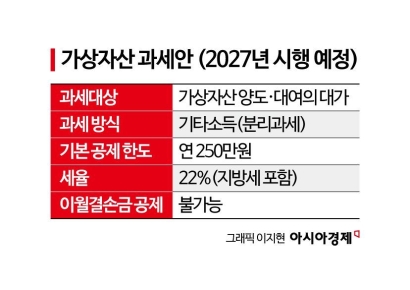 "Stocks Are Not Taxed, but Annual Crypto Gains Over 2.5 Million Won to Be Taxed Next Year... Investors Push Back"
- "Not Jealous of Winning the Lottery"... Entire Village Stunned as 200 Million Won Jackpot of Wild Ginseng Cluster Discovered at Jirisan
- "Rather Than Endure a 1.5 Million KRW Stipend, I'd Rather Earn 500 Million in the U.S." Top Talent from SNU and KAIST Are Leaving [Scientists Are Disappearing] ①
- "How Did an Employee Who Loved Samsung End Up Like This?"... Past Video of Samsung Electronics Union Chairman Resurfaces
- "Even With a 90 Million Won Salary and Bonuses, It Doesn’t Feel Like Much"... A Latecomer Rookie Who Beat 70 to 1 Odds [Scientists Are Disappearing] ③
In response, Representative Park said, "World-renowned scholars and governments around the world are suspending or abolishing fiscal rules to respond to COVID-19," adding, "Since active fiscal roles are needed, introducing fiscal rules makes crisis response difficult, so a full review of fiscal rule standards should be postponed until after the COVID-19 response is completed."
© The Asia Business Daily(www.asiae.co.kr). All rights reserved.







