[2021 Budget] 200 Trillion Won for 'Health, Welfare, and Employment'... 36% of Next Year's Budget Focused
'2021 Budget Proposal'
Strengthening Employment and Social Safety Nets…199.9 Trillion KRW, 10.7% Increase
Core Areas of Digital and Green New Deal…66.8 Trillion KRW, 17.4% Increase
Expansion Focused on SOC Digitalization and Safety Investment…26.0 Trillion KRW, 11.9% Increase
Building a Smart Strong Military and Expanding Military Morale Investment…52.9 Trillion KRW, 5.5% Increase

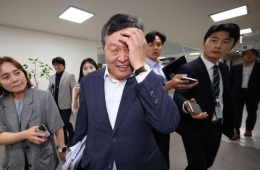
Hong Nam-ki, Deputy Prime Minister and Minister of Economy and Finance, is reading the statement at the detailed pre-briefing on the '2021 Budget Proposal' held at the Government Sejong Complex on the 27th of last month.
View original image[Sejong=Asia Economy Reporter Joo Sang-don] The government has decided to allocate 200 trillion KRW, accounting for 36% of next year's budget of 555.8 trillion KRW, to the 'Health, Welfare, and Employment' sector. Through this, employment insurance will be gradually expanded to cover all workers, and the 'National Employment Support System' will be introduced to eliminate blind spots in the employment insurance system. Additionally, customized employment support by target will induce the creation of 570,000 private sector jobs, while providing 1.03 million public jobs for vulnerable groups such as the elderly and disabled who face difficulties in employment.
The Ministry of Economy and Finance announced that the '2021 Budget Proposal' containing these details passed the Cabinet meeting on the 1st.
First, the government allocated 199.9 trillion KRW for the health, welfare, and employment sector next year. This is an increase of 19.4 trillion KRW (10.7%) compared to this year (180.5 trillion KRW). Accordingly, the budget for this sector has maintained an increase rate of over 10% for four consecutive years since 2018 (11.7%), when the Moon Jae-in administration began.
The budget for health, welfare, and employment will be used to expand the social safety net by eliminating blind spots in the Basic Livelihood Security System and strengthening coverage. To eliminate blind spots in livelihood benefits, the support obligation criteria will be abolished by 2022. To strengthen coverage, the median income standard will be gradually increased by 2 percentage points annually over the next six years, with differentiated application of the increase rate focusing on 1-2 person households. Improvements to housing benefits will also be pursued, such as adjusting the separate payment standard rent for youth housing benefits from 90% to 95-100% of the minimum housing standard.
Investment to overcome low birth rates and prepare for aging will also be strengthened. The supply of rental housing for newlyweds and youth will be expanded to 110,000 households, and support for early life-stage home visit health management will be expanded from 20 to 50 locations, along with the establishment of 5 new maternity obstetrics clinics in vulnerable areas and the operation of clinics increasing from 22 to 26. To establish a stable income base for the elderly, the basic pension will be raised to 300,000 KRW per month for all recipients, elderly jobs will be significantly expanded from 740,000 to 800,000, and the number of beneficiaries of elderly tailored care services will increase from 450,000 to 500,000. The digital care pilot project will also expand from 25,000 to 58,000 people.
The government allocated 30.6 trillion KRW of the health, welfare, and employment budget to job creation. Of this, 8.6 trillion KRW will be invested solely in job retention and creation. This reflects the urgent need to overcome short-term employment shocks caused by COVID-19 and to proactively create jobs in response to rapid industrial structural changes. On the 27th of last month, Deputy Prime Minister and Minister of Economy and Finance Hong Nam-ki emphasized at a pre-briefing on the 2021 budget proposal held at the Government Complex Sejong, "The first of the four major investment focuses in next year's budget is 'fast and strong economic recovery.' We will invest 8.6 trillion KRW to protect and create more than 2 million jobs, which are the foundation of people's livelihoods."
To maintain employment, the government will provide employment retention support funds to 450,000 workers (1.2 trillion KRW) and expand the region-led employment stability proactive response packages from 5 to 8, including 'root industry advancement' in Incheon and specialized training for machinery, shipbuilding, and automobile professionals in Changwon, Gyeongnam. For job creation, customized support for youth, middle-aged, and small business owners will be implemented. Targeted support such as youth employment incentives and early reemployment allowances for middle-aged job seekers will induce the creation of 570,000 private sector jobs. The government plans to provide 1.03 million direct public jobs for vulnerable groups such as the elderly and disabled.
The sector with the highest budget growth rate next year is 'Industry, SMEs, and Energy.' The budget is set at 29.1 trillion KRW, an increase of 22.9% (5.4 trillion KRW) compared to this year (23.7 trillion KRW). Investment in the Korean New Deal, including the digital economy and low-carbon energy transition, is central. To accelerate manufacturing innovation, the government will expand the establishment of logistics (from 3 to 4) and energy platforms (7 newly added in supplementary budget) that resident companies can jointly use, and raise the smart factory distribution target from 5,500 to 6,000. Comprehensive export support will also be provided, including strengthening trade finance, establishing non-face-to-face and online export support systems, and expanding overseas marketing. To this end, an additional 5.4 trillion KRW in trade policy funds will be supplied to discover new export engines such as large-scale overseas infrastructure orders and new business ventures. Green New Deal investments for energy transition, such as the spread of renewable energy, will also be expanded. Support budgets for large-scale solar power complexes and the still early-stage wind power infrastructure, including funding, research and development (R&D), and site acquisition, will increase to 1.3 trillion KRW.
The environmental sector budget is set at 10.5 trillion KRW, 1.5 trillion KRW more than this year. This will expand Green New Deal investments to respond to the climate change crisis and investments to improve living environments such as air, water, and green spaces. The R&D budget will increase by 12.3% to 27.2 trillion KRW. Support will be intensively expanded for future advanced innovative technologies such as the BIG3?system semiconductors, future cars, bio-health?and materials, parts, and equipment that lead the pioneering economy.
The social overhead capital (SOC) budget, centered on digitalization and safety investment, is set at 26 trillion KRW, an increase of 2.8 trillion KRW (11.9%) from this year. Following a 17.6% increase last year, this marks two consecutive years of double-digit growth. Safety investments in infrastructure such as roads and railways will be expanded, and digitalization applying new technologies (AI, 5G, etc.) to infrastructure management will be promoted. Green remodeling will be pursued for aging public buildings (1,085 buildings) such as daycare centers, public health centers, and medical institutions with facility lifespans of 15 to 30 years, promoting the spread of zero-energy buildings.
The defense budget for building a smart strong military and boosting morale is allocated 52.9 trillion KRW, 2.7 trillion KRW (5.5%) more than this year. Although the defense capability improvement fund has decreased in annual installments as major projects such as the F-35A and maritime patrol aircraft are entering their final stages according to weapon acquisition schedules, funds necessary for establishing nuclear and weapons of mass destruction (WMD) response systems (5.8 trillion KRW), which are core to 'Defense Reform 2.0,' and for the transition of wartime operational control (2.2 trillion KRW) have all been reflected. Additionally, soldier pay will increase by 12.5%, raising the monthly pay for a sergeant from 541,000 KRW to 609,000 KRW. Including this, 3.8 trillion KRW has been allocated to the '7-package morale boosting measures' covering increases in meal and clothing costs, expansion of self-development support targets, and new support for soldier group insurance.
Hot Picks Today
!["Rather Than Endure a 1.5 Million KRW Stipend, I'd Rather Earn 500 Million in the U.S." Top Talent from SNU and KAIST Are Leaving [Scientists Are Disappearing] ①](https://cwcontent.asiae.co.kr/asiaresize/93/2026051914165468840_1779167814.png) "Rather Than Endure a 1.5 Million KRW Stipend, I'd Rather Earn 500 Million in the U.S." Top Talent from SNU and KAIST Are Leaving [Scientists Are Disappearing] ①
"Rather Than Endure a 1.5 Million KRW Stipend, I'd Rather Earn 500 Million in the U.S." Top Talent from SNU and KAIST Are Leaving [Scientists Are Disappearing] ①
- Given Grants, Then Says "No Launch" ... Innovative Korean Technology Ultimately Forced Overseas
- [Breaking] Chairman Park Sookeun: "Possibility of Agreement Instead of Samsung Electronics Labor-Management Mediation Proposal"
- "If That's the Case, Why Not Just Buy Stocks?" ETFs in Name Only, Now 'Semiconductor-Heavy' and a Playground for Short-Term Traders
- "No Cure Available, Spread Accelerates... Already 105 Dead, American Infected"
Among the 12 major sectors, education is the only one with a reduced budget, set at 71 trillion KRW. This is 1.6 trillion KRW (2.2%) less than this year (72.6 trillion KRW). The government will significantly expand the production of online content for elementary, middle, and high schools, provide customized learning content through learning level diagnostics, and create an online lecture environment. It will also promote the cultivation of human resources in new technology fields and the establishment of future-ready educational environments in preparation for the Fourth Industrial Revolution.
© The Asia Business Daily(www.asiae.co.kr). All rights reserved.
![Cheaper Than Candy, Yet Impossible to Find... Fears of a 'Pediatric Medical Crisis' as Pharmaceutical Companies Halt Production [Why&Next]](https://cwcontent.asiae.co.kr/asiaresize/307/2026051910065268365_1779152813.jpg)