[Good Morning Stock Market] Focus on 'New COVID-19 Cases' Rather Than US Stock Market
FDA's Emergency Approval of COVID Plasma Therapy Boosts US Stock Market
Material Already Reflected in Domestic Market...Limited Impact
"May Change Depending on New COVID Cases" Possible
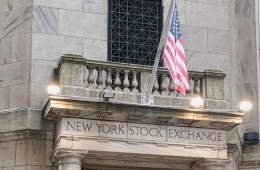
[Asia Economy Reporter Oh Ju-yeon] On the 24th (local time), the U.S. stock market closed higher amid news of the Food and Drug Administration (FDA)'s emergency approval of a COVID-19 plasma treatment and reports that the Trump administration is considering emergency use authorization of a COVID-19 vaccine before the November presidential election. The Dow Jones Industrial Average closed at 28,308.46, up 1.35% from the previous trading day, the S&P 500 rose 1.0% to 3,431.28, and the Nasdaq Composite gained 0.6% to 11,379.72.
However, since the factors driving the U.S. stock market's rise had already been reflected in the domestic market the previous day, it is expected that market attention will focus more on the number of new COVID-19 cases to be announced on the morning of the 25th rather than on the strong U.S. stock market performance seen the day before.

On the 19th, the electronic board in the dealing room of Hana Bank in Jung-gu, Seoul, displayed the stock prices of the US markets, including the Nasdaq and S&P 500. On this day, the S&P 500 index rose to as high as 3395.06, setting an intraday record high based on price. The tech-focused Nasdaq also broke its previous record, closing 81.12 points (0.73%) higher than the previous session at 11,210.84. Photo by Kim Hyun-min kimhyun81@
View original image◆ Sangyoung Seo, Kiwoom Securities Researcher = The Korean stock market on the previous day rose with the KOSPI up 1.10% and the KOSDAQ index up 2.48%, supported by the FDA's emergency approval of the COVID-19 plasma treatment, a decrease in new COVID-19 cases, Bank of Korea Governor Lee Ju-yeol's indication of a moderate monetary policy, and expectations for an extension of the short-selling ban. Meanwhile, although the U.S. stock market showed strength, considering that the reasons were due to individual issues and had already been reflected in the Korean market the previous day, the impact is expected to be limited. On the contrary, the increased volatility in individual stocks, such as the bubble controversy surrounding Tesla, could dampen investor sentiment, warranting caution.
The U.S. stock market opened higher, buoyed by the FDA's emergency approval of the COVID-19 plasma treatment and sharp rises in Apple and Tesla. However, as bubble concerns about Tesla emerged and volatility increased in both stocks, gains were partially given back. Sectors that had been weak, including airlines, energy, banks, and consumer discretionary, showed strength with some positive news, further expanding the gains.
Meanwhile, the number of new COVID-19 cases announced at 10 a.m. is expected to attract attention, as the previous day's decrease in new cases may have been due to a weekend effect. Currently, health authorities are concerned about raising social distancing to level 3 due to the significant social and economic impact. However, as infectious disease societies have argued, attention is also on the rapid resolution of the situation if the level is raised to 3. Ultimately, despite the U.S. market's strength, the Korean stock market is expected to change depending on the new COVID-19 case numbers announced by health authorities, as the related factors have limited influence.
◆ Taedong Oh, NH Investment & Securities Researcher = The upward momentum is expected to weaken over the next few months, with fluctuations within a trading range anticipated. This is because the stock market has already priced in domestic and international stimulus policies, and we are entering a period where concerns about the economy are rising again due to uncertainties surrounding the U.S. presidential election and COVID-19. Therefore, a correction of the overshot stock prices may occur.
With low interest rates lowering discount rates, the stock market is trading at higher valuations than in the past, and considering abundant cash waiting to be invested, a strategy to increase exposure around the 2200 level is necessary. From a style perspective, the strategy is to reduce growth stocks near the upper bound of the trading range and increase growth stock exposure near the lower bound.
◆ Kyungmin Lee, Daishin Securities Researcher = The resurgence of COVID-19 will slow the pace of Korea's economic recovery. However, the possibility of Korea's economic recovery trend breaking down is low. Since global economic activities have resumed, global economy and trade are recovering, and even if social distancing is strengthened in Korea, economic activities will not come to a halt. Additionally, the domestic fiscal policy is expected to strengthen visibly, with discussions on the second round of disaster relief funds and the fourth supplementary budget, which will enhance the resilience of the domestic economy.
Hot Picks Today
 "Stocks Are Not Taxed, but Annual Crypto Gains Over 2.5 Million Won to Be Taxed Next Year... Investors Push Back"
- "Not Jealous of Winning the Lottery"... Entire Village Stunned as 200 Million Won Jackpot of Wild Ginseng Cluster Discovered at Jirisan
- "Jeong Yu-kyung Is a Neighbor"...Itaewon Standalone House with Record 23.2 Billion Won Appraisal Up for Auction [Real Estate AtoZ]
- "How Did an Employee Who Loved Samsung End Up Like This?"... Past Video of Samsung Electronics Union Chairman Resurfaces
- "Even With a 90 Million Won Salary and Bonuses, It Doesn’t Feel Like Much"... A Latecomer Rookie Who Beat 70 to 1 Odds [Scientists Are Disappearing] ③
However, caution is warranted as short-term overheating and valuation pressures increase, fundamental uncertainties due to the COVID-19 resurgence expand, and factors such as weakened investor sentiment, increased foreign exchange market volatility, and supply-demand instability could stimulate volatility in the KOSPI.
© The Asia Business Daily(www.asiae.co.kr). All rights reserved.