If Tenants Do Not Agree, Not a Single Rent Increase Allowed... Landlords Have No Rights
'Commentary on the Housing Lease Protection Act' Revealed
Tenant Consent Required to Raise Rent by 5%
Renewal Request Cannot Be Refused
Dispute Mediation Is Non-Binding, Lawsuits Possible

[Asia Economy Reporter Lee Chun-hee] The government is expected to face repercussions after issuing an authoritative interpretation that effectively nullifies landlords' rights to demand rent increases during the renewal process of jeonse (lump-sum deposit lease) and monthly rent contracts. This essentially recognizes tenants' unconditional right to request contract renewals, which is likely to expand controversies over infringement of private property rights.
According to the Ministry of Land, Infrastructure and Transport (MOLIT) on the 24th, the government plans to distribute a "Guidebook on the Housing Lease Protection Act" containing these details starting from the 28th through MOLIT, the Ministry of Justice, and various local governments. The guidebook includes authoritative interpretations on various dispute cases under the amended Housing Lease Protection Act, which was promulgated and enforced on the 31st of last month, centered on the introduction of the jeonse and monthly rent ceiling system and the contract renewal request system.
Can't landlords raise rent if tenants refuse?
The controversy lies in the fact that even the landlord's only defense against tenants' contract renewal requests?the 5% rent increase?has become ineffective. The guidebook contains a response stating that regarding the jeonse and monthly rent ceiling system, which legally limits increases to within 5%, "tenants are not obligated to accept the increase request, nor must landlords necessarily raise the rent by 5%."
MOLIT interprets that rent increases within 5% during contract renewal are only possible "through negotiation." Furthermore, to justify such an increase request, the landlord must prove reasons such as "when the current rent is inappropriate due to changes in taxes, public charges, or other burdens related to the leased housing, or due to changes in economic circumstances," according to MOLIT's position.
A MOLIT official explained, "Since the landlord is exercising their rights, they bear the responsibility to prove the reasons for it." In other words, to raise the rent, the landlord must convince the tenant that their current situation makes it difficult to sustain without a rent increase.
Can't refuse contract renewal either... If unfair, sue?

Moreover, if the tenant refuses the rent increase, landlords have no effective recourse. It is impossible to refuse contract renewal on the grounds of rent increase refusal. A MOLIT official stated, "Under current law, refusal of contract renewal by landlords does not include tenants' refusal to accept rent increases," adding, "Therefore, refusal of renewal due to this reason is not possible."
The current Housing Lease Protection Act stipulates only the following as valid reasons for landlords to refuse contract renewal: ▲tenant's rent arrears for two or more periods ▲tenant's intentional or grossly negligent damage to the housing ▲landlord's need to recover possession for demolition or reconstruction ▲landlord or their direct ascendants/descendants intending to reside in the property. If none of these reasons apply, landlords must renew the contract for two years when tenants request renewal.
The solution to disputes is left to the parties themselves. The only ways landlords can raise rent are to apply for mediation at the Housing Lease Dispute Mediation Committee or file a civil lawsuit. However, if the tenant refuses mediation, the landlord's application is dismissed. Ultimately, the only remaining option is a civil lawsuit.
Landlords say "A law unheard of and unseen before"
Upon learning of these details, landlords have expressed dissatisfaction, saying, "Where in the world is there such a law?" A landlord in their 40s, Mr. A, said, "Which tenant would agree to a rent increase? No matter how well you justify it, if the tenant refuses, that's the end of it."

They argue that not only is the rent ceiling capped at 5%, but the jeonse-to-monthly rent conversion rate has been lowered from 4% to 2.5%, effectively preventing any rent increase for four years. Online communities are filled with posts condemning this as "a world where tenants are the masters" and "a denial of the foundations of the market economy."
Hot Picks Today
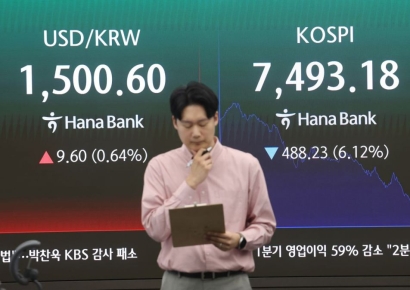 After Topping 8,000 Instead of Hitting 10,000... KOSPI Plunges—When Will It Rebound?
- "Samsung and Hynix Were Once for the Underachievers"... Hyundai Motor Employee's Lament
- "What? It Wasn't a Wristwatch?" This Brand's Stock Soared 15%, Then Plunged After Official Announcement
- [Breaking] Court Rules Against Samsung Electronics Union...1 Billion Won per Day Penalty for Exceeding Strike Scope
- "That? It's Already Stashed" Nightlife Scene Crosses the Line [ChwiYak Nation] ③
Real estate agencies on the front lines are also responding with bewilderment. A representative from A Real Estate Office in Bundang pointed out, "Under the revised Housing Lease Protection Act, landlords have no way to counter tenants," adding, "Landlords with some financial capacity will likely evict tenants and preemptively raise rents when re-leasing."
© The Asia Business Daily(www.asiae.co.kr). All rights reserved.