Gwangju City Declares Major Shift to 'Energy Self-Sufficient City by 2045'
On the 21st, 'Gwangju-type AI-Green New Deal Vision Report Meeting' Held at DJ Center
Mayor Lee Yong-seop: "Leap to a Global Leading City in the Post-Corona Era"

On the afternoon of the 21st, Lee Yong-seop, Mayor of Gwangju Metropolitan City, announced the digital, green, and human New Deal policies at the 'Gwangju-type AI-Green New Deal' vision briefing held at the multipurpose hall of the Kim Dae-jung Convention Center in Seo-gu. Photo by Gwangju Metropolitan City
View original image[Asia Economy Honam Reporting Headquarters Reporter Park Seon-gang] Gwangju Metropolitan City declared a major transformation into the country's first "2045 Energy Self-Reliant City" on the 21st, along with the announcement of the vision for the three major Gwangju-type New Deal policies.
Mayor Lee Yong-seop presented the vision of "Gwangju, a global leading city in the post-COVID era" at the Kim Dae-jung Convention Center in the afternoon, proposing the three major Gwangju-type New Deal policies: ▲ AI-based "Digital New Deal," ▲ Carbon-neutral (Net-zero) "Green New Deal," and ▲ Coexistence and safety "Human New Deal."
Along with this, through the vision report of "2045 Energy Self-Reliant City Gwangju," which aims to achieve 100% energy self-sufficiency by 2045, the city announced the three major strategies and nine core tasks of the "Gwangju-type AI-Green New Deal."
Following this, Professor Moon Seung-il of Seoul National University, co-chairman of the Gwangju Energy Policy Committee, announced the Green New Deal promotion plan.
The report meeting was conducted via non-face-to-face online live streaming through SNS due to the implementation of social distancing level 2, and only key related personnel such as Ju Young-jun, Director General of the Ministry of Trade, Industry and Energy, Kim Yong-jip, Chairman of the Gwangju City Council, Jo Young-tak, Chairman of the Korea Power Exchange, and Jung Ji-woon, co-representative of the Gwangju Regional Energy Transition Network attended on-site.
The goal of the Gwangju-type AI-Green New Deal is to realize an energy self-reliant city by 2045. The city plans to achieve "2030 Corporate RE100," which supplies all electricity needed by companies with eco-friendly renewable energy by 2030 as the first phase, and realize "2035 Gwangju RE100," which supplies all electricity used in Gwangju with renewable energy by 2035 as the second phase.
Then, as the third phase, by 2045, Gwangju aims to become a "carbon-neutral energy self-reliant city" that does not receive power energy from outside, establishing itself as a global leading city in AI-based energy transition.
Mayor Lee Yong-seop presented the three major strategies to achieve the goal of the "Gwangju-type AI-Green New Deal": ▲ Green Democracy, ▲ Green Energy, and ▲ Green AI Infrastructure and Green Transportation, and announced the nine core tasks accordingly.
Gwangju expects to invest approximately KRW 24.4716 trillion to realize the energy self-reliant city by 2045.
National funds of KRW 4.0312 trillion, local funds of KRW 2.2602 trillion, and private investments of KRW 18.0802 trillion will be invested. Until 2025, the project foundation will be established mainly through national and city funds, and after 2025, the project will be led through private priority investments. A large-scale green investment fund will be created to actively support private investments.
Along with this, the city plans to induce changes in citizens' awareness and active participation of companies.
Mayor Lee Yong-seop said, "The '2045 Carbon-neutral Energy Self-Reliant City Gwangju' project will bring a major transformation to citizens' lives, including an eco-friendly clean city free from fine dust worries, realizing Gwangju as a city where people and companies come rather than leave, and increasing citizens' jobs and income."
By gradually converting coal-fired power plants, the main cause of fine dust, to green energy and replacing old diesel vehicles with hydrogen electric vehicles, operating a 40MW hydrogen fuel cell for one hour can purify the breathing volume of 910,000 people, and operating a 110kW hydrogen electric vehicle for one hour can purify the breathing volume of 43 people.
Also, when the target installation capacity of 1,645MW solar power and 827MW hydrogen fuel cells is completed by 2045, CO2 emissions can be reduced by up to 89%, and the effect of replacing one nuclear power plant can be expected.

On the afternoon of the 21st, Lee Yong-seop, Mayor of Gwangju Metropolitan City, took a commemorative photo after signing the 'Gwangju-type AI-Green New Deal Implementation Business Agreement' with 12 organizations and groups including the Gwangju City Council, Jeollanam-do, and KEPCO at the 'Gwangju-type AI-Green New Deal' vision briefing held at the multipurpose hall of the Kim Dae-jung Convention Center in Seo-gu. Photo by Gwangju Metropolitan City
View original imageGwangju plans to lead the global trend and realize RE100 Gwangju, aiming for reshoring effects where domestic factories or overseas factories planning to relocate overseas due to lack of renewable energy will return to Gwangju, as well as transforming from an energy-consuming city to a green energy export city.
Citizens can save KRW 20,000 per month and KRW 246,000 per year by installing 1kW solar power and a small-scale 3kW ESS in one household of a house or apartment based on current standards. Also, installing 30kW solar power and 90kW ESS in a building with a contracted power of 90kW can save KRW 633,000 per month and KRW 7,592,000 per year based on current standards.
Gwangju expects economic ripple effects such as KRW 30.0491 trillion in production inducement, KRW 9.8599 trillion in value-added inducement, and 134,815 jobs in employment inducement.
To establish a citizen-led energy decentralization foundation, Gwangju will strengthen the operation of citizen-participatory energy governance.
The city plans to build an organic cooperation system consisting of the "Energy Policy Committee," co-chaired by the mayor and private experts, the "Energy Policy Support Council," a practical promotion group of industry-academia-research-government, the "Energy Citizen Council," which includes 38 civic groups, and the "Energy Citizen Action Group," responsible for energy policy, education, and publicity.
Mayor Lee Yong-seop explained the background of promoting the Gwangju-type AI-Green New Deal policy, saying, "We want to take the green revolution as an opportunity for Gwangju's development and make the global green market our new growth foundation," and added, "We will support government policies aimed at transforming our economic structure into a low-carbon eco-friendly growth model in response to the climate and environmental crisis humanity faces, while enhancing Gwangju's urban competitiveness."
He emphasized, "In the post-COVID era, the core of urban competitiveness is safety and environment."
He said, "The Gwangju-type AI-Green New Deal announced today is a bold strategy to create jobs and revitalize the local economy through a major transformation into a decarbonized clean city that reduces greenhouse gases and eliminates inequality in response to the climate crisis, as well as realizing a safe Gwangju."
He expressed his ambition, saying, "By realizing an energy self-reliant city, we will leap forward as the safest, cleanest, and most livable global green city, and on the other hand, lead the 4th Industrial Revolution through Gwangju as an AI-centered city."
Hot Picks Today
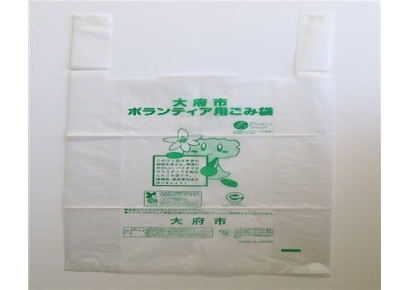 "Only Two Per Person" Garbage Bag Crisis Was Just Yesterday... Japan Also Faces Shortage Anxiety
- "Samsung Electronics Employee with 100 Million Won Salary Receiving 600 Million Won Bonus... Estimated Tax Revealed"
- Lived as Family for Over 30 Years... Daughter-in-Law Cast Aside After Husband's Death
- 'Will Demand Finally Decline Due to High Prices?'... "I'll Just Enjoy Nearby Trips" as Japan and China See a Surge
- "Wore It Once, Then This? White Spots All Over 4.15 Million Won Prada Jacket... 'Full Refund Ordered'"
Gwangju plans to promptly prepare and announce roadmaps supporting the Green New Deal, as well as Digital New Deal and Human New Deal policies in the future.
© The Asia Business Daily(www.asiae.co.kr). All rights reserved.