[Price Target Check] Bank of Korea: "Expansion of Online Transactions Lowers Inflation"
Bank of Korea 'Report on the Status of Inflation Target Management'
![[Price Target Check] Bank of Korea: "Expansion of Online Transactions Lowers Inflation"](http://www.asiae.co.kr/news/img_view.htm?img=2020062514213725990_1593062498.jpg)
[Asia Economy Reporter Kim Eun-byeol] The rapid increase in online transactions amid the novel coronavirus disease (COVID-19) pandemic has been cited as one of the factors lowering inflation. On the other hand, the weakening of the Global Value Chain (GVC) is analyzed to act as an inflationary pressure by increasing production costs.
On the 25th, the Bank of Korea stated in its "Price Stability Target Operation Status Review" report, "An analysis of matchable products showed that online prices are generally lower than offline prices, and price adjustments occur more frequently." This means that product prices sold online are lower, and price reductions through competition are more frequent.
The Bank of Korea added, "The expansion of online transactions may exert downward pressure on prices and increase volatility through the effect of increased online purchases, which have relatively lower prices and more frequent price adjustments. This could also increase the price elasticity of offline prices, making inflation more sensitive to macroeconomic shocks."
This analysis was derived from the Bank of Korea's use of Lotte Members' micro sales data (POS data) to understand the impact of the spread of online transactions on price dynamics. The analysis targeted four product groups?electronics, cosmetics, groceries, and other household goods?where product matching between online and offline channels is possible. It analyzed 1.15 billion transaction records from 2017 to 2019, covering 166,000 products and approximately 6 trillion won in transaction value.
For example, in electronics, the regional price standard deviation was 0.23 without online competition but decreased to 0.18 when competition was present. For cosmetics, the standard deviation was 0.24 without competition and dropped to 0.15 with online competition. Cosmetics showed the most frequent price adjustments through comparisons on online channels. The number of price adjustments for cosmetics was 7 times online compared to 4.3 times offline. Household goods increased from 1.9 to 5.6 times, and electronics from 2.9 to 4.4 times.
![[Price Target Check] Bank of Korea: "Expansion of Online Transactions Lowers Inflation"](http://www.asiae.co.kr/news/img_view.htm?img=2020062514230625997_1593062586.jpg)
Meanwhile, the Bank of Korea analyzed that the weakening of the GVC due to COVID-19 is a factor raising domestic prices. Typically, Korea procures cheap parts (intermediate goods) from overseas to manufacture finished products, so when the GVC weakens, inflationary pressure arises.
An empirical analysis using data from 32 OECD countries showed that a 1 percentage point increase in GVC backward participation lowers industry-specific prices (GDP deflator) by an average of 0.4 percentage points. When the GVC expands, the average annual deflator growth rate across countries decreases by 0.2 percentage points, and Korea, which has a high dependence on the GVC, experienced a relatively large decline of 0.5 percentage points.
Lee Ji-won, head of the Price Research Team at the Bank of Korea's Research Department, explained, "In Korea's case, the GVC backward participation is high. When backward participation increases, it is possible to procure cheap parts through overseas competition and substitute them at any time, acting as a downward factor on prices."
Hot Picks Today
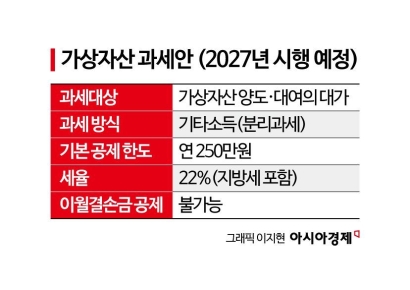 "Stocks Are Not Taxed, but Annual Crypto Gains Over 2.5 Million Won to Be Taxed Next Year... Investors Push Back"
- "Not Jealous of Winning the Lottery"... Entire Village Stunned as 200 Million Won Jackpot of Wild Ginseng Cluster Discovered at Jirisan
- "Even With a 90 Million Won Salary and Bonuses, It Doesn’t Feel Like Much"... A Latecomer Rookie Who Beat 70 to 1 Odds [Scientists Are Disappearing] ③
- "Rather Than Endure a 1.5 Million KRW Stipend, I'd Rather Earn 500 Million in the U.S." Top Talent from SNU and KAIST Are Leaving [Scientists Are Disappearing] ①
- "How Did an Employee Who Loved Samsung End Up Like This?"... Past Video of Samsung Electronics Union Chairman Resurfaces
GVC forward participation refers to producing and exporting intermediate goods such as parts used in other countries' exports. Processing and assembling imported intermediate goods for export is classified as backward participation.
© The Asia Business Daily(www.asiae.co.kr). All rights reserved.







