[The Editors' Verdict] Overseas Stock Investment: Beware of Surging Short-Term External Debt

Overseas stock investment by domestic residents has increased significantly. From January to April this year, more than $15.5 billion (approximately 18.8 trillion KRW) flowed overseas through stock investments. During the same period, foreign (non-resident) investors sold more than $15.4 billion worth of domestic stocks.
According to the balance of payments statistics showing transactions between residents and non-residents over a certain period, resident overseas stock investment surpassed corporate foreign direct investment in 2017. Since 2018, it has accounted for the largest portion of overseas assets acquired by residents. Last year, $42.8 billion (approximately 51.937 trillion KRW), equivalent to 2.6% of the gross domestic product (GDP), was invested in overseas stocks. Contrary to common belief, from 2001 to 2019, domestic residents’ overseas stock investments amounted to $270.2 billion (approximately 327.887 trillion KRW), more than five times the foreign investors’ domestic stock investments ($52 billion).
According to the international investment position showing the status of residents’ external assets and liabilities at a specific point in time, overseas stocks among external assets increased from $1 billion at the end of 2000 to $344.7 billion at the end of 2019. This represents an increase of $343.7 billion over 19 years. The $73.5 billion difference after deducting the investment amount ($270.2 billion) during the same period is valuation gains.
Meanwhile, what about domestic stocks held by foreigners among Korea’s external liabilities? They increased from $40.5 billion at the end of 2000 to $497.5 billion at the end of last year. After deducting the net inflow of $52 billion over 19 years, the valuation gains amount to a staggering $405 billion. In summary, foreigners made substantial profits with relatively small investments, while domestic residents invested actively in overseas stocks but did not earn as much as foreigners.
The United States (over 42%) holds the largest share of domestic listed stocks among foreigners. It sells U.S. Treasury bonds, a global economic safe asset, to buy dollars that have flowed out due to current account deficits, and then invests in risky assets such as overseas stocks to generate profits. In other words, the U.S. exports safe assets (U.S. Treasury bonds) and imports risky assets (overseas stocks). This is why people call the U.S. the "venture capitalist of the world."
However, after the global financial crisis, as the U.S. enjoyed a solo boom, the pattern of capital flows changed. The share of debt securities in U.S. external liabilities (USD 9.5 trillion in 2019) decreased to 31.7% in 2019, while the share of stocks (USD 9.3 trillion) increased to 24.1%. Korea’s trend of activating overseas stock investment can also be understood in this context.
Cross-border capital transactions have caused synchronization of global stock prices. A high correlation (0.89) was observed between domestic residents’ overseas stock investment and foreigners’ domestic stock investment valuation gains. The same applies to the U.S. (0.86), which appears to be a result of this synchronization. Therefore, domestic residents’ overseas stock investment seems to be motivated more by chasing high returns in growth stocks such as Amazon and Apple, rather than by risk diversification as reported in the media.
However, it is necessary to examine the source of funds for overseas stock investments from the perspective of the national economy, since the U.S. dollar is not our currency. Looking at the balance of payments statistics from January to April, overseas stock investment ($15.5 billion) was effectively financed by external debt ($50.2 billion). Leveraged investment is not new. In 2007, domestic residents’ overseas stock investment ($52.6 billion) was also financed by external debt ($113.4 billion). Such hedging of investment funds acted as a technical factor increasing external debt, and the following year, our economy was pushed into a dollar liquidity crisis due to a rise in short-term external debt. When investing in overseas risky assets by borrowing external debt under insufficient internationalization of the Korean won, the national economy could fall into a trap.
Hot Picks Today
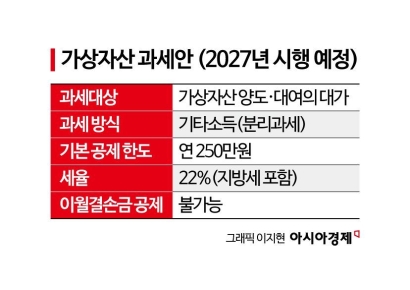 "Stocks Are Not Taxed, but Annual Crypto Gains Over 2.5 Million Won to Be Taxed Next Year... Investors Push Back"
- "Not Jealous of Winning the Lottery"... Entire Village Stunned as 200 Million Won Jackpot of Wild Ginseng Cluster Discovered at Jirisan
- "Rather Than Endure a 1.5 Million KRW Stipend, I'd Rather Earn 500 Million in the U.S." Top Talent from SNU and KAIST Are Leaving [Scientists Are Disappearing] ①
- "How Did an Employee Who Loved Samsung End Up Like This?"... Past Video of Samsung Electronics Union Chairman Resurfaces
- "Even With a 90 Million Won Salary and Bonuses, It Doesn’t Feel Like Much"... A Latecomer Rookie Who Beat 70 to 1 Odds [Scientists Are Disappearing] ③
Kyungsoo Kim, Professor Emeritus, Sungkyunkwan University
© The Asia Business Daily(www.asiae.co.kr). All rights reserved.







