Financial Company CEOs Prohibited from 'Self-Recommending' Executives... Governance Law Passes Cabinet Meeting

[Asia Economy Reporter Kangwook Cho] A measure to prohibit financial company CEOs from 'self-recommending executives' and to raise the eligibility maintenance requirements for major shareholders is being pushed again.
The Financial Services Commission (FSC) announced on the 23rd that the amendment to the Financial Company Governance Act, which was publicly notified last month, has passed the Cabinet meeting. The FSC explained that the amendment was resubmitted after being discarded due to the expiration of the term, having been initially submitted to the 20th National Assembly in September 2018.
The amendment adds violations of the Act on the Aggravated Punishment of Specific Economic Crimes (Special Economic Crimes Act) to the eligibility maintenance requirements for major shareholders. Currently, the law only stipulates violations of financial-related laws, the Tax Offense Punishment Act, and the Fair Trade Act. Additionally, a new provision was established allowing the FSC to order the disposal of shares if a major shareholder fails to comply with the FSC's order to restrict voting rights due to non-fulfillment of eligibility maintenance requirements.
The amendment also includes a prohibition on financial company CEOs 'self-recommending executives.' The current law stipulates that members of the Executive Nomination Committee (ENC), including the CEO, cannot exercise voting rights on resolutions of the ENC. However, the new amendment prohibits the CEO from even 'attending' such resolutions. CEOs are also prohibited from attending the ENC that recommends outside directors and audit committee members. The proportion of outside directors on the ENC will increase from the current 'majority' to 'two-thirds or more.'
In response to criticism that financial company executives' compensation is excessively high compared to performance, executive compensation control will be strengthened. The total compensation or performance-based compensation of executives exceeding a certain amount must be disclosed in the annual compensation system report, including individual total compensation and total performance-based compensation. Specific monetary criteria will be determined later through amendments to enforcement ordinances. For listed financial companies, the executive compensation payment plan must be explained at least once during the term at the shareholders' meeting.
Furthermore, new regulations have been introduced to guarantee the minimum term (2 years) of audit committee members and to ensure the independence of the audit committee's duties. Audit committee members are also restricted from concurrently holding other board duties within the board of directors, except for the compensation committee or ENC, which have strong work relevance.
Hot Picks Today
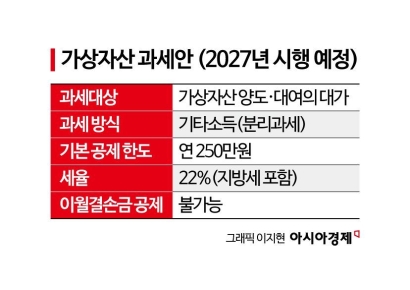 "Stocks Are Not Taxed, but Annual Crypto Gains Over 2.5 Million Won to Be Taxed Next Year... Investors Push Back"
- "Not Jealous of Winning the Lottery"... Entire Village Stunned as 200 Million Won Jackpot of Wild Ginseng Cluster Discovered at Jirisan
- "Even With a 90 Million Won Salary and Bonuses, It Doesn’t Feel Like Much"... A Latecomer Rookie Who Beat 70 to 1 Odds [Scientists Are Disappearing] ③
- "Rather Than Endure a 1.5 Million KRW Stipend, I'd Rather Earn 500 Million in the U.S." Top Talent from SNU and KAIST Are Leaving [Scientists Are Disappearing] ①
- "How Did an Employee Who Loved Samsung End Up Like This?"... Past Video of Samsung Electronics Union Chairman Resurfaces
The FSC plans to submit this amendment to the National Assembly within this month.
© The Asia Business Daily(www.asiae.co.kr). All rights reserved.







