National Museum of Modern and Contemporary Art's 'Strange War'戰... What Does the Korean War Mean to Us Today?
70th Anniversary of the Korean War Outbreak Large-Scale Exhibition Opens Online... Live Stream on YouTube at 4 PM on the 25th
Over 250 Works by 50 Domestic and International Artists Including Kim Whanki and Ai Weiwei Emphasize 'Human Dignity'
[Asia Economy Reporter Byunghee Park] The National Museum of Modern and Contemporary Art (MMCA) will hold an online opening of the exhibition "Strange War," commemorating the 70th anniversary of the outbreak of the Korean War, with a live broadcast on YouTube at 4 p.m. on the 25th.
This exhibition is a large-scale planned exhibition prepared to overcome the damage and wounds caused by the Korean War and to present a vision of healing and peace through art amid global disasters such as the war and the novel coronavirus disease (COVID-19).
As time passes, the Korean War is becoming a "strange war" due to the growing generational gap in perceptions of war, division, and unification. Even now, large and small wars occur around the world, but it is difficult to truly feel them as they are only indirectly conveyed through the media. The "Strange War" exhibition deals with the stories of people living in the midst of war, behind the macro perspectives explaining war such as inter-state conflicts and ideological clashes. It highlights the tragedies and wounds left by war on individuals and speaks about the responsibilities and roles for solidarity as global citizens. Through this, it seeks the direction that communities and nations should take toward the restoration of humanity and a world without war.

Kim Whanki, "Panjajip" (Shanty House), 1951, oil on canvas, 72.5×90.3 cm, private collection (Courtesy of Busan Museum of Art)
Photo by National Museum of Modern and Contemporary Art
The exhibition is divided into four parts: "Memories of a Strange War," "Living with War," "To Live Humanely," and "What Will We Do?" It features works created during the Korean War in the 1950s on the evacuation route to contemporary works dealing with Syrian refugees, encompassing drawings, paintings, videos, new media, and performances on the theme of war across time and space. It presents over 250 works by more than 50 domestic and international artists who listen to the memories and stories of individuals who survived the war and focus on the dignity of humans damaged by war and disasters.
The first part, "Memories of a Strange War," summons the Korean War from the memories of the war generation. Works by war artists such as Kim Whanki and Woo Shin-chul, war-period drawings by Kim Seong-hwan and Yoon Joong-sik, and works by Kim Woo-jo, Yang Dal-seok, and Lim Ho are revealed. Also introduced are photographs by journalist John Rich and AP photographer Max Desfor, capturing the Korean War and the Korean people from the perspective of outsiders. Digital images of works by Australian Korean War veterans Ivor Hele and Frank Norton, and Canadian Edward Juber, depicting wartime situations, are also displayed. Related materials showing the realities of civilians such as prisoners of war and orphans during the Korean War, held by the U.S. National Archives, are made public.
The second part, "Living with War," presents works focusing on social issues caused by the division of North and South Korea. It introduces Lee Dong-pyo’s experience of living as an art student, soldier, prisoner of war, and displaced person against his will; No Sun-taek’s "Good, Murder (2008)," which paradoxically depicts a global arms fair as a family outing spot; Han Seok-kyung’s "Sian, Language of the Times (2019)," observing the life trajectory of a grandfather who longs for his hometown in North Korea all his life; and Kim Se-jin’s new work "Green Flash," exploring the violence of war in a virtualized space like a computer game.

Kim Seonghwan, "6.25 Sketch June 27, 1950, Near Donam Bridge," 1950, pencil and color on paper, 19.3×25cm, Collection of the National Museum of Modern and Contemporary Art.
Photo by the National Museum of Modern and Contemporary Art
The third part, "To Live Humanely," examines what we have lost and the values damaged by war. Contemporary artists such as Ai Weiwei, who has revealed the situation of refugees through various media during his detention by the Chinese government in 2011; Erkan ?zgen, who deals with the pain and life of women in conflict zones; and Robert Knos and Antoinette de Jong, who expose hidden transactions behind war, explore the meaning of "living humanely" in war through their artistic activities and social practices.
The fourth part, "What Will We Do?" introduces activities seeking peace practices with the new generation. Ahn Eun-mi presents her new work "Tatata (2020)," starting from her previous work "Three Three Rang (2017)" conducted with families of soldiers who died under suspicious circumstances. The group "Documents Inc.," composed of designers and artists, recreates the "Safety Guarantee Certificate" among the "pira" leaflets distributed during the Korean War in a 2020 version. Peace Momo, an organization aiming for post-division peace education, operates a reading space with workshops and books related to the Korean War and peace visions from various perspectives.
In July, the National Museum of Modern and Contemporary Art will hold a screening program of various contemporary films dealing with war titled "Strange War: For the Unrestored" at MMCA Film & Video. It will screen 20 works by 21 domestic and international artists, including Chris Marker’s "The Sentinel (1962)" and Diane Borshay Liem’s "Memory of Forgotten War (2013)."

Ai Weiwei 'Refugees and the New Odyssey', 2016, wall-mounted adhesive sheet, variable size, collection of Ai Weiwei Studio.
Photo by National Museum of Modern and Contemporary Art
The exhibition catalog includes contributions from more than 10 researchers from diverse fields such as history, literature, art history, war history, and feminism, proposing new discourses on the role of art amid war and disasters. Contributors include Myunglim Park (Director of Yonsei University Kim Dae-jung Library), Gap-saeng Jeon (Researcher at Seoul National University Institute for Social Development), Jong-cheol Choi (Professor at Miyazaki International College, Japan), Alexandra Torrance (Curator at Australian War Memorial), Eun-jung Cho (Art historian), Tae-man Choi (Professor at Kookmin University), and Dong-jin Seo (Professor at Kaywon University of Art and Design).
The "Strange War" exhibition will open with a vivid explanation by curator Sujeong Lee and a live YouTube broadcast for about 40 minutes at 4 p.m. on the 25th.
Hot Picks Today
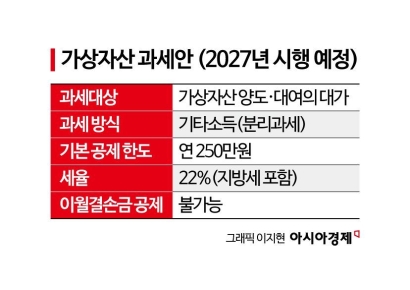 "Stocks Are Not Taxed, but Annual Crypto Gains Over 2.5 Million Won to Be Taxed Next Year... Investors Push Back"
- "Not Jealous of Winning the Lottery"... Entire Village Stunned as 200 Million Won Jackpot of Wild Ginseng Cluster Discovered at Jirisan
- "Even With a 90 Million Won Salary and Bonuses, It Doesn’t Feel Like Much"... A Latecomer Rookie Who Beat 70 to 1 Odds [Scientists Are Disappearing] ③
- "Rather Than Endure a 1.5 Million KRW Stipend, I'd Rather Earn 500 Million in the U.S." Top Talent from SNU and KAIST Are Leaving [Scientists Are Disappearing] ①
- "How Did an Employee Who Loved Samsung End Up Like This?"... Past Video of Samsung Electronics Union Chairman Resurfaces
Yun Beom-mo, Director of the National Museum of Modern and Contemporary Art, said, "The 'Strange War' exhibition, planned on the occasion of the 70th anniversary of the outbreak of the Korean War in the only divided country in the world, South Korea, is an exhibition delivering a message of humanity and peace." He added, "I hope it will be an opportunity to explore new roles of art amid the global disasters we are experiencing and to inspire hope among domestic and international visitors."

Erkan ?zgen 'Adult Play', 2004, single-channel video, color, sound, 3 minutes 56 seconds.
Photo by National Museum of Modern and Contemporary Art
© The Asia Business Daily(www.asiae.co.kr). All rights reserved.







