Elderly Households Reduced Consumption Despite Income Increase Amid COVID Shock

On the 19th, a confirmed case of COVID-19 was reported among visitors to the main cafeteria of the Government Seoul Office Building in Jongno-gu, Seoul, leading to the suspension of the cafeteria's operation. A notice prohibiting entry related to COVID-19 is posted on the stairs leading to the cafeteria. Photo by Moon Honam munonam@
View original image[Asia Economy Reporter Oh Hyung-gil] Due to the COVID-19 pandemic, disposable income increased in the first quarter of this year, but consumption decreased. This is the largest gap in 37 years since 1983.
According to the Insurance Research Institute's report "Characteristics of Household Types with Recent Consumption Decline" on the 21st, the average monthly disposable income of households in the first quarter increased by 5.11% compared to the same period last year, but consumption decreased by 5.98%. The difference in growth rates between the two indicators is 11.09 percentage points.
The gap between income and consumption was relatively large in elderly households and single-earner households.
Looking at the gap in growth rates by age group, it increased with age: under 39 (5.96 percentage points), 40s (8.51 percentage points), 50s (10.65 percentage points), and 60 and over (21.14 percentage points). Also, the gap for single-earner households (16.83 percentage points) was about three times that of dual-earner households (5.15 percentage points).
Lee Tae-yeol, Senior Research Fellow at the Insurance Research Institute, explained, "Household heads aged 60 or older or single-earner households may have relatively weaker income stability compared to other households," adding, "They may view future economic conditions more negatively than other households."
Hot Picks Today
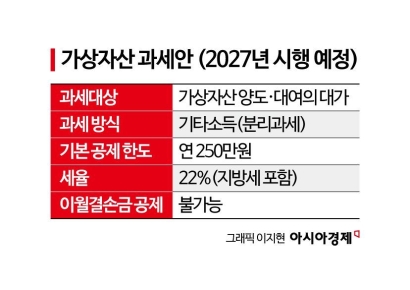 "Stocks Are Not Taxed, but Annual Crypto Gains Over 2.5 Million Won to Be Taxed Next Year... Investors Push Back"
- "Not Jealous of Winning the Lottery"... Entire Village Stunned as 200 Million Won Jackpot of Wild Ginseng Cluster Discovered at Jirisan
- "Rather Than Endure a 1.5 Million KRW Stipend, I'd Rather Earn 500 Million in the U.S." Top Talent from SNU and KAIST Are Leaving [Scientists Are Disappearing] ①
- "How Did an Employee Who Loved Samsung End Up Like This?"... Past Video of Samsung Electronics Union Chairman Resurfaces
- "Even With a 90 Million Won Salary and Bonuses, It Doesn’t Feel Like Much"... A Latecomer Rookie Who Beat 70 to 1 Odds [Scientists Are Disappearing] ③
He further stated, "To revitalize the overall household economy and restore domestic demand, it is necessary to understand the economic situation of various household groups," and "Especially in Korea, where increases in various taxes and quasi-taxes must be considered simultaneously, a micro-level approach is needed to understand how different policies affect different types of households."
© The Asia Business Daily(www.asiae.co.kr). All rights reserved.







