[Reporter’s Notebook] Son Jung-woo’s Extradition Review That Should Be Asked Again
![[Reporter’s Notebook] Son Jung-woo’s Extradition Review That Should Be Asked Again](http://www.asiae.co.kr/news/img_view.htm?img=2020061615020697852_1592287325.jpg)
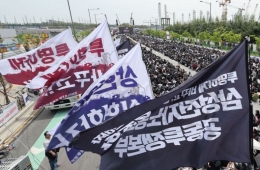
[Asia Economy Reporter Seongpil Cho] During the socialist revolution period, there were people's trials. Although called trials, they were purges in form only. The law was not applied. There were no systems or promises. The conclusion made by the crowd was taken as the standard for judgment. It was harm inflicted by the collective and an outrage reigning over the rule of law. A similar sign appears in our society in June 2020, with a century of time difference. It is the extradition review of Son Jeong-woo (24).
Son is the operator of the world's largest child sexual exploitation site, "Welcome to Video." From July 2015 to March 2018, he provided child pornography to about 4,000 paid members in exchange for cryptocurrency worth hundreds of millions of won. He was sentenced to 1 year and 6 months in prison by our court, and completed his sentence in April this year. However, the United States requested compulsory extradition, and the review has been underway since last month.
The U.S. side says they will punish the charge of concealing criminal proceeds and money laundering, which our judiciary did not address. The indictment states that he disguised the crime funds as gambling proceeds using an account under his father's name. If found guilty in the U.S., it is a crime punishable by up to 20 years in prison.
The public has already reached a conclusion before the review, regardless of the severity of the crime. They say he should be sent to the U.S. The charges do not matter. There is a strong voice that 1 year and 6 months in prison is too little for committing a sex crime. It sounds like the logic of "he was punished less, so he should be punished more." This goes against the constitutional principle of prohibition of double jeopardy. Of course, it falls under "freedom of expression." It is also a public opinion stemming from our lenient laws. Even for money laundering alone, the sentence in Korea is only up to 5 years in prison.
The court's decision will be announced on the 6th of next month. It may differ from the conclusion set by the public. The Extradition Act specifies three reasons for refusal of extradition. Among them is a discretionary reason. It states that extradition is not permitted if the criminal is a Korean national or if the extradition crime was committed within Korean territory. Son's lawyer is arguing for refusal of extradition based on this discretionary reason. Similar voices are coming from within the prosecution. A prosecution official said, "It is right to punish nationals who committed crimes in our country domestically."
Hot Picks Today
 "Samsung and Hynix Were Once for the Underachievers"... Hyundai Motor Employee's Lament
- "Plunged During the War, Now Surging Again"... The Real Reason Behind the 6% One-Day Silver Market Rally [Weekend Money]
- After Losing Her Only Daughter, a Mother in China Gave Birth to Twins at 60... Reinventing Life at 76
- KOSPI Drops Over 3% Intraday, Falls Below 7,300 Mark
- "That? It's Already Stashed" Nightlife Scene Crosses the Line [ChwiYak Nation] ③
This article is not written to invoke nationalism. There is no intention to defend Son either. I am only concerned about the current trend that seems to allow only one conclusion. The public asks, "Answer whether Son Jeong-woo received appropriate punishment as a sex offender." Naturally, the answer is "No." Then they order, "Send him to the U.S. unconditionally." How is this different from a people's trial? I want the question to be asked again: "Is it right for a national who laundered money domestically to be punished in the U.S.?" Opinions are expected to be divided. This review is a procedure to seek an answer to this question.
© The Asia Business Daily(www.asiae.co.kr). All rights reserved.