Starting a Franchise in Seoul Costs an Average of 132 Million Won
Average Franchise Fee 11.38 Million KRW ... Interior and Equipment Costs Account for Most at 112.86 Million KRW

At the '46th Franchise Startup Expo' held at COEX in Gangnam-gu, Seoul, in January 2018, prospective entrepreneurs are receiving startup consultations.
Photo by Hyunmin Kim kimhyun81@asiae.co.kr
[Asia Economy Reporter Jo In-kyung] The average startup cost for franchise brands registered in Seoul was found to be around 132 million KRW. Most of the expenses were spent on interior design and equipment setup.
According to the "2019 Seoul Franchise Analysis Results" announced by the Seoul Metropolitan Government on the 18th, utilizing the status of franchise business disclosure registration, the average startup cost for franchise stores was surveyed at 132.42 million KRW.
The startup costs for franchise stores have gradually decreased each year: 164 million KRW in 2016, 158.34 million KRW in 2017, and 145.2 million KRW in 2018. This appears to be the result of improvements in the past practice where franchisors forced specific interior installations or added unnecessary items, placing a burden on entrepreneurs (store owners). Additionally, due to the economic downturn and intensified competition among franchises, there are more brands that allow startups with relatively lower costs.
Among the average startup costs, the franchise fee (joining fee) was 11.38 million KRW, the deposit was 4.8 million KRW, and the training fee was 3.38 million KRW. The largest portion was other costs such as interior and equipment expenses, amounting to 112.86 million KRW.
By industry, the startup cost was highest in the service sector (education, beauty, lodging, pharmacy, etc.) at 194.61 million KRW, followed by wholesale and retail (convenience stores, cosmetics, etc.) at 166.64 million KRW, and food service (Korean food, franchises, etc.) at 103.97 million KRW.
Regarding the differential franchise fee, known as the "logistics margin," 30.5% (752 brands) out of 2,467 brands responded that it exists. The differential franchise fee is the price difference between what the franchisor purchases and the price supplied to the franchisee. Seoul City plans to conduct a field survey on this item in the second half of this year, considering that there may be differences from reality due to perception gaps between franchisors and franchisees.
Meanwhile, as of 2019, among the franchisors registered in Seoul, The Born Korea operated the most brands with 22, and also had the highest number of franchise stores at 1,341. The second most brands were operated by E-Land Eats (12) and Playtime Group (12), and in terms of the number of franchise stores, Hulala (480) and E-Land Eats (210) followed.
There are 1,900 franchisors and 2,467 brands registered in Seoul, accounting for 36.7% and 38.8% of the nationwide registered numbers, respectively.
Hot Picks Today
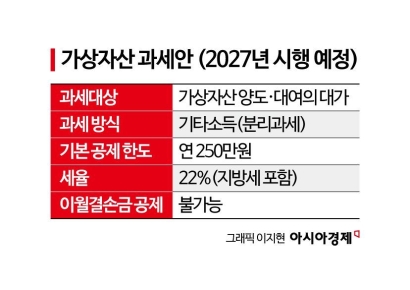 "Stocks Are Not Taxed, but Annual Crypto Gains Over 2.5 Million Won to Be Taxed Next Year... Investors Push Back"
- "Not Jealous of Winning the Lottery"... Entire Village Stunned as 200 Million Won Jackpot of Wild Ginseng Cluster Discovered at Jirisan
- "Even With a 90 Million Won Salary and Bonuses, It Doesn’t Feel Like Much"... A Latecomer Rookie Who Beat 70 to 1 Odds [Scientists Are Disappearing] ③
- "Rather Than Endure a 1.5 Million KRW Stipend, I'd Rather Earn 500 Million in the U.S." Top Talent from SNU and KAIST Are Leaving [Scientists Are Disappearing] ①
- "How Did an Employee Who Loved Samsung End Up Like This?"... Past Video of Samsung Electronics Union Chairman Resurfaces
The survival rates of these franchise brands were 93.4% in the first year, 82.0% in the second year, and 79.4% in the third year. This means that more than 20% of brands disappear within three years. Seoul City plans to regularly provide such objective information related to franchise startups every year to offer practical help to prospective franchise entrepreneurs.
© The Asia Business Daily(www.asiae.co.kr). All rights reserved.







