The First Schedule of the Chairman of the Korean Institute of Certified Public Accountants is a 'Company Visit'
President Kim Young-sik elected on the 17th
First Han Gonghoe president to visit Sangjanghyeop
[Asia Economy Reporter Minji Lee] Kim Young-sik, the newly appointed president of the Korean Institute of Certified Public Accountants (KICPA), will make his first move after taking office on the 18th by directly visiting clients (companies). This is the first time a KICPA president has officially visited corporate-related organizations. The purpose is to listen to companies' concerns and jointly consider solutions following the introduction of the new External Audit Act (New External Audit Act). Throughout the election period, he emphasized, "If elected, I will visit clients first to actively promote the value and necessity of KICPA."
![[Image source=Yonhap News]](http://www.asiae.co.kr/news/img_view.htm?img=2020061811243212298_1592447072.jpg)
On the afternoon of the same day, President Kim's first schedule after inauguration is to visit the Korea Listed Companies Association and the Federation of Medium-Sized Enterprises consecutively. Considering that KICPA has not officially met with companies for the past 60 years, Kim's approach is unprecedented. His visit to clients, among his emphasized coexistence with clients, members, and authorities, is interpreted as a recognition that regaining trust from client companies is crucial at a time when accounting reform has become important. Currently, companies are voicing complaints that accounting-related costs have increased excessively relative to quality since the introduction of the New External Audit Act, including standard audit hours, internal accounting management system audits, and periodic auditor designation systems. An industry insider said, "It is expected that companies will respond positively as the dialogue was initiated by listening to the complaints of companies that have grown since the introduction of the New External Audit Act."
President Kim plans to present a concrete blueprint for coexistence among members going forward. He aims to expand the accounting industry's pie and correct the imbalance between large and small-to-medium firms to support small and medium accounting firms, whose workload and manpower have significantly decreased since the introduction of the New External Audit Act. He said, "Until now, the accounting industry has not thought about expanding the pie but only fought over the existing pie," adding, "Regarding the imbalance, I will secure concessions from the Big 4 (Samil, Anjin, Samjong, Hanyoung), which have large shares, to establish an ecosystem that extends from small and medium firms to individuals." For example, he is considering specializing accounting audits for non-profit corporations, apartments, and collective housing to small and medium firms to create new markets.
He also plans to actively present KICPA's opinions to financial authorities. In particular, to reduce the number of certified public accountants?a topic that drew attention during the election period?President Kim intends to persuade financial authorities. Although difficulties are expected due to the current government's policy of promoting job creation, he believes that reducing the quota is essential given the current mismatch between supply and demand. Kim explained, "Every year, the Big 4 have absorbed about 1,000 accountants, but this year's recruitment is estimated to be around 750," adding, "There are also increasing cases of people returning to the accounting industry from general companies, so the current supply and demand forecasts should be considered inaccurate."
Hot Picks Today
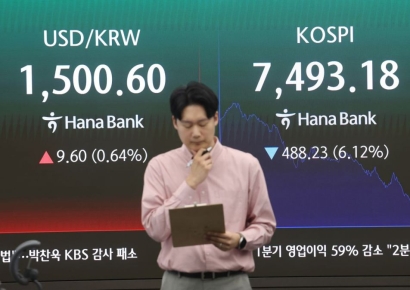 After Topping 8,000 Instead of Hitting 10,000... KOSPI Plunges—When Will It Rebound?
- "Samsung and Hynix Were Once for the Underachievers"... Hyundai Motor Employee's Lament
- [Breaking] Court Rules Against Samsung Electronics Union...1 Billion Won per Day Penalty for Exceeding Strike Scope
- 'Real Strike' Looms as Samsung Union Grows More Hardline... How the 2024 Strike Process Compares
- "That? It's Already Stashed" Nightlife Scene Crosses the Line [ChwiYak Nation] ③
Within the accounting industry, Kim's election is regarded as "the right person has been chosen." Although the introduction of electronic voting for the first time due to the COVID-19 pandemic made the outcome unpredictable, the accounting industry selected Kim as the suitable candidate to ensure a smooth landing of reforms and growth. During his tenure as CEO of Samil Accounting Corporation, he improved the work environment for women and junior accountants, reducing the turnover rate from 30% to 10%, which is analyzed to have stimulated young voters' support. In the KICPA presidential election held the previous day, Kim was elected by receiving 4,638 votes (40%) out of 11,624 valid votes, defeating four other candidates.
© The Asia Business Daily(www.asiae.co.kr). All rights reserved.







