FKI Forecasts Weak Performance in Key Industries Such as Refining, Steel, and Semiconductors in the Second Half of the Year
[Asia Economy Reporter Changhwan Lee] It is forecasted that most of Korea's key manufacturing industries, including electronics, automobiles, semiconductors, steel, shipbuilding, and petroleum refining, will continue to show sluggish performance in the second half of the year.
The Federation of Korean Industries (FKI) held the '2020 Second Half Industry Outlook Seminar' on the 10th at the FKI Conference Center in Yeouido, Seoul. At the seminar, industry experts including Kim Hyun, Head of Corporate Analysis Team at Meritz Securities, presented outlooks for six key manufacturing sectors such as shipbuilding, steel, and semiconductors, as well as construction and aviation industries.
The experts participating as speakers at the seminar projected that Korea's key manufacturing industries in the second half of 2020 will face a coexistence of concerns and expectations, with high uncertainty due to the novel coronavirus disease (COVID-19). The sector outlook was summarized as '3 Weak (steel, semiconductors, petroleum refining) and 3 Strong (shipbuilding, electronics, automobiles)'.
Looking at each sector, the steel industry, which experienced a demand cliff due to the COVID-19 crisis, saw China's steel inventory reach an all-time high, and it is expected that high levels of steel inventory will be maintained throughout the year.
This will act as downward pressure on steel prices, leading to expected profitability deterioration. Although there will be a trend of inventory reduction due to deferred demand after COVID-19, the inventory level, which is about 50% higher than last year, is expected to have limitations in returning to normal levels.
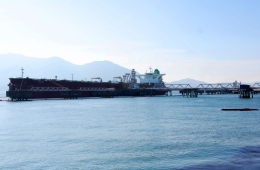
In petroleum refining, the sharp drop in oil prices and lockdowns in the first half caused a significant reduction in operations of airplanes, vehicles, and ships, which account for 70-80% of petroleum product demand, worsening margins. Considering the COVID-19 spread in the second half, it is expected to take considerable time for petroleum product demand to recover, and refining margins are anticipated to remain weak in the second half.
For semiconductors, an increase in DRAM demand was initially expected in the second half due to new mobile product launches, but the slowdown in server sales, delayed smartphone demand recovery, and increased supply are expected to sustain oversupply.
NAND flash is also expected to face oversupply and price declines in the second half due to weak demand for smartphones, TVs, and consumer products, limiting performance improvement. However, companies are expected to sharply reduce new equipment investments in the second half, and inventory burdens within the industry are likely to ease after the first quarter of next year, suggesting the downturn phase will be short-lived.
Shipbuilding and machinery sectors have seen rising expectations for recovery following the recent news of a dock contract for Qatar LNG carriers. However, with freight rates plunging after global lockdowns and the persistent risk of COVID-19 resurgence, these remain variables for shipbuilding recovery.
Given the shipbuilding industry's characteristic of lagging behind global economic recovery and cargo volume, it is expected to take time for the industry to return to pre-COVID-19 levels. The machinery sector also has hopes for market recovery through China's infrastructure investments, but the spread of lockdowns in emerging countries such as India is expected to pose risks.
Electronics and electrical sectors are expected to see some performance recovery in the second half due to rapid domestic market recovery after COVID-19, increased domestic battery demand driven by high growth in European electric vehicles, favorable exchange rates, deferred demand in the second half, and a base effect from second-quarter results. However, supply chain disruptions due to worsening US-China relations and prolonged demand stagnation if COVID-19 resurges remain significant concerns.
The automobile and auto parts sectors experienced their worst performance in the first half, with export results declining by 54.1% as of May due to global production facility shutdowns and demand cliffs in major markets.
Since May, major production bases have begun resuming operations, raising expectations for performance recovery in the second half due to pent-up demand. However, ongoing COVID-19 spread in emerging countries such as Mexico and India, and the possibility of a second pandemic wave, pose risks of renewed production halts and delayed demand recovery.
The construction industry is expected to continue sluggish conditions due to the global construction market contraction caused by COVID-19 and low oil prices, domestic economic slowdown, and strengthened real estate regulations.
The aviation industry, severely hit by COVID-19 in the first half, is unlikely to recover easily despite countries beginning to ease lockdown measures. Domestic competition is expected to intensify, and structural adjustments in the international passenger aviation market will accelerate. Unless a treatment is developed, it is forecasted that it will take at least 3 to 4 years to recover to 2019 demand levels.
Hot Picks Today
 "Stocks Are Not Taxed, but Annual Crypto Gains Over 2.5 Million Won to Be Taxed Next Year... Investors Push Back"
- "Don't Throw Away Coffee Grounds" Transformed into 'High-Grade Fuel' in Just 90 Seconds [Reading Science]
- Despite Warnings of "Do Not Enter, You May Not Make It Out Alive"... Foreign Tourist Stranded After Unauthorized Climb on Jeju Sanbangsan
- Signed Without Viewing for 1.6 Billion Won... Jamsil and Seongbuk Jeonse Prices Jump 200 Million Won in a Month [Real Estate AtoZ]
- "Even With a 90 Million Won Salary and Bonuses, It Doesn’t Feel Like Much"... A Latecomer Rookie Who Beat 70 to 1 Odds [Scientists Are Disappearing] ③
Yoo Hwan-ik, Director of Corporate Policy at FKI, emphasized, "Although there is hope for economic recovery with the sequential lifting of lockdowns in China and advanced countries, COVID-19 is still ongoing, and the possibility of a second pandemic wave in the fall remains. Given additional issues such as the US-China trade conflict and Japan's export restrictions, continuous monitoring of all industries is necessary."
© The Asia Business Daily(www.asiae.co.kr). All rights reserved.