[Report] "Even if it's hot, we have to work to make a living" Outdoor workers sigh amid heatwave
Recent daytime highs reach up to 35 degrees... 'Scorching heat' continues
Outdoor workers "Dizzy from working under the blazing sun"
Ministry of Employment promotes measures to protect workers' health
Experts "Consistent criticism of effectiveness... continuous management and supervision needed"

Around 1:30 PM on the 8th, delivery driver A was met in the Dongdaemun-gu area of Seoul. He is moving delivery boxes to his vehicle.
Photo by Joohee Kang, Intern Reporter kjh818@asiae.co.kr
[Asia Economy Reporter Kim Ga-yeon, Intern Reporter Kang Joo-hee] "What can we do about a job like this? We just endure it even if it's hot."
As the recent daytime high temperatures have exceeded 30 degrees Celsius and the hot weather continues, outdoor workers are voicing their hardships caused by summer disasters such as heatwaves. Experts emphasize that the government must prepare measures to protect workers' health and continuously supplement, manage, and supervise these measures afterward.
At around 2 p.m. on the 8th, workers met in the Jung-gu and Dongdaemun-gu areas of Seoul unanimously said that despite the sudden heat, they are not guaranteed separate rest times.
Park (67), who was distributing flyers on a street in Euljiro, Jung-gu, said, "I've been handing out flyers for 5 to 6 years. I work about 4 hours during the daytime, but on days like these, just standing for 10 minutes makes me sweat profusely."
Park added, "These days, because of COVID-19, I have to wear gloves and a mask while working. It was bearable before the weather got this hot, but now I feel suffocated and even dizzy," he complained.
A delivery driver, Han (55), who was moving delivery boxes, also said, "I work 14 to 16 hours a day delivering packages. The working hours don’t decrease just because it’s hot, nor does the volume of deliveries, and no separate rest time is given, so physically it’s very tough on hot days like this."
Despite the hot summer weather, workers who were not guaranteed rest and suffered industrial accidents such as heatstroke exceeded 20 people last year, according to investigations.

On the afternoon of the 8th, a street vendor located in Dongdaemun-gu, Seoul / Photo by Joohee Kang, Intern Reporter kjh818@asiae.co.kr
View original imageAccording to the Ministry of Employment and Labor (MOEL) on the 3rd, there were 22 victims of heat-related occupational diseases last year, among whom 3 died from heat-related illnesses. Although the number of heat-related occupational disease victims sharply decreased compared to 65 in the previous year, the damage continues, highlighting the need for countermeasures.
MOEL announced on the same day that it would distribute measures to workplaces to prevent heatstroke and protect the health of outdoor workers during summer, but criticism arises that these measures lack effectiveness. This is because MOEL cannot conduct a full survey of outdoor workplaces, and it is difficult to manage and supervise delivery workers and couriers whose work sites change.
In particular, it is pointed out that self-employed outdoor vendors are in a blind spot regarding such measures.
A person in their 60s, A, who operates a street stall near Dongdaemun Station on Subway Line 4, said, "These days, because of the novel coronavirus infection (COVID-19), there are no customers, the weather is getting hotter, and naturally, it’s very hard," adding, "We are like this even in midsummer. It’s hot, but what can I do? This is the job."
He continued, "When there are no customers, I take off my mask, but when customers come, I put it back on. It feels suffocating and frustrating," and added, "People who own stores can turn on air conditioners and fans, but people like me just sit here fanning myself. Since I run the business alone, I can’t take separate breaks or anything."

A street in Dongdaemun-gu, Seoul, on the afternoon of the 8th / Photo by Kay Kim katekim221@asiae.co.kr
View original imageExperts see the need for continuous management and inspection regarding the effectiveness of the 'Heatwave Preparedness Worker Health Protection Measures.'
Jung Woo-jun, an activist with the Labor Health Solidarity, said, "The government has issued heatwave countermeasure guidelines, but their effectiveness has been a continuously pointed-out issue," adding, "It is necessary to continuously review whether the measures issued by the government during heatwave warnings are being followed at the work sites. Also, the Ministry of Employment and Labor’s staffing situation must support sufficient inspection."
He continued, "This year, a greater heatwave is expected compared to last year, and there is also the variable of masks. Moreover, even when heatwave warnings are not issued, some workers may have to work in high-temperature environments depending on the nature of their work," emphasizing, "Measures for such exceptional situations should also be broadly considered."
Meanwhile, MOEL plans to strengthen guidance and supervision of outdoor workplaces to protect the health of outdoor workers exposed to summer heatwaves.
MOEL announced on the 3rd that it will implement worker health protection measures from the 4th of this month through September 11, including producing and distributing the 'Three Basic Rules for Heatstroke Prevention Compliance Guidelines' at work sites.
Hot Picks Today
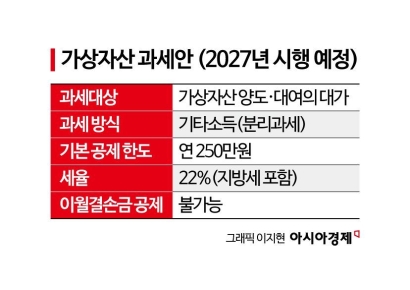 "Stocks Are Not Taxed, but Annual Crypto Gains Over 2.5 Million Won to Be Taxed Next Year... Investors Push Back"
- "Not Jealous of Winning the Lottery"... Entire Village Stunned as 200 Million Won Jackpot of Wild Ginseng Cluster Discovered at Jirisan
- "Even With a 90 Million Won Salary and Bonuses, It Doesn’t Feel Like Much"... A Latecomer Rookie Who Beat 70 to 1 Odds [Scientists Are Disappearing] ③
- "Rather Than Endure a 1.5 Million KRW Stipend, I'd Rather Earn 500 Million in the U.S." Top Talent from SNU and KAIST Are Leaving [Scientists Are Disappearing] ①
- "How Did an Employee Who Loved Samsung End Up Like This?"... Past Video of Samsung Electronics Union Chairman Resurfaces
According to the guidelines, employers must provide workers with sufficient water, shade, and rest. Additionally, when a heatwave warning is issued, employers must provide rest by scheduling regular breaks of 10 to 15 minutes per hour, adjusting working hours, and minimizing outdoor work during the hottest times. If a worker requests to stop work for health reasons, the employer must accept and immediately take action.
© The Asia Business Daily(www.asiae.co.kr). All rights reserved.







