Enhancing the Management System for Yujon Area
Cultural Heritage Administration Announces 'Measures to Enhance the Effectiveness of Buried Cultural Heritage Preservation and Management'
The Cultural Heritage Administration is enhancing the public nature of buried cultural heritage preservation and management to strengthen the foundation for cultural heritage protection. On the 8th, it announced the “Measures to Improve the Effectiveness of Buried Cultural Heritage Preservation and Management,” which includes three major tasks and detailed plans.
Buried cultural heritage has high historical and academic value, but once damaged, it is difficult to restore. Therefore, securing public interest in preservation and management is crucial. The Cultural Heritage Administration has been promoting “Strengthening the Public Nature of Buried Cultural Heritage Surveys” as a national agenda, resulting in the provision of Geographic Information System (GIS) data, small-scale excavations and surface surveys, expanded national funding, and land acquisition for preservation sites. However, there have been calls for institutional improvements due to GIS data errors, the financial burden on project implementers for surveys, and the shrinking of university museums. There is also a persistent tendency to perceive buried cultural heritage as an obstacle delaying development projects.
The three major tasks are ▲ Advancing the management system for preserved areas ▲ Strengthening the public function of excavation surveys ▲ Building social consensus. Preserved areas refer to regions recognized as containing buried cultural heritage based on discoveries or surveys. The Cultural Heritage Administration plans to investigate and disclose related information so that citizens intending to use land can anticipate cultural heritage information. An official stated, “The national and local governments will conduct detailed surface surveys to derive accurate preservation measures. A GIS management team will also be newly established,” adding, “We will link with the Ministry of Land, Infrastructure and Transport’s land information system to reduce the public’s perception of regulation.”
The public function of excavation surveys will be strengthened by expanding national support and enhancing management functions for surveys. Until now, survey costs have been entirely borne by project implementers. The Cultural Heritage Administration will expand national funding support to reduce this burden. An official said, “Since March, the government has been supporting surface surveys of buried cultural heritage for private construction projects,” and added, “We will promote national funding support for all sample and trial excavations as well.”
To enhance the public nature of surveys, the Cultural Heritage Administration will develop a manual for survey institutions. Additionally, it will distribute standard contracts for fair survey agreements. The establishment of a dedicated public institution to efficiently conduct regular site inspections and strengthen site management is also being pursued. For the time being, local governments are likely to take on this role. An official stated, “We will assist local governments in securing dedicated personnel and establishing educational programs,” and added, “We will encourage active participation in academic excavations in the relevant areas to ensure that sites are excavated and maintained from a comprehensive and long-term perspective.”
Hot Picks Today
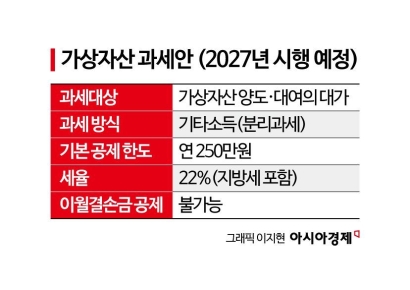 "Stocks Are Not Taxed, but Annual Crypto Gains Over 2.5 Million Won to Be Taxed Next Year... Investors Push Back"
- "Not Jealous of Winning the Lottery"... Entire Village Stunned as 200 Million Won Jackpot of Wild Ginseng Cluster Discovered at Jirisan
- "Rather Than Endure a 1.5 Million KRW Stipend, I'd Rather Earn 500 Million in the U.S." Top Talent from SNU and KAIST Are Leaving [Scientists Are Disappearing] ①
- "How Did an Employee Who Loved Samsung End Up Like This?"... Past Video of Samsung Electronics Union Chairman Resurfaces
- "Even With a 90 Million Won Salary and Bonuses, It Doesn’t Feel Like Much"... A Latecomer Rookie Who Beat 70 to 1 Odds [Scientists Are Disappearing] ③
Building social consensus will be encouraged through the activation of excavation site openings, utilization of educational and cultural spaces, and expansion of various social education programs. An official said, “We will strive to transform the perception of buried cultural heritage from unnecessary regulation to a cultural heritage enjoyed together by creating heritage parks and cultural spaces for non-registered cultural properties.”
© The Asia Business Daily(www.asiae.co.kr). All rights reserved.