Seoul Housing Prices Stop Falling... "Not a Full Rebound" vs "Escaping the Downtrend"
Seoul Housing Prices Stop Declining After Two Months
Urgent Diagnosis by 8 Experts
Tax-saving Driven Rapid Sales in Gangnam Exhausted
Chasing Buying Demand Remains Calm
Loan Regulations Over 1.5 Billion Won Pose Obstacles
Interest Rate Cuts and Increased Liquidity
Somewhat Recovered Sentiment
Investment Funds Moving into Real Estate

[Asia Economy Reporters Inho Yoo, Chunhee Lee] Seoul housing prices have stopped declining after 10 weeks. This trend differs from earlier predictions that the downturn would continue through the second half of the year. There are also forecasts that Seoul's housing market, which had been subdued due to the impact of the novel coronavirus disease (COVID-19) and successive government regulations, might be reviving recently due to liquidity expansion following the base interest rate cut.
◆ Seoul Housing Prices End Decline
According to the Korea Real Estate Board's weekly apartment price trend for the first week of June, Seoul apartment prices stopped declining and shifted to a stable trend as of June 1. Prices had been falling since March 30 and maintained the downward trend until the end of last month. The Korea Real Estate Board analyzed that "the decline has eased mainly in complexes priced over 1.5 billion KRW, where quick-sale properties were exhausted following the base interest rate cut and the passing of the property tax reference date (June 1)," and that mid-to-low priced complexes under 900 million KRW showed an upward trend.
The reduced decline in high-priced complexes in the Gangnam area appears to have influenced the price changes. All four Gangnam districts?Seocho (-0.04%), Gangdong (-0.04%), Gangnam (-0.03%), and Songpa (-0.03%)?showed a slowdown in the rate of decline compared to the previous week.
Outside the Gangnam 4 districts, Gangseo (-0.03%) and Yangcheon (-0.01%) declined mainly in reconstruction complexes, while Guro (0.07%) and Geumcheon (0.03%) rose mainly in mid-to-low priced complexes.
Apartment prices in Gangbuk-gu, where mid-to-low priced complexes are concentrated, also showed an upward trend. Mapo (-0.03%) and Yongsan (-0.02%) rose mainly in complexes priced over 900 million KRW, while Dongdaemun (0.03%) and Nowon (0.01%) increased mainly in mid-to-low priced complexes.

◆ Trend Reversal Not Yet... Concerns Over Further Decline
However, among experts, the prevailing view is that this is not a full-fledged rebound. This is because the quick-sale properties for tax-saving purposes that appeared ahead of the property tax imposition date on the 1st of this month have been exhausted, but overall chasing buying demand has not emerged.
Im Byung-chul, Chief Researcher at Real Estate 114, said, "While signs of recovery are detected mainly in some Gangnam area complexes due to the trading of quick-sale properties for tax-saving purposes, chasing buying demand remains quiet. Economic uncertainty due to COVID-19 persists, and because of ultra-low interest rates, the impact of further cuts is limited, so concerns about decline remain."
Park Won-gap, Senior Real Estate Specialist at KB Kookmin Bank WM Star Advisory Group, predicted, "The real estate market moves reflecting the real economy, so changes are not rapid, making short-term recovery difficult. From the demand side, the loan regulations on properties over 1.5 billion KRW are a significant obstacle, so a sharp rebound is unlikely."
Jang Jae-hyun, Head of Real Today, also forecasted, "Since regulations continue and transactions are difficult to sustain, prices will slightly decline in the second half of the year. The Gangbuk area is also likely to shift to a downward stabilization trend."

◆ Slightly Stable Prices with Balloon Effect
Considering liquidity expansion due to additional base rate cuts and a booming pre-sale market, some analyses suggest that the market is somewhat escaping the bearish phase.
Ham Young-jin, Head of Zigbang Big Data Lab, diagnosed, "Transactions have shrunk, but sentiment is somewhat recovering." He explained that since tax-avoidance sale properties have been exhausted and considering liquidity expansion due to base rate cuts and supplementary budgets, housing prices are unlikely to continue falling. His observation is that prices will fluctuate between slight increases and stability within a box range.
Ahn Myung-sook, Head of the Real Estate Investment Support Center at Woori Bank, predicted, "With the power of liquidity at work, funds are moving toward investable real estate. Prices will rise in certain areas, slightly lifting overall housing prices."
Hot Picks Today
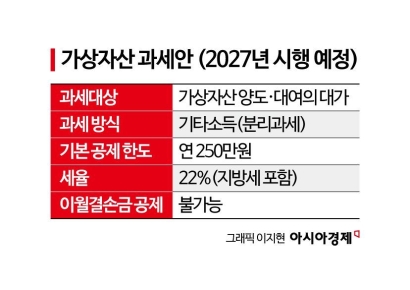 "Stocks Are Not Taxed, but Annual Crypto Gains Over 2.5 Million Won to Be Taxed Next Year... Investors Push Back"
- "Not Jealous of Winning the Lottery"... Entire Village Stunned as 200 Million Won Jackpot of Wild Ginseng Cluster Discovered at Jirisan
- "Rather Than Endure a 1.5 Million KRW Stipend, I'd Rather Earn 500 Million in the U.S." Top Talent from SNU and KAIST Are Leaving [Scientists Are Disappearing] ①
- "How Did an Employee Who Loved Samsung End Up Like This?"... Past Video of Samsung Electronics Union Chairman Resurfaces
- "Even With a 90 Million Won Salary and Bonuses, It Doesn’t Feel Like Much"... A Latecomer Rookie Who Beat 70 to 1 Odds [Scientists Are Disappearing] ③
Some experts also forecast that price increases will continue mainly in mid-to-low priced apartments where loans are easier to obtain. Kwon Il, Research Team Leader at Real Estate Info, said, "Investor expectations for reconstruction remain high. Prices of complexes with fast progress or issues will rise." Yang Ji-young, Director of Yang Ji-young R&C Research Institute, explained, "In areas where housing prices are relatively affordable, such as under 600 million KRW, and loans are easier, the balloon effect will continue."
© The Asia Business Daily(www.asiae.co.kr). All rights reserved.







