[Good Morning Stock Market] US-China Conflict Boosts Safe Assets Together... KOSPI Rebounds to 2030 Level

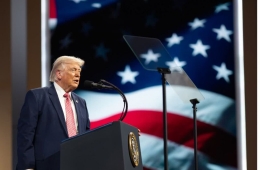
Donald Trump (left), President of the United States, and Xi Jinping, President of China (Photo by Reuters)
View original image[Asia Economy Reporter Kum Boryeong] In the global market, where the rally of risk assets had continued, a simultaneous rise in safe-haven assets occurred due to the expansion of US-China conflicts rekindled over the responsibility for the novel coronavirus infection (COVID-19). The domestic stock market saw the KOSPI index rebound to the 2030 level, recovering most of the losses caused by economic lockdowns in the US and Europe.
◆ Najunghyuk, Researcher at Hana Financial Investment = In the global financial market, the overwhelming dominance of risk assets continues. Expectations for the resumption of economic activities following the easing of 'social distancing' in major countries such as the US and Europe are rising, and positive news in the development of treatments and vaccines is adding to this. The massive liquidity injected into the market is raising investors' risk appetite. However, as seen from the S&P 500's price-to-earnings ratio (12-month forward PER) reaching about 21 times, valuation pressures remain.
Meanwhile, the US has raised the issue of China's responsibility for COVID-19, intensifying conflicts between the two countries. Particularly, with the Chinese government announcing at the closing session of the 28th National People's Congress this week its plan to enact the Hong Kong National Security Law, President Trump warned of sanctions against China related to this, increasing the possibility of the conflict escalating into a full-scale confrontation. Expected US measures include revoking Hong Kong's special status (such as tariff benefits) granted under the Hong Kong Policy Act of 1992, designating China as a currency manipulator in response to the recent two consecutive days of yuan devaluation announcements, imposing trade-related sanctions (additional tariffs, technology regulations, withdrawal from agreements) due to non-compliance with the first phase trade deal, freezing Chinese assets in the US, visa revocations and travel bans, loan restrictions, and banning listings on the US stock market as part of a COVID-19 responsibility law.
◆ Jeong Inji, Researcher at Yuanta Securities = Global stock markets and the KOSPI are rebounding due to the resumption of economic activities in the US and Europe and expectations for COVID-19 vaccine development. In particular, the KOSPI has surpassed the 2000 mark, rising to 2031 as of the previous day.
Hot Picks Today
!["Rather Than Endure a 1.5 Million KRW Stipend, I'd Rather Earn 500 Million in the U.S." Top Talent from SNU and KAIST Are Leaving [Scientists Are Disappearing] ①](https://cwcontent.asiae.co.kr/asiaresize/93/2026051914165468840_1779167814.png) "Rather Than Endure a 1.5 Million KRW Stipend, I'd Rather Earn 500 Million in the U.S." Top Talent from SNU and KAIST Are Leaving [Scientists Are Disappearing] ①
"Rather Than Endure a 1.5 Million KRW Stipend, I'd Rather Earn 500 Million in the U.S." Top Talent from SNU and KAIST Are Leaving [Scientists Are Disappearing] ①
- "Not Jealous of Winning the Lottery"... Entire Village Stunned as 200 Million Won Jackpot of Wild Ginseng Cluster Discovered at Jirisan
- "I'll Stop by Starbucks Tomorrow": People Power Chungbuk Committee and Geoje Mayoral Candidate Face Criticism for Alleged 5·18 Demeaning Remarks
- [New York Stock Exchange] All Major Indices Close Lower as U.S. Treasury Yields Surge
- "How Did an Employee Who Loved Samsung End Up Like This?"... Past Video of Samsung Electronics Union Chairman Resurfaces
The development of COVID-19 vaccines and the resumption of economic activities by major countries could reduce concerns about the deterioration of fundamentals such as corporate earnings and economic indicators, which is positive. However, the KOSPI has already recovered most of the losses caused by COVID-19. After the Chinese New Year holiday ended and the Chinese market reopened, the index confirmed a bottom around 2082 at the opening and rebounded. Subsequently, as COVID-19 spread intensively in Korea centered on Daegu's Shincheonji, the index fell to around 2080 on February 24. Later, as news spread that COVID-19 was expanding to the US and Europe, the KOSPI plunged sharply. In other words, the resolution of COVID-19 risks in the US and Europe can be seen as a factor for the KOSPI to rise to around 2080, and since it has already risen to 2030, the potential for further gains based on COVID-19 resolution expectations is limited.
© The Asia Business Daily(www.asiae.co.kr). All rights reserved.