Gwangju City Announces Policy Series III: "Gwangju, a Great Place to Have and Raise Children"

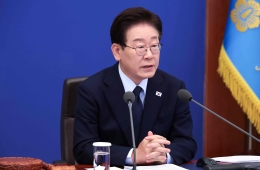
Kim Jong-hyo, Deputy Mayor of Gwangju Metropolitan City, attended the meeting of the "Council for Promoting Gwangju as the Best City to Have and Raise Children," a public-private-academic cooperation system to address ultra-low birth rates and youth population outflow, held on the afternoon of the 26th in the medium conference room. He urged the development of policies to realize a Gwangju where people raise children together and live happily together, making Gwangju a model city best suited for having and raising children. Photo by Gwangju Metropolitan City
View original image[Asia Economy Honam Reporting Headquarters Reporter Park Seon-gang] Gwangju Metropolitan City announced the ‘Making Gwangju a Better Place to Have and Raise Children’ Policy Series III on the 26th, focusing on youth start-up support and creating a work-life balance environment.
On the same day, at the city hall’s 3rd-floor medium conference room, the ‘Making Gwangju a Better Place to Have and Raise Children Promotion Council,’ a public-private-academic cooperation system to solve the ultra-low birthrate and youth population outflow issues, was held with about 50 participants including Kim Jong-hyo, Deputy Mayor for Administration, Park Mi-jung, Chair of the City Council’s Environment and Welfare Committee, Lee Seung-o, Director of the Education Bureau of Gwangju Metropolitan Office of Education, and Kim Mi-kyung, CEO of Gwangju Women and Family Foundation.
At the promotion council meeting, Policy Series III was announced, consisting of two areas and nine tasks: youth start-up support to encourage young people to settle in the region, support for healthy living, cultural and communication exchange support, and work-life balance environment creation through support for pregnant workers and family-friendly environment creation.
The youth start-up support area includes five tasks: the Youth Family Love Savings Account Project, which supports young people’s marriage, childbirth, and child-rearing funds by matching 200,000 KRW monthly for 10 months 1:1 between youth and Gwangju City to help regional settlement and operates financial support programs; the Youth Plus Health Support Project, which supports infertility test fees when young residents of Gwangju undergo health checkups; the Youth AI Support ‘Smart Youth, Smart Gwangju!’ providing non-face-to-face youth communication opportunities through public app development to support cultural communication and exchange; youth club support ‘Reply 2030,’ selecting and supporting about 30 youth clubs; and five courses operating education programs for prospective parents and couples.
The work-life balance environment creation area consists of four tasks: support for employment retention of pregnant workers by subsidizing employers’ health insurance premiums and four months’ retirement reserves during maternity leave; support for creating a pregnant worker-friendly environment by improving workspaces with items such as chairs and footrests for pregnant workers, alongside on-site labor consulting; discovering and promoting best practices of family-friendly certified excellent companies to encourage expansion of family-friendly certified companies; and developing practical guidelines for establishing a family-friendly workplace culture and creating representative models through the development of public institution family-friendly management models.
Since March, the city has operated three subcommittees of the public-private-academic policy development TF to discover new policies, gather opinions from related organizations, and coordinate with autonomous districts, culminating in the announcement of Policy Series III at the promotion council meeting.
Previously, in August last year, Gwangju announced Policy Series I aimed at expanding care service infrastructure, including the operation of the 24-hour Gwangju Emergency Childcare Center and expansion of inpatient child care services throughout Gwangju. In December last year, Policy Series II was announced to expand dense living base infrastructure, including the establishment of the indoor play experience room Kiwoomtteul for infants and toddlers and expansion of the functions of the Childcare Comprehensive Support Center, creation of the Together Care Center, establishment and operation of the integrated care information platform Aichingu (1279), and expansion of resident-led women and family-friendly village care.
Hot Picks Today
 "Samsung and Hynix Were Once for the Underachievers"... Hyundai Motor Employee's Lament
- "Plunged During the War, Now Surging Again"... The Real Reason Behind the 6% One-Day Silver Market Rally [Weekend Money]
- After Losing Her Only Daughter, a Mother in China Gave Birth to Twins at 60... Reinventing Life at 76
- "We Will Return to the EU" ... Brexit Reignited in UK Prime Ministerial Race
- "That? It's Already Stashed" Nightlife Scene Crosses the Line [ChwiYak Nation] ③
Deputy Mayor for Administration Kim Jong-hyo said, “The ‘Making Gwangju a Better Place to Have and Raise Children’ Policy Series aims not only to overcome low birthrate and youth outflow but also to improve the quality of life for all members of society through life cycle support for each citizen.” He added, “By gathering the power and wisdom of the community, we will realize ‘Growing Together, Happy Together Gwangju’ so that the lives of youth and families can be happier, enabling Gwangju to leap forward as the best model city in Korea for having and raising children.”
© The Asia Business Daily(www.asiae.co.kr). All rights reserved.