Entry Bans from South Korea Reduced to 149 Countries... Despite 'COVID-19' Lockdowns, 5,635 Businesspeople Allowed Entry in 12 Countries
In China, 467 Employees from Large Corporations and Partners Arrived in Two Phases
Cases of Arrival Continue from Vietnam, Poland, Hungary, Kuwait, and Others
![[Image source=Yonhap News]](http://www.asiae.co.kr/news/img_view.htm?img=2020052213310152566_1590121860.jpg)
[Asia Economy Reporter Lim Cheol-young] As countries that had locked down their borders due to the novel coronavirus infection (COVID-19) are gradually easing strict entry restrictions on South Korea, the number of countries allowing entry to Korean businesspeople has increased to 12. Meanwhile, the number of countries imposing entry bans on travelers from South Korea has decreased from a peak of 153 to 149.
A task force (TF) led by related ministries such as the Ministry of Foreign Affairs and the Ministry of Trade, Industry and Energy is consulting with more than 20 major trading partners, and some countries including China and Hungary are lowering entry barriers for South Korea, so exceptions for businesspeople’s entry are expected to continue steadily.
According to the Ministry of Foreign Affairs on the 23rd, the number of countries imposing entry bans on travelers from South Korea has recently declined to 149, falling below 150. Earlier this month, 153 countries banned entry from South Korea, but some countries such as Tanzania and Hungary have eased their full entry bans on travelers from South Korea, reversing the trend.
Entry of Korean businesspeople has been steadily increasing. Since the businesspeople exception entry TF, established under the direction of Prime Minister Chung Sye-kyun, began operating, the number of Korean businesspeople who have entered local countries has been counted at 5,635 across 12 countries. After the number of exception entry cases for businesspeople exceeded 5,000 across 11 countries earlier this month, employees of large and small-to-medium enterprises have been entering China and Vietnam one after another.
An official from the Ministry of Foreign Affairs explained, “Businesspeople have entered as exceptions in 12 countries including China, Vietnam, Poland, Hungary, and Kuwait,” adding, “We are closely consulting at the working level to ensure that (businesspeople’s exception entry) proceeds smoothly on an ongoing basis.”
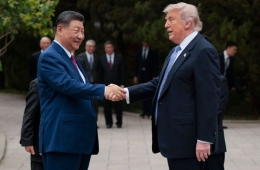
In China, the Korea-China ‘Fast Track’ system has been fully implemented since the 1st of this month. A delegation of 252 LG employees departed for Nanjing, China, and began work locally on the 8th, while 215 employees from Samsung SDI, Samsung Electro-Mechanics, Samsung Display, and partner companies arrived in Tianjin, China, and started activities from the 13th.
Following China, Vietnam has also allowed exception entry for small and medium-sized businesspeople, opening the door for exchanges. The Ministry of Foreign Affairs and the local embassy persuaded the Vietnamese government, and initially 340 small and medium-sized businesspeople entered Vietnam. After completing a two-week quarantine on the 13th, they began working at local business sites. The Ministry of Foreign Affairs is reportedly continuing consultations with the Vietnamese government for additional entries of small and medium-sized businesspeople.
In Europe, where borders had been tightly closed, news of exception entry for businesspeople is also continuing. Hungary, the only Asian country to fully allow entry of businesspeople from South Korea, has been followed by Poland lowering its entry barriers. In Hungary’s case, Korean businesspeople are exempt from the mandatory 14-day quarantine and can operate locally. Additionally, some Middle Eastern countries such as Kuwait have allowed limited entry of Korean businesspeople, triggered by support of Korean-made COVID-19 diagnostic kits.
The government plans to continue negotiations to expand the Korea-China businesspeople ‘Fast Track’ system to other countries. Minister of Foreign Affairs Kang Kyung-wha has been requesting the allowance of entry for essential personnel along with COVID-19 prevention cooperation during ongoing bilateral foreign minister non-face-to-face consultations. At a video conference of foreign ministers from seven major countries including the United States, Japan, India, Brazil, Israel, and Australia held on the 11th (local time), Minister Kang emphasized the need for “resuming cross-border human exchanges including essential movement of businesspeople, restoring transportation networks, and maintaining openness of the global market.”
Hot Picks Today
 "Suspicious Timing?"...Trump Traded Stocks After Praising Wartime Capabilities
- [Breaking] Three basic local government heads and 510 local council members elected unopposed in the June 3 local elections
- "Even If I Lose My Investment, the Government Will Cover It"... The Fund Attracting Retail Investors' Attention [Weekend Money]
- There Is a Distinct Age When Physical Abilities Decline Rapidly... From What Age Do Strength and Endurance Drop?
- "Envious of Korean Daily Life"...Foreign Tourists Line Up in Central Myeongdong from Early Morning [Reportage]
An official from the Ministry of Foreign Affairs said, “We are consulting with major trading countries, including efforts to make China’s Fast Track system smoother,” adding, “Although the COVID-19 spread situation in each country greatly affects the consultations, we are consulting on a case-by-case basis as needed.”
![[Image source=Yonhap News]](http://www.asiae.co.kr/news/img_view.htm?img=2020051012491127618_1589082551.jpg)
© The Asia Business Daily(www.asiae.co.kr). All rights reserved.