Gwangyang City to Significantly 'Promote' Diesel Vehicle Scrappage Support and Emission Reduction Projects in the Second Half of 2020
A Budget of 1.18 Billion Won Allocated for Early Vehicle Retirement, LPG Cargo Trucks, Engine Replacement, and Emission Reduction Device Support.

[Asia Economy Honam Reporting Headquarters Reporter Lee Hyung-kwon] Gwangyang City announced on the 20th that it will implement a vehicle emission reduction project in the second half of this year to reduce harmful air pollutants such as fine dust and nitrogen oxides caused by diesel vehicle emissions.
The projects to be implemented in the second half include ▲early retirement support for old diesel vehicles (663 million KRW, for 300 vehicles) ▲support for purchasing new LPG cargo trucks after scrapping diesel vehicles (64 million KRW, for 16 vehicles) ▲support for attaching diesel particulate filters (DPF) (206 million KRW, for 40 vehicles) ▲support for engine replacement of construction machinery (248 million KRW, for 15 vehicles).
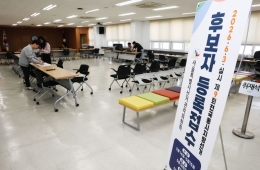
Applications for the vehicle emission reduction project can be submitted to the Environmental Division (4th floor) of Gwangyang City from June 1 to 19. Citizens who find it difficult to visit in person can apply by registered mail from June 1 to 12.
The eligibility for early retirement support for old diesel vehicles is for those who have been continuously registered in Gwangyang City for more than six months (180 days) as of the announcement date (May 20, 2020) and have owned the vehicle for more than six months (for corporations, the place of use must be registered in Gwangyang City).
The main application conditions are that the vehicle must be a diesel vehicle with emission grade 5 or a road-use type 3 construction machine (dump truck, concrete mixer truck, concrete pump truck) manufactured before 2005 emission standards, and must not have been retrofitted with emission reduction devices or low-emission engines through government support. Additionally, the vehicle must have passed a normal operation judgment in the vehicle performance inspection record.
The support amount is applied based on the vehicle standard value calculated by the Insurance Development Institute according to the vehicle type and year.
Especially this year, if a vehicle under 3.5 tons is scrapped and a new non-diesel vehicle is purchased, support of up to 3 million KRW is provided. For vehicles over 3.5 tons, if scrapped and a new vehicle with the same or smaller engine displacement or maximum load capacity is purchased, support of up to 30 million KRW is provided.
Furthermore, vehicle owners or institutions that scrapped diesel vehicles after January 1, 2020, and purchased a new LPG 1-ton cargo truck will receive an additional subsidy of 4 million KRW.
Support recipients will be selected in order of priority among early retirement support recipients, basic livelihood security recipients, low-income groups, national merit recipients, persons with disabilities, and multi-child families, totaling 16 vehicles. However, those receiving LPG new vehicle purchase support cannot receive overlapping subsidies with early retirement new vehicle purchase subsidies.
The target for diesel particulate filter attachment support is diesel vehicles with emission grade 5 that have been continuously registered in Gwangyang City as of the announcement date (May 20, 2020). The construction machinery eligible for particulate filter attachment support includes dump trucks, concrete mixer trucks, and concrete pump trucks manufactured before December 31, 2005. The construction machinery eligible for engine replacement includes forklifts and excavators equipped with Tier 1 or lower engines.
The subsidy amount is calculated according to the specifications of the particulate filter and the replacement engine. The particulate filter attachment subsidy ranges from 3 million to 9 million KRW, and engine replacement ranges from 13 million to 30 million KRW, which are paid directly to the device manufacturers.
Recipients of the subsidy must operate the vehicle with the particulate filter attached for two years and receive maintenance from the device manufacturer (cleaning, call monitoring, etc.). Removal of the device is only possible after approval from Gwangyang City.
In particular, if the device is removed within the mandatory two-year operation period, the subsidy will be reclaimed according to the usage period. It is necessary to check the vehicle’s year and performance before applying to ensure compliance with the mandatory operation period after installing the particulate filter.
Hot Picks Today
![Airlines Set to Benefit in the Long Term Despite Fuel Cost Surge: "It's Actually Good" [Weekend Money]](https://cwcontent.asiae.co.kr/asiaresize/93/2025062508161320621_1750806973.jpg) Airlines Set to Benefit in the Long Term Despite Fuel Cost Surge: "It's Actually Good" [Weekend Money]
Airlines Set to Benefit in the Long Term Despite Fuel Cost Surge: "It's Actually Good" [Weekend Money]
- "Suspicious Timing?"...Trump Traded Stocks After Praising Wartime Capabilities
- [Weekend Money] "Mardi Mercredi Goes Global"...K-Fashion Leader Sets Sights on Expansion
- There Is a Distinct Age When Physical Abilities Decline Rapidly... From What Age Do Strength and Endurance Drop?
- "Contact Me First If Houses Are Built": Wealthy Clients Eyeing... Will Ultra-High-End Residences Worth 20 Billion Won Be Developed? [Real Estate AtoZ]
Kim Jae-hee, head of the Environmental Division, said, “We hope citizens actively participate in this subsidy support project, which can greatly contribute to improving air quality by preparing for vehicle operation regulations under the upcoming 「Air Quality Management Zone Act」 and reducing fine dust.” For more details, contact the Environmental Division of Gwangyang City. Application forms are posted in the notices section on the Gwangyang City website.
© The Asia Business Daily(www.asiae.co.kr). All rights reserved.