"Yoon Mi-hyang 'Unaware of Irreversible' Agreement" vs "No Way She Didn't Talk About It" Ruling and Opposition Clash

Yoon Mi-hyang, elected member of the Democratic Citizens' Party (former director of Justice and Sharing). Photo by Yonhap News
View original image[Asia Economy Intern Reporter Kim Yeon-ju] Amid claims by grandmother Lee Yong-soo, a victim of the Japanese military sexual slavery, that the donations to the Justice and Memory Foundation (Jeonguiyeondae) were not used for the victims, the ruling and opposition parties continue to clash over suspicions surrounding Yoon Mi-hyang, the elected member of the Democratic Party of Korea (formerly the director of Jeonguiyeondae), including her prior knowledge of the Korea-Japan comfort women agreement.
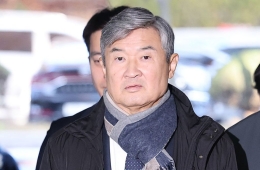
On the 11th, Kang Byung-won of the Democratic Party and Cho Hae-jin, an elected member of the United Future Party, appeared on CBS Radio's "Kim Hyun-jung's News Show" and expressed differing views regarding the suspicions surrounding Yoon.
Kang said, "When the Korea-Japan comfort women agreement was announced on December 28, 2015, our citizens and the victims were shocked by the phrase stating that the issue was resolved irreversibly," adding, "It seems true that Yoon met with the Ministry of Foreign Affairs, and she probably was informed about Japan's acknowledgment of responsibility, apology and reflection, and that the Japanese government intended to collect funds to support the victims."
He argued, "I don't think she was informed about the irreversible resolution or that the government would remove the statue of the girl. If that had been the case, Yoon would not have remained silent."
He continued, "If they were discussing an irreversible resolution, do you think Yoon would have been the only one to know? She would have naturally informed our party and those involved in the movement and gotten them to participate."
On the other hand, Cho countered that the government had formed a task force to investigate the Korea-Japan comfort women agreement process, and the report from that investigation stated that there were multiple prior consultations with Yoon.
Cho said, "The report says there were several prior consultations with Yoon. Since the government conducted the investigation, it’s impossible that she didn’t disclose this."
He added, "As far as I remember, the removal of the statue was not explicitly mentioned in the agreement but was implicitly agreed upon to be pursued continuously. In the case of grandmother Lee Yong-soo and others, they were actually more surprised because they believed Yoon had prior knowledge."
He further speculated, "The grandmother’s anger seems to stem from the fact that if Yoon had only conveyed the level of information that the grandmothers knew ? that this much could be agreed upon ? she should have informed us and strongly protested. But she did not. The content was something the grandmothers could not accept, and since Yoon apparently knew but did not tell us, they felt betrayed and became angry."
Cho also expressed doubts about the tuition fees for Yoon’s children studying abroad amid allegations of embezzlement of donations.
Cho explained, "Yoon’s child is studying in the U.S., and the annual tuition and living expenses range from 50 million to 100 million won. Yoon and her husband’s annual income, after taxes, is only about 50 million won. Although they say the child receives scholarships, living expenses are still incurred, which is fueling suspicions."
Hot Picks Today
 "Now Our Salaries Are 10 Million Won a Month" Record High... Semiconductor Boom Drives Performance Bonuses at Major Electronic Component Firms
- Experts Already Watching Closely..."Target Price Set at 970,000 Won" Only Upward Momentum Remains [Weekend Money]
- "Heading for 2 Million Won": The Company the Securities Industry Says Not to Doubt [Weekend Money]
- 'Still Hesitant? If You're Wondering Whether KOSPI Will Rise, This Is the Number You Must Watch [Weekend Money]'
- Is It Really Like an Illness? "I Can't Wait to Go Again"—Over 1 Million Visited in Q1, Now 'Busanbyeong' Takes Hold [K-Holic]
Kang partially accepted Cho’s claims, emphasizing, "It is primarily necessary for Jeonguiyeondae as well to transparently disclose the details so that the public does not misunderstand," and added, "If the suspicions are true, I believe it is a matter of taking responsibility."
© The Asia Business Daily(www.asiae.co.kr). All rights reserved.