'Valenberry Role Model' Samsung Draws Up Collective Governance Roadmap... No Separation of Affiliates

Samsung Electronics Vice Chairman Lee Jae-yong is entering the press conference room on the 6th at the Seocho-dong headquarters to make a public apology regarding the succession of management rights, non-union management, and communication with civil society. Photo by Moon Honam munonam@
View original image[Asia Economy Reporter Kim Hyewon] Samsung Group is attempting to transform from long-standing owner management to a collective governance structure that separates ownership and management, similar to the Swedish Wallenberg family, which it has regarded as a governance model. This comes as Lee Jae-yong, the third-generation founder and Vice Chairman of Samsung Electronics, publicly stated for the first time that he will not pass on management rights to his children, breaking the principle of fourth-generation succession.
A key Samsung Group official said on the 7th, "The core message of Vice Chairman Lee's remarks is a public declaration that Samsung will move toward a collective governance structure without separate affiliate splits." This overturned the general expectation that Samsung Group would divide and separate affiliates centered around the three children of Chairman Lee Kun-hee of Samsung Electronics: Lee Jae-yong, Lee Boo-jin, President of Hotel Shilla, and Lee Seo-hyun, Chairwoman of the Samsung Welfare Foundation. ▶Related article page 7
Another Samsung Group official also stated, "Samsung has continuously benchmarked the Wallenberg family in addressing various issues surrounding the group, conducting ongoing research and gathering advice from experts across fields," adding, "The owner family plays a responsible role as major shareholders, while entrusting management to capable professional managers, envisioning a big picture."
Vice Chairman Lee’s sudden announcement to forgo fourth-generation management is understood to be influenced not only by social criticism over controversies arising during the succession process?such as the Everland convertible bonds (CB) undervalued purchase allegations, Samsung SDS’s preferential treatment in business, and bribery charges related to succession?but also by his own recognition of the managerial limitations caused by the chronic drawbacks of hereditary management. At a self-initiated press conference the previous day, he said, "I will ensure that no further controversies arise over the issue of management succession," and added, "Many of the controversies surrounding me and Samsung fundamentally stem from this issue (succession)."
Furthermore, Vice Chairman Lee’s direct move to separate management and ownership reflects the urgent crisis awareness within the business community that, despite Samsung’s growth into a world-class company, only top-level responsible management with expertise and insight can guarantee survival amid increasingly fierce competition and the need for innovation and technological advancement. Accordingly, it is expected that a professional manager-centered responsible management system will be sequentially introduced and strengthened across all Samsung Group affiliates, including Samsung Electronics. The owner family is also predicted to maintain ownership of affiliates and fulfill their roles and responsibilities as shareholders without separate division.
Hot Picks Today
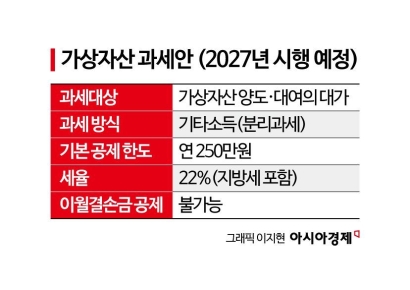 "Stocks Are Not Taxed, but Annual Crypto Gains Over 2.5 Million Won to Be Taxed Next Year... Investors Push Back"
- "Not Jealous of Winning the Lottery"... Entire Village Stunned as 200 Million Won Jackpot of Wild Ginseng Cluster Discovered at Jirisan
- "Rather Than Endure a 1.5 Million KRW Stipend, I'd Rather Earn 500 Million in the U.S." Top Talent from SNU and KAIST Are Leaving [Scientists Are Disappearing] ①
- "How Did an Employee Who Loved Samsung End Up Like This?"... Past Video of Samsung Electronics Union Chairman Resurfaces
- "Even With a 90 Million Won Salary and Bonuses, It Doesn’t Feel Like Much"... A Latecomer Rookie Who Beat 70 to 1 Odds [Scientists Are Disappearing] ③
This approach models the Wallenberg family, which has maintained family management for over 160 years under the motto "exist but do not reveal," while firmly guaranteeing independent management of each affiliate. The Wallenberg family owns and manages shares of over 100 companies collectively through a family foundation. Their affiliated companies account for 40% of the market capitalization of the Swedish stock market. The total sales amount corresponds to one-third of Sweden’s entire gross domestic product (GDP). A notable feature is that most of the net profits are returned to society through the foundation.
© The Asia Business Daily(www.asiae.co.kr). All rights reserved.







