[Good Morning Stock Market] Confirming COVID-19 Uncertainty... Increased Possibility of Exiting the Bear Market
Last Month's Stock Market Crash: From 'Unknown Anxiety' to 'Measured Risk'
Signs of Exiting Bear Market...Global Stocks Up 20% from Lows
Stable Rise Requires Oil Stability and Weak Dollar
![[Image source=Yonhap News]](http://www.asiae.co.kr/news/img_view.htm?img=2020041606291478632_1586986153.jpg)
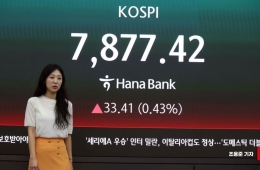
[Asia Economy Reporter Minwoo Lee] Despite various economic indicators and earnings showing sluggishness due to the impact of the novel coronavirus infection (COVID-19), the global stock market has begun to show an upward trend. Analysts interpret this as investors having confirmed the effects of COVID-19 through last month's downturn. They are accepting the risk as something measurable rather than an unknown anxiety. There is a forecast that a stable rebound will be possible if the COVID-19 situation calms down.
◆ Seonghoon Seo, Researcher at Samsung Securities = The impact of COVID-19 was confirmed through poor key indicators. Over the past four weeks, the total number of new unemployment claims in the U.S. reached 22 million. Considering that the U.S. labor force is approximately 160 million, a double-digit unemployment rate is a foregone conclusion. The fact that jobs created since the financial crisis disappeared in just four weeks reminds us once again that the COVID-19 shock is at a destructive level.
However, it is important to note that market reactions have stabilized as these indicators have been confirmed. The uncertainty felt by investors has decreased compared to before. In fact, after the shutdown, there was a large gap between the expected scale of job losses and the actual figures announced. Due to the accumulated experience over the following four weeks, investor expectations have significantly lowered, and the released indicators have entered the expected range, transforming vague anxiety into measurable risk. Risks that enter the realm of understanding are naturally easier to manage.
The expansion of market gains after the U.S. government presented economic reopening guidelines is also in the same context. Although the conditional function of COVID-19 containment still applies, the clearer expected path is a positive factor for risk assets overall. Considering that policy responses have become clearer than before and the spread of COVID-19 has also eased, the possibility of a crash experienced in mid-last month is likely to fade. Positive signals are also confirmed in key indicators. The current economic situation indices compiled by regional Federal Reserve Banks, including the New York Fed, are near historic lows, but future expectation indices have improved compared to the previous month.
However, several prerequisites must be met to ensure a stable rise in global stock markets overall. International oil prices, which are at their lowest level since 2018, must stabilize. A weakening dollar trend that can strengthen preference for emerging markets should also appear. Considering that the OPEC+ decision to cut production (a reduction of 9.7 million barrels per day) will take effect from next month, expectations for oil price recovery will increase as the month progresses. Regarding the dollar, with the U.S. Treasury's cash outflow due to expanded fiscal spending beginning in earnest and the Federal Reserve's quantitative easing effects spreading sequentially, upward pressure is likely to gradually ease.
◆ Kyungmin Lee, Researcher at Daishin Securities = Global stock markets, including the KOSPI, are recording rebounds of more than 20% from their lows. The first technical rebound and the target for autonomous rebound (a 50% retracement of the decline) have also been surpassed. It is judged that global stock markets, centered on the U.S. and developed countries, have emerged from a bear market. Various uncertainties were largely pre-reflected during last month's panic phase. The possibility of entering a COVID-19 containment phase and discussions on the normalization of economic activities in major countries, including the U.S., are becoming visible. If the COVID-19 pandemic ends and economic activities normalize, the global economy can expect a V-shaped or U-shaped rebound. Expectations for economic recovery and strengthened economic stimulus policies following stabilization of investor sentiment are moving global liquidity into the stock market.
Hot Picks Today
 "Samsung Electronics Employee with 100 Million Won Salary Receiving 600 Million Won Bonus... Estimated Tax Revealed"
- Lived as Family for Over 30 Years... Daughter-in-Law Cast Aside After Husband's Death
- Lotte Pays Deposit First, Daewoo Responds: Seongsu District 4 Construction Rights Rematch [Real Estate AtoZ]
- Despite ‘Tank Day’ Controversy, Gwangju Schools Purchased Starbucks Gift Certificates
- "Wore It Once, Then This? White Spots All Over 4.15 Million Won Prada Jacket... 'Full Refund Ordered'"
© The Asia Business Daily(www.asiae.co.kr). All rights reserved.