Production, Investment, and Employment All Declined... Ministry of Economy and Finance Says "Real Economy Challenges Worsened Due to COVID-19"
Recent Economic Trends April Issue (Green Book) Published
"Proactively Establish Measures for Livelihood Economy and Job Response"
[Asia Economy Reporter Kim Hyun-jung] The government has diagnosed that amid the continued contraction of domestic demand due to the impact of the novel coronavirus infection (COVID-19), difficulties in the real economy are expanding, including a significant slowdown in related employment indicators and increased uncertainty in exports.
On the 17th, the Ministry of Economy and Finance published the April issue of the 'Recent Economic Trends (Green Book)' containing these details.
In fact, both production and expenditure declined in February this year. Both industrial production (-3.8% month-on-month) and service production (-3.5%) decreased, causing total industrial production to fall 4.9% compared to the previous month. Expenditures also retreated, with retail sales (-6.0%), facility investment (-4.8%), and construction investment (-3.4%) all declining. Despite an increase in operating days (1.5 days), exports in March decreased by 0.2% year-on-year due to factors such as falling export unit prices caused by the drop in oil prices. The average daily export amount fell from $2.09 billion in March last year to $1.95 billion in March this year.
Economic sentiment also contracted significantly. The Consumer Sentiment Index (CSI) in March was 78.4, down 18.5 points from the previous month. The Manufacturing Business Survey Index (BSI) for March actual performance was 56, down 9 points from the previous month, and the April outlook was 54, down 15 points.
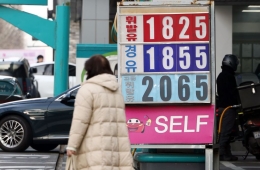
Employment decreased by 195,000 compared to the same month last year, marking a negative figure for the first time in over 10 years since May 2009. The unemployment rate fell by 0.1 percentage points to 4.3% during the same period. Inflation rose 1.0% year-on-year as the increase in petroleum prices slowed but prices of agricultural, livestock, and fishery products expanded. Core inflation, which shows the underlying trend of prices, also rose by 0.7%.
The financial market saw a sharp decline in stock prices in March, a slight rise in the exchange rate, and mixed trends in government bond yields by maturity, with short-term yields falling and long-term yields rising.
In the housing market, sales prices rose 0.54% month-on-month in March, expanding the rate of increase, while jeonse prices rose 0.19%, showing a reduced rate of increase.
Hot Picks Today
 "Only Two Per Person" Garbage Bag Crisis Was Just Yesterday... Japan Also Faces Shortage Anxiety
- "Samsung Electronics Employee with 100 Million Won Salary Receiving 600 Million Won Bonus... Estimated Tax Revealed"
- Lived as Family for Over 30 Years... Daughter-in-Law Cast Aside After Husband's Death
- 'Will Demand Finally Decline Due to High Prices?'... "I'll Just Enjoy Nearby Trips" as Japan and China See a Surge
- "Wore It Once, Then This? White Spots All Over 4.15 Million Won Prada Jacket... 'Full Refund Ordered'"
The Ministry of Economy and Finance stated, "Externally, financial market instability has somewhat eased due to proactive policy responses by governments worldwide, but economic activities in major countries such as the U.S. and EU have significantly contracted, worsening real indicators and expanding concerns about a global economic recession." It added, "To minimize COVID-19 damage and achieve early recovery, we will swiftly implement the already prepared support measures worth {$_150 trillion through the Emergency Economic Meeting, and under a serious awareness of the situation, we will proactively prepare comprehensive response plans for the livelihood economy and jobs to respond with full force."
© The Asia Business Daily(www.asiae.co.kr). All rights reserved.