"Recovery in Distribution Industry to Accelerate After Overcoming COVID-19... Manufacturing and Aviation Sectors Expected to Lag Behind"

[Asia Economy Reporter Kim Min-young] There is a forecast that South Korea's economy will enter a recovery phase as early as next month if the novel coronavirus infection (COVID-19) is overcome. By industry, the recovery of domestic demand and service sectors such as distribution is expected to be rapid, while manufacturing and aviation industries are anticipated to experience delayed recovery.
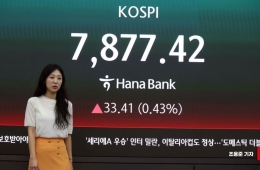
The Hana Financial Management Research Institute, affiliated with Hana Bank, published a report on the industry-specific impacts of the COVID-19 pandemic on the 13th.
Through the report, the institute analyzed that not only domestic demand and service industries but also manufacturing sectors such as steel and shipbuilding are significantly deteriorating due to COVID-19. However, considering China's case, South Korea can expect a return to normal economic activities as early as May, and if normalization occurs faster than in major countries, it could increase its market share globally. The report emphasized that if confirmed cases rise again due to quarantine failures, a similar isolation process would have to be repeated, making it meaningless to predict the timing of a return to normal economic life.

The distribution industry, which has a high domestic demand ratio, is expected to recover the fastest. The institute foresees that if the domestic COVID-19 situation calms down, government consumption stimulus measures and recovery of suppressed demand will lead to the earliest recovery in service industries with a high domestic demand ratio, such as distribution. In particular, the homeconomy (a compound of home and economy, referring to consumption activities conducted online at home) and untact consumption culture are expected to establish themselves as new purchasing patterns. In the education industry, the attractiveness of non-face-to-face education services is increasing, and mid- to long-term stable growth of the edutech market is anticipated.
For manufacturing industries such as automobile and shipbuilding, a gradual rebound is expected after the second half of the year when South Korea's economic activities are expected to normalize.
On the other hand, the aviation, tourism, and accommodation industries are forecasted to experience delayed normalization of business conditions until after the fourth quarter due to prolonged global travel restrictions caused by the worsening COVID-19 situation. In the domestic aviation sector, major variables include whether government support is expanded and the duration of the COVID-19 crisis, but structural reorganization such as mergers and acquisitions (M&A) leading to the enlargement of low-cost carriers (LCCs) is highly likely. For tourism and accommodation industries, even after the pandemic ends, it is expected to take considerable time to rebuild infrastructure due to closures of local tourism operators.
The petroleum refining and chemical industries, which have been hit by demand decreases and production increase issues due to the pandemic, are expected to recover only after the global situation stabilizes, given their high export dependency. Researcher Ahn Hye-young of the institute analyzed, “Especially in the petroleum refining industry, financial stability is weaker compared to the chemical industry, so prolonged deterioration of business conditions could cause significant damage.”
The institute also forecasted that the global economy will inevitably change around global supply chains and distribution networks after the pandemic. The institute diagnosed that due to the chain shutdown of major countries' factories caused by COVID-19, frequent disruptions in parts supply and production delays have occurred, leading to increased incentives to diversify supply sources of parts and materials in key industries and to reconsider inventory in the Just In Time system to spread risks. Regarding distribution networks, it is expected that business restructuring will focus on large companies with strong financial structures due to decreased cargo volumes caused by prolonged restrictions on human and material movement.
Hot Picks Today
 "Samsung Electronics Employee with 100 Million Won Salary Receiving 600 Million Won Bonus... Estimated Tax Revealed"
- Lived as Family for Over 30 Years... Daughter-in-Law Cast Aside After Husband's Death
- Lotte Pays Deposit First, Daewoo Responds: Seongsu District 4 Construction Rights Rematch [Real Estate AtoZ]
- Government Freezes Sixth Maximum Oil Price... Gasoline at 1,934 Won, Diesel at 1,923 Won
- "Wore It Once, Then This? White Spots All Over 4.15 Million Won Prada Jacket... 'Full Refund Ordered'"
Kim Young-jun, head of the industry analysis team at Hana Financial Management Research Institute, pointed out, “Reconsidering the Just In Time system and diversifying supply sources may increase corporate cost burdens,” adding, “In the aviation industry, concerns about deteriorating performance and financial stability will rise, especially among LCC companies.”
© The Asia Business Daily(www.asiae.co.kr). All rights reserved.