Temporary Suspension of 'Visa Exemption and Visa-Free Entry' for Countries Banning Korean Entry to Prevent Overseas Inflow of 'COVID-19'
148 Countries Ban Entry from Korea... This Measure Applies to Australia, Canada, Russia, etc.
Strengthening Entry Restrictions Based on Openness and Reciprocity Principles
![[Image source=Yonhap News]](http://www.asiae.co.kr/news/img_view.htm?img=2020040811135965460_1586312039.jpg)
[Asia Economy reporters Kwangho Lee and Chulyoung Lim] The government has decided to temporarily suspend visa exemptions and visa-free entry for countries that have banned Korean nationals from entering, based on the principle of reciprocity, due to the novel coronavirus infection (COVID-19). This measure applies to 88 countries including Australia, Canada, Russia, and France, marking the first time the government has simultaneously strengthened entry restrictions on multiple fronts.
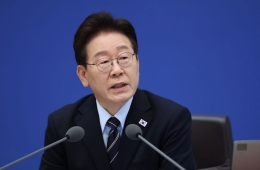
Prime Minister Jeong Sye-kyun chaired a meeting of the Central Disaster and Safety Countermeasure Headquarters (CDSCH) for COVID-19 response at the Government Complex Sejong on the 8th, stating, "While maintaining the foundation of openness, we will strengthen restrictions based on the principle of reciprocity," and added, "We will temporarily suspend visa exemptions and visa-free entry for countries that prohibit the entry of our citizens." He also said, "We will discuss more proactive measures to address the risk of overseas inflow," and urged, "Relevant ministries should promptly prepare and implement measures based on today's discussion results."
According to the Ministry of Foreign Affairs, a total of 181 countries have either banned entry of Koreans or strengthened entry procedures. Entry bans on all regions of Korea have been imposed by 148 countries (including one country banning entry to some regions of Korea and China), quarantine measures by 15 countries, and enhanced quarantine or advisory measures by 18 countries. This government measure applies to a total of 88 countries, including 34 visa-free entry countries such as Australia and Canada, and 54 visa waiver agreement countries such as Thailand, Russia, and France. A government official explained, "This is a measure to minimize the re-importation of COVID-19 amid the rapid increase of overseas confirmed cases during the pandemic," and added, "It is a decision based on openness and reciprocity."
Additionally, Prime Minister Jeong mentioned that a decision on the introduction of electronic wristbands will be made soon after gathering public opinion. On the afternoon of the 7th, Jeong held a closed-door meeting with related ministers to discuss the introduction of a method to attach electronic devices such as bracelets to the bodies of price-liers to monitor real-time quarantine compliance. However, opinions were divided between the necessity of the measure to prevent the spread of COVID-19 and concerns over human rights violations and side effects, so no conclusion was reached.
Meanwhile, as of the 6th, the total number of people under self-quarantine nationwide was 46,566, of whom 36,424 had entered from overseas. So far, 75 people (67 cases) who violated self-quarantine guidelines by unauthorized departure or other means are undergoing judicial procedures for violations of the Infectious Disease Control and Prevention Act or the Quarantine Act. Among them, six have been sent to the prosecution with police recommendations for indictment.
Hot Picks Today
 "Stocks Are Not Taxed, but Annual Crypto Gains Over 2.5 Million Won to Be Taxed Next Year... Investors Push Back"
- "Don't Throw Away Coffee Grounds" Transformed into 'High-Grade Fuel' in Just 90 Seconds [Reading Science]
- Signed Without Viewing for 1.6 Billion Won... Jamsil and Seongbuk Jeonse Prices Jump 200 Million Won in a Month [Real Estate AtoZ]
- "Groups of 5 or More Now Restricted"... Unrelenting Running Craze Leaves Citizens and Police Exhausted
- "Even With a 90 Million Won Salary and Bonuses, It Doesn’t Feel Like Much"... A Latecomer Rookie Who Beat 70 to 1 Odds [Scientists Are Disappearing] ③

On the 1st, when the mandatory 2-week self-quarantine for all incoming travelers from abroad began, arrivals at Terminal 1 of Incheon International Airport were registering their names to board the special airport buses equipped with full quarantine measures for overseas arrivals. Photo by Moon Honam munonam@
View original image© The Asia Business Daily(www.asiae.co.kr). All rights reserved.