FKCCI "More Difficult Than the Foreign Exchange Crisis, Deregulation Urgently Needed" (Comprehensive)

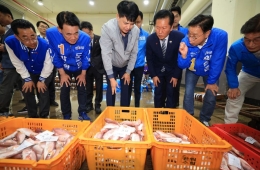
Huh Chang-soo, Chairman of the Federation of Korean Industries, is announcing the 'Urgent Economic Proposal' in response to the spread of COVID-19 at the Federation of Korean Industries building in Yeouido, Seoul, on the 25th. Photo by Yoon Dong-joo doso7@
View original image[Asia Economy Reporter Changhwan Lee] The Federation of Korean Industries (FKI) has diagnosed that the current economic crisis in South Korea is more severe than the 1998 International Monetary Fund (IMF) foreign exchange crisis or the 2008 global financial crisis. They argue that innovative measures such as deregulation of businesses, expansion of the Corporate Vitality Act, and improvement of stock investment conditions are urgently needed.
On the 25th, Huh Chang-soo, chairman of the FKI, held an emergency press conference at the FKI headquarters in Yeouido, Seoul, stating, "Our economy is currently facing a complex crisis in both the real and financial sectors, and we must mobilize all available means to respond."
Chairman Huh said, "Our economy is in the midst of a perfect storm, a complex crisis in both the real and financial sectors caused by fear of the novel coronavirus infection (COVID-19). Just as much as quarantine measures, extraordinary economic measures are necessary."
He added, "Companies will strive to protect jobs and carry out planned investments without disruption," and explained, "The FKI is preparing joint proposals for overcoming the crisis together with the Global Business Coalition (GBC), the U.S. Chamber of Commerce, and others."
Kwon Tae-shin, the FKI’s standing vice chairman, also evaluated, "Our economy was already suffering from underlying conditions, and the COVID-19 outbreak has hit us, placing us in a much more serious crisis than the 1997 foreign exchange crisis or the 2008 financial crisis." He added, "With weakened economic fundamentals such as potential growth rate and blocked overseas export routes, there is no apparent breakthrough."
Vice Chairman Kwon emphasized, "Last year, the amount of overseas direct investment outflow from South Korea reached a record high of $61.8 billion. Meanwhile, both foreign investment in Korea and domestic facility investment decreased, and our economy is already in a 'sick state' where everyone is reluctant to invest."
The FKI introduced urgent matters that must be addressed for economic recovery.
First, they urged the introduction of a system to temporarily suspend regulations on companies. South Korea’s corporate regulations ranked 50th among 63 major countries worldwide (2019 IMD World Competitiveness Ranking), imposing a heavy burden on companies.
They emphasized that in the current situation where consumption, investment, and exports have all contracted due to COVID-19, regulations are hindering companies' survival. Considering this, the FKI argued that regulations should be boldly suspended even temporarily.
They proposed suspending regulations for at least two years and permanently abolishing them if no side effects occur after the suspension period ends. The temporary regulation suspension system suspends or defers enforcement of regulations that hinder economic recovery for a certain period and has been implemented for 280 cases in 2009, 26 cases in 2012, and 303 cases in 2016.
They also stated the need to expand the application of the Corporate Vitality Act (One-Shot Act), which promotes voluntary business restructuring by companies, to all industries and companies. The One-Shot Act is a system that grants special measures such as simplified procedures and regulatory suspensions when companies proactively and voluntarily restructure their businesses. Currently, its application is limited to oversupplied industries.
Vice Chairman Kwon said, "Because the application is limited, severely affected industries such as air transportation and refining cannot utilize the One-Shot Act," and argued, "Since all industries are facing a crisis due to COVID-19, it is necessary to expand the application to all industries to support companies' proactive and voluntary business restructuring."
They also proposed a temporary suspension of forced sales of stocks. Forced sales occur when financial institutions arbitrarily sell stocks to maintain collateral value during stock price declines. This causes stocks to be sold at bargain prices, intensifying market crashes, tightening financial markets, and increasing shareholder losses.
Moreover, if major shareholders’ collateral stocks are forcibly sold, corporate management rights become unstable, negatively affecting companies’ active investment activities. Therefore, the FKI argued that forced sales by financial institutions should be temporarily suspended until financial markets stabilize. They added that government guarantees are necessary to cover potential losses incurred by financial institutions.
Additionally, they demanded a significant expansion of currency swaps and permission for COVID-19 testing at corporate clinics. To respond to the surge in dollar demand caused by COVID-19, they proposed signing currency swap agreements with key currency countries and expanding currency swaps to the level of Japan in the long term.
Hot Picks Today
 "Suspicious Timing?"...Trump Traded Stocks After Praising Wartime Capabilities
- [Breaking] Three basic local government heads and 510 local council members elected unopposed in the June 3 local elections
- "Even If I Lose My Investment, the Government Will Cover It"... The Fund Attracting Retail Investors' Attention [Weekend Money]
- There Is a Distinct Age When Physical Abilities Decline Rapidly... From What Age Do Strength and Endurance Drop?
- "Envious of Korean Daily Life"...Foreign Tourists Line Up in Central Myeongdong from Early Morning [Reportage]
They also explained that corporate clinics with doctors should be actively utilized as screening clinics for COVID-19 testing to help companies contribute to preventing the spread of the virus.
© The Asia Business Daily(www.asiae.co.kr). All rights reserved.