Drunk Driving and Proxy Gaming... Ongoing Controversies Surrounding Proportional Representatives
[Asia Economy Reporters Kang Nahum and Won Dara] Controversies over the eligibility of proportional representation candidates within the progressive camp continue unabated. It is expected to pose a risk to the ruling party's ongoing efforts to form a 'Proportional Representation Coalition Party.'
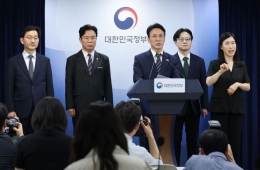
On the 15th, the Justice Party recommended that Shin Jang-sik, a proportional representation candidate (No. 6) who was involved in a controversy over drunk and unlicensed driving, voluntarily withdraw through a discussion at the National Committee. Shin was fined 6 million won for violating the Road Traffic Act four times between 2006 and 2007, including drunk and unlicensed driving, sparking debates over his eligibility as a proportional representation candidate. Shin resigned from his candidacy shortly after the recommendation.
![[Image source=Yonhap News]](http://www.asiae.co.kr/news/img_view.htm?img=2020031611405623591_1584326457.jpg)
The Justice Party is suffering not only from Shin's case but also from eligibility issues among candidates within the winning range. Although re-endorsement was granted, the controversy over Ryu Ho-jeong, the party's IT Industry Labor Special Committee Chair, regarding 'League of Legends (LoL) proxy gaming' has not subsided. Additionally, it was revealed that Jeong Min-hee, who was selected as the 12th proportional representation candidate, had served as president of Shim Crush, Representative Shim Sang-jung’s fan club, for three years, sparking accusations of favoritism against Representative Shim.
The Democratic Party of Korea feels relieved by the proportional representation controversy within the Justice Party. Since the Justice Party refused to join the 'Proportional Representation Coalition Party,' the Democratic Party has been spared the burden of sharing these controversies. A Democratic Party official said, "If the Justice Party had participated in the proportional party and their candidates took the top spots, public opinion could have turned against us. The Justice Party’s refusal to join might actually be a good thing."
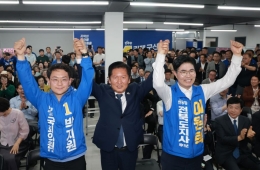
However, the Democratic Party cannot simply laugh off the controversies related to proportional representation. The controversy over Professor Choi Hye-young of Gangdong University, confirmed as the Democratic Party’s No. 1 proportional representation candidate, regarding improper receipt of basic living expenses and disability activity support payments has yet to be resolved. Recently, criticism of President Moon Jae-in by Seo Guk-hwa, co-representative of the animal rights research lawyer group PNR and a successor on the proportional representation preliminary list, has been circulating, causing backlash among party supporters.
![[Image source=Yonhap News]](http://www.asiae.co.kr/news/img_view.htm?img=2020031509273921905_1584232058.jpg)
There is speculation that such 'proportional representation risks' could continue within the Proportional Representation Coalition Party as well. This is because it is unclear which candidates minority parties with relatively weak verification systems will nominate. Currently, minor parties outside the National Assembly, such as the Green Party and the Future Party, have decided to participate in the coalition. Since the Democratic Party has promised to place its proportional representation candidates lower on the list, it is highly likely that candidates nominated by minority parties will receive higher rankings.
Hot Picks Today
!["Not Everyone Can Afford This: Inside the World of the True Top 0.1% [Luxury World]"](https://cwcontent.asiae.co.kr/asiaresize/93/2026051507261063923_1778797570.png) "Not Everyone Can Afford This: Inside the World of the True Top 0.1% [Luxury World]"
"Not Everyone Can Afford This: Inside the World of the True Top 0.1% [Luxury World]"
- "Now Our Salaries Are 10 Million Won a Month" Record High... Semiconductor Boom Drives Performance Bonuses at Major Electronic Component Firms
- While All Eyes Were on Samsung and Hynix, This Company Surged 50% to New Highs in Four Days [Weekend Money]
- "Heading for 2 Million Won": The Company the Securities Industry Says Not to Doubt [Weekend Money]
- Experts Already Watching Closely..."Target Price Set at 970,000 Won" Only Upward Momentum Remains [Weekend Money]
A political insider said, "Compared to major parties in the National Assembly, the methods for selecting proportional representation candidates and the individuals themselves from minority parties are almost unknown. If, after the proportional order is set, a minority party candidate becomes embroiled in moral or misconduct controversies, it will inevitably be a significant burden for the Democratic Party. It would also be difficult to defend them by saying they belong to another party."
© The Asia Business Daily(www.asiae.co.kr). All rights reserved.