[Good Morning Stock Market] US Stock Market Drop Is Excessive... "No Crisis Like 2008 Will Occur"
Coordination of Monetary and Fiscal Policies by Governments Worldwide... "No Sharp Rebound, but Less Extreme Fear Like in the Past"
Rebound Expected Mainly in IT, Healthcare, and Communication Sectors
![[Image source=Yonhap News]](http://www.asiae.co.kr/news/img_view.htm?img=2020031215074418615_1583993264.jpg)
[Asia Economy Reporter Minwoo Lee] Although the U.S. stock market plunged sharply in a short period due to the spread of the novel coronavirus infection (COVID-19) and the sharp drop in international oil prices, there are concerns that the fear sentiment is excessive. It is expected that market volatility will gradually decrease and stabilize through coordinated monetary and fiscal policies by major governments. It is analyzed that the rebound will occur mainly in sectors such as Information Technology (IT), healthcare, and communication, rather than in industries heavily influenced by commodity prices and real consumption conditions.
◆ Younghan Lee, Researcher at Daishin Securities = On the 11th (local time), the Volatility Index (VIX) at the Chicago Board Options Exchange recorded 53.90, close to the highest level since the 2008 financial crisis, and 68% of S&P 500 stocks fell more than 20% from their 52-week highs. Given the sharp decline in a short period, expectations for a rebound due to overselling are increasing, but there is an aspect that fear sentiment is excessive. Since major governments are implementing various policies and cooperating, stability is expected to be restored.
However, 'cyclical' sectors affected by the economy should be approached cautiously. Negative earnings forecasts are expected due to COVID-19 and the sharp drop in international oil prices, and uncertainty about when this will be resolved may prolong disturbances.
The spread of infectious diseases is reducing various consumption demands and paralyzing economic activities such as trade and investment. The international oil price shock is a bigger negative factor for cyclical sectors than the fear of COVID-19. Looking at past major epidemic cases, when government policies were introduced or the epidemic subsided, the negative impact of the oil price plunge was short-lived, and stock prices quickly recovered. On the other hand, this international oil price plunge is a hegemony war over the oil market among the U.S., Russia, and Saudi Arabia. It is not easy to find stability in the short term. Energy companies face increased concerns about reduced crude oil demand and inventory revaluation losses. Materials and industrial goods companies are struggling to escape poor performance as the oil price drop raises concerns about economic slowdown in emerging markets before recovering from the aftermath of the U.S.-China trade dispute. Additionally, as the high-yield spread (the interest rate difference between high-quality and distressed corporate bonds) of energy companies rises, the risk of non-performing loans to energy companies by banks is also increasing.
In the upcoming stock market rebound phase, IT, healthcare, and communication services are more likely to be the leading sectors than cyclical sectors. If the spread of the infectious disease slows down in the U.S. and Europe, the investment appeal of Nike, Las Vegas Sands (LVS), and Boeing is relatively higher than that of ExxonMobil.
◆ Sangyoung Seo, Researcher at Kiwoom Securities = The World Health Organization (WHO) declared a pandemic during the 2009 H1N1 flu outbreak. At that time, the financial market was already responding to the U.S.-originated financial crisis, so the pandemic did not have a significant impact on the market. When confirmed cases of H1N1 surged in the U.S., then-President Barack Obama declared a 'national emergency' and responded actively, and countries also actively implemented policy responses due to the aftermath of the financial crisis. Therefore, there was only a temporary shock, and a sustained bull market appeared.
Hot Picks Today
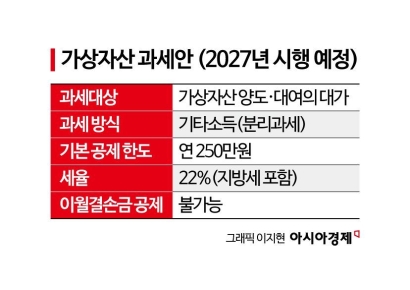 "Stocks Are Not Taxed, but Annual Crypto Gains Over 2.5 Million Won to Be Taxed Next Year... Investors Push Back"
- "Not Jealous of Winning the Lottery"... Entire Village Stunned as 200 Million Won Jackpot of Wild Ginseng Cluster Discovered at Jirisan
- "Rather Than Endure a 1.5 Million KRW Stipend, I'd Rather Earn 500 Million in the U.S." Top Talent from SNU and KAIST Are Leaving [Scientists Are Disappearing] ①
- "How Did an Employee Who Loved Samsung End Up Like This?"... Past Video of Samsung Electronics Union Chairman Resurfaces
- "Even With a 90 Million Won Salary and Bonuses, It Doesn’t Feel Like Much"... A Latecomer Rookie Who Beat 70 to 1 Odds [Scientists Are Disappearing] ③
U.S. President Donald Trump is also reported to increase fiscal spending through a national emergency declaration. Of course, the current financial market is different from that time. The global stock market plunged 40-60% in 2008 but rose 10-30% last year. However, there is a commonality. Central banks worldwide have implemented aggressive monetary policies, and governments have expanded fiscal spending. Considering this, the stock market may not rise as it did in 2009, but it is expected that it will not show an extreme pattern overwhelmed by fear.
© The Asia Business Daily(www.asiae.co.kr). All rights reserved.