I-eonju Faction Rises While Park Hyung-jun and Jeong Byeong-guk Fall... Mixed Fortunes for Key Figures in the Integration
![[Image source=Yonhap News]](http://www.asiae.co.kr/news/img_view.htm?img=2020031011443713806_1583808278.jpg)
[Asia Economy Reporter Lee Ji-eun] The candidate selection process of the United Future Party, which was born after long struggles, saw mixed fortunes for the key figures behind the unification. Rep. Lee Eon-ju, who led the Future Forward 4.0 (Jeonjin Party), secured a favorable position, while Rep. Jeong Byeong-guk from the New Conservative Party, who led the unification discussions, declared he would not run. The Ahn Cheol-soo faction lawmakers achieved some success. Former Innovation and Integration Promotion Committee (Hyuktongwi) Chairman Park Hyung-joon, who sparked the unification, applied for candidacy in the Future Korea Party but later withdrew.
On the 9th, Rep. Jeong announced on his Facebook, "Throughout a quarter-century political journey, I have always advocated the sword of reform, but now that blade is directed at me," stating he would accept the decision of the United Future Party’s candidate selection committee. Earlier that day, the committee decided to recommend former Yangpyeong County Governor Kim Seon-gyo as the sole candidate for the Yeoju-Yangpyeong district in Gyeonggi Province, solidifying Rep. Jeong’s decision not to run in that area. There had been rumors of a strategic nomination for Rep. Jeong in Suwon, but it appears he did not accept it.
Former Chairman Park caused a stir that afternoon by applying for candidacy to the Future Korea Party’s selection committee and withdrawing within an hour. He said, "After much deliberation, I made the decision and applied, but due to some objections regarding my promise not to run in the general election, I concluded that this should not harm the cause of regime judgment or cast doubt on the sincerity of unification." He added, "If there is any harm to the meaning of unification, I believe I must relinquish my personal ambitions at any time," explaining his withdrawal.
While many key figures in the unification faced setbacks in the candidate selection process, analysis suggests that the Future Forward faction, which had only one incumbent lawmaker, benefited the most. Despite controversy over a 'strategic nomination' in Jung and Yeongdo districts, Rep. Lee secured a strategic nomination in Busan Nam-gu Eul. Lee’s close aides, including Kim Won-seong, a United Future Party Supreme Council member, and Yang Ju-sang, former Supreme Council member of the Jeonjin Party, received nominations in Busan Bukgangseo Eul and Gwangmyeong Gap, respectively. On the other hand, the New Conservative Party, which had the second-largest number of incumbents after the Liberty Korea Party, saw only five of its seven incumbents receive nominations or prepare for primaries, excluding Rep. Yoo Seung-min who declared he would not run.
![[Image source=Yonhap News]](http://www.asiae.co.kr/news/img_view.htm?img=2020031011445213807_1583808292.jpg)
The Ahn Cheol-soo faction lawmakers also showed results in the nominations. Due to redistricting, Sejong City was divided into Sejong City Gap and Eul, with Rep. Kim Jung-ro, formerly of the Bareunmirae Party, receiving a strategic nomination in Sejong City Gap. Reps. Kim Sam-hwa and Lee Dong-seop were nominated in Seoul Jungnang Gap and Nowon Eul, respectively, while Rep. Kim Soo-min was nominated in Cheongwon District, Cheongju City, North Chungcheong Province. Rep. Shin Yong-hyun is also contesting a primary in Daejeon Yuseong.
Hot Picks Today
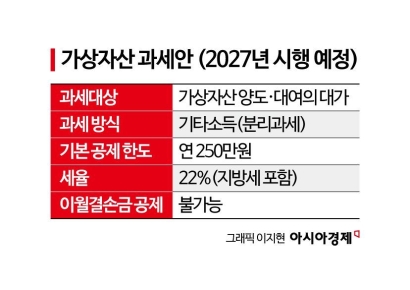 "Stocks Are Not Taxed, but Annual Crypto Gains Over 2.5 Million Won to Be Taxed Next Year... Investors Push Back"
- "Not Jealous of Winning the Lottery"... Entire Village Stunned as 200 Million Won Jackpot of Wild Ginseng Cluster Discovered at Jirisan
- "Rather Than Endure a 1.5 Million KRW Stipend, I'd Rather Earn 500 Million in the U.S." Top Talent from SNU and KAIST Are Leaving [Scientists Are Disappearing] ①
- "How Did an Employee Who Loved Samsung End Up Like This?"... Past Video of Samsung Electronics Union Chairman Resurfaces
- "Even With a 90 Million Won Salary and Bonuses, It Doesn’t Feel Like Much"... A Latecomer Rookie Who Beat 70 to 1 Odds [Scientists Are Disappearing] ③
The United Future Party’s candidate selection committee, which completed the announcement of results for the Daegu-Gyeongbuk (TK) and Busan-Gyeongnam (PK) regions?considered the most contentious?by last week, will begin reviewing the remaining Seoul districts and Honam region from the 10th. In Honam, only three out of 28 constituencies have completed nominations, and due to the party’s low approval ratings there, additional applications were accepted.
© The Asia Business Daily(www.asiae.co.kr). All rights reserved.







