[Viewpoint] Stewardship Code, Insider Trading, and the Mosaic Theory
![[Viewpoint] Stewardship Code, Insider Trading, and the Mosaic Theory](http://www.asiae.co.kr/news/img_view.htm?img=2019111810264387675_1574040403.jpg)
Insider trading using undisclosed information is quite peculiar. When you don’t know much, it seems simple and easy, but the more you learn, the more complex and difficult it becomes. Analyzing specific cases often leaves only fleeting impressions, like an impressionist painting without essence; facts become blurred, legal principles dance, and substantive justice is often easily lost in an endless fog. There is another peculiarity. While the general public and most legal scholars consider insider trading to be highly unfair, a significant number of economists and business scholars hold opposing views. In any case, insider trading has become a representative unfair crime under the Capital Markets Act in its relatively short history and is punished with the severest penalties. However, there is a significant gray area in insider trading regulation known as the so-called 'mosaic theory.'
Sometimes, information by itself may not be considered material information that significantly affects an investor’s investment decision, but when combined with other known or publicly disclosed information to complete a mosaic, it may become material overall. The issue arises whether the receipt and use of such non-material information contributing to the mosaic’s completion constitute illegal insider trading. The core of the mosaic theory is the claim that such cases do not amount to insider trading. There is no mention of this in statutes or precedents yet. Even in the United States, where insider trading law is well developed, this topic has not been widely discussed. Let us examine a recent actual case.
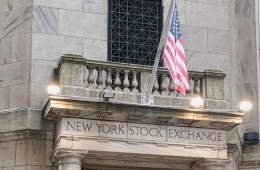
In early 2010, Richard Moore, an investment banking officer at the Canadian Imperial Bank, learned that an executive of the Canadian Pension Fund Investment Board, whom he knew through work, was pushing forward a major merger and acquisition (M&A). Between March and May 2010, they exchanged several minor work-related emails, and Moore also learned that the executive was traveling to London on a business trip. On June 12, 2010, at a charity party, Moore saw the executive sitting with another person but was neither introduced to that person nor told who they were. Later, Moore accidentally found out that the person was the CEO of the British company Tomkins. Combining all this information, Moore concluded that the Canadian Pension Fund Investment Board would acquire Tomkins and on June 28 purchased 51,350 American Depositary Receipts (ADRs) of Tomkins on the New York Stock Exchange, earning about $160,000 in profit.
In fact, a detailed look at the case shows that there was no active provision of material information from insiders, and although the emails contained hints that could suggest an M&A, the information alone was non-material and did not meet the usual materiality required for insider information. Therefore, under the existing mosaic theory, it was difficult to regard this as insider trading. Nevertheless, in April 2013, both the U.S. Securities and Exchange Commission and the Ontario Securities Commission in Canada regarded the transaction as insider trading and imposed sanctions. This is significant and impactful because these securities authorities explicitly rejected the exemption claims based on the mosaic theory, breaking their previous reserved stance.
In the 2011 insider trading case involving Rajaratnam, founder of the world’s seventh-largest hedge fund, Galleon Fund, the defendant’s key defense was also the mosaic theory, but the jury did not accept it and returned a guilty verdict, finding that insider trading was conducted based on illegally obtained material non-public information.
This year can be considered the inaugural year in which institutional investors such as pension funds actively engage in shareholder activities under the stewardship code. When institutions, which already have a significant information advantage over ordinary investors, obtain a lot of information through close contact with listed companies, even if that information is not very material, they will combine it with existing information to have 'larger and clearer mosaics.' When institutions trade with such edge-like mosaics, it will be interesting to see how our financial authorities, prosecutors, and courts respond in light of the fundamental regulatory philosophy of the Capital Markets Act, the 'principle of information equality.'
Seong Hee-Hwal, Professor, Inha University School of Law
Hot Picks Today
 "Stocks Are Not Taxed, but Annual Crypto Gains Over 2.5 Million Won to Be Taxed Next Year... Investors Push Back"
- "Not Jealous of Winning the Lottery"... Entire Village Stunned as 200 Million Won Jackpot of Wild Ginseng Cluster Discovered at Jirisan
- "Jeong Yu-kyung Is a Neighbor"...Itaewon Standalone House with Record 23.2 Billion Won Appraisal Up for Auction [Real Estate AtoZ]
- "How Did an Employee Who Loved Samsung End Up Like This?"... Past Video of Samsung Electronics Union Chairman Resurfaces
- "Even With a 90 Million Won Salary and Bonuses, It Doesn’t Feel Like Much"... A Latecomer Rookie Who Beat 70 to 1 Odds [Scientists Are Disappearing] ③
© The Asia Business Daily(www.asiae.co.kr). All rights reserved.