[Square] After Putting Out Urgent Fires, We Must Start Narrowing the Distance Between Korea, China, and Japan
Professor Hwang Jae-ho, Department of International Studies, Hankuk University of Foreign Studies

Professor Jaeho Hwang, School of International Studies, Hankuk University of Foreign Studies
View original imageOn the 5th, Japanese Prime Minister Shinzo Abe announced a de facto entry ban on arrivals from Korea and China related to COVID-19, including a 14-day quarantine at designated locations and cancellation of visa-free entry. In response, Foreign Minister Kang Kyung-wha summoned the Japanese ambassador to protest, and from the 9th, Korea decided to implement retaliatory measures against Japan. However, it is now pointless to scrutinize how transparent Japan’s quarantine measures are or how scientific the basis is for the number of infected Koreans per 10,000 people. Whether it is about quarantine, politics, or diplomacy, the urgent fire on the feet of all three countries?Korea, China, and Japan?is their own.
There are several reasons behind Japan’s excessive decision. Considering that Japan only partially banned entry even when the situation in China was most severe, it does not seem that Korea was included out of consideration for China. Attention should be paid to the fact that the entry ban is initially set until the end of March. This is the deadline for the International Olympic Committee (IOC) to decide whether to hold the Tokyo Olympics. Prime Minister Abe must make a last attempt to hold the Games, and if there is no sign of COVID-19 calming down, he faces a dead end where he must give up the Olympics. Then he becomes a ‘failed’ prime minister. If he fails, the significance of President Xi Jinping’s visit to Japan also diminishes. Therefore, he is now urgently going all in.
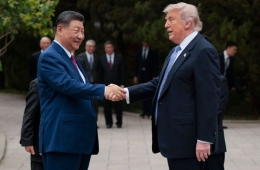
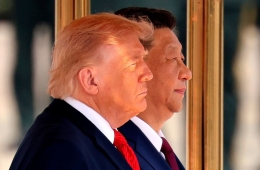
The Chinese government has been mostly quiet. First, Japan’s 14-day quarantine measure is a Chinese-style (Made in China) policy. Second, since relations between the two countries are stable, this measure was implemented after prior communication. Third, Xi Jinping and Abe need each other. Especially for Abe, hosting the Olympics and Xi’s visit to Japan would be his greatest diplomatic achievement.
While Sino-Japanese relations are stable, the Moon-Abe Korea-Japan relationship has been a series of tensions. In his March 1st Independence Movement Day speech, President Moon sent a message hoping for a future-oriented relationship with Japan, but Japan views it as a tactical change. Above all, Korea is not included in Japan’s mid- to long-term strategy. There is neither willingness nor expectation to resolve current bilateral issues.
The reason Korea’s responses to China and Japan differ is, first, China only restricted the Daegu and Gyeongbuk regions, but Japan restricted all of Korea. Second, China’s local governments quarantine Koreans, but Japan’s central government directly intervened. In fact, local governments in China tend to act more excessively, watching the central government’s stance. China is more centralized but the central government does not intervene directly. In contrast, Japan’s cabinet directly announced the measure, as it did during the previous export restrictions, so Korea cannot avoid responding at the central government level in some way. Third, unlike China and Japan, Korea and Japan had little or no mutual communication, and fourth, Korea has a general election in April, so it cannot ignore voters.
While the COVID-19 pandemic is a concern, there is also concern about a pandemic of entry bans depending on the situation. Social distancing is now expanding internationally, not just domestically. The fear of infectious diseases is the same for all countries. All three countries are confused in their response because this is an unprecedented infectious disease. A stronger second mutated virus may come again. At times like this, the three countries should not distance themselves but rather narrow the gap as a precaution. Even if they dislike each other, they must cooperate where cooperation is needed.
Once the COVID-19 situation calms down and domestic politics in Korea and Japan settle, tensions will ease. If the Tokyo Olympics are held as scheduled and President Xi visits Korea and Japan, the atmosphere will improve significantly. Although it is early to mention, I hope that when the Korea-Japan-China summit is held in Korea in the second half of this year, a non-traditional security mechanism will be established. At the Korea-Japan-China summit held last December in Chengdu, China, a 10-year vision for trilateral cooperation was adopted. Since joint efforts were proposed, including for transboundary livestock diseases, the people of the three countries will want tangible results from this vision of cooperation. Such win-win cooperation does not carry high political costs. I hope it becomes an opportunity to build a disaster management system that enhances the resilience of the entire Korea-China-Japan region.
Hot Picks Today
![Samsung: "More, Faster — Letting Your Guard Down Is Fatal"... Hesitation Means Losing Ground [Chip Talk]](https://cwcontent.asiae.co.kr/asiaresize/93/2025021710490034501_1739756940.jpg) Samsung: "More, Faster — Letting Your Guard Down Is Fatal"... Hesitation Means Losing Ground [Chip Talk]
Samsung: "More, Faster — Letting Your Guard Down Is Fatal"... Hesitation Means Losing Ground [Chip Talk]
- "Even If I Lose My Investment, the Government Will Cover It"... The Fund Attracting Retail Investors' Attention [Weekend Money]
- "I Turned It On Again Out of Frustration"... Chinese Youth Hooked on 20,000 Won AI Fortune-Telling Services [Z-World Now]
- There Is a Distinct Age When Physical Abilities Decline Rapidly... From What Age Do Strength and Endurance Drop?
- "Envious of Korean Daily Life"...Foreign Tourists Line Up in Central Myeongdong from Early Morning [Reportage]
© The Asia Business Daily(www.asiae.co.kr). All rights reserved.