Sudden Surges and Drops Almost Daily... How Long Will the Volatile Stock Market Continue?

On the 28th of last month, when the KOSPI opened at 2,192.22, down 53.92 points (2.4%) from the previous trading day due to the spread of fear over the novel coronavirus infection known as 'Wuhan pneumonia,' dealers were working in the dealing room of KEB Hana Bank in Jung-gu, Seoul. On the same day, the won-dollar exchange rate started trading at 1,178.5 won, up 9.8 won from the previous trading day. Photo by Kang Jin-hyung aymsdream@
View original imageLast year, KOSPI fluctuated more than 1% on one out of every five trading days
This year, due to the impact of the novel coronavirus, it happens about once every two days
[Asia Economy Reporter Ko Hyung-kwang] The domestic stock market continues to experience wild swings amid the shock of the novel coronavirus infection (Wuhan pneumonia). The KOSPI index has been showing daily fluctuations of more than 1%, and the KOSDAQ index has also seen days with volatility in the 2-3% range. Analysts say that the volatility in the stock market has further increased due to the combined effects of the novel coronavirus, exchange rate fluctuations, and the earnings season.
According to the Korea Exchange on the 9th, out of 20 trading days in the last month on the KOSPI market, there were 9 trading days when the index recorded a fluctuation rate of more than 1%. This means the index rose or fell by more than 1% about once every two days.
By month, this is the highest number of occurrences since October 2018, which was called the "Black October" due to the plunge caused by concerns over the US-China trade conflict. At that time, out of 21 trading days, 10 days showed fluctuations of more than 1%.
In the case of last year, out of a total of 246 trading days, the KOSPI index recorded fluctuations of more than 1% on 51 trading days (20.7%). On average, this means the index fluctuated more than 1% once every five trading days. The months with the highest number of days with more than 1% movement were January and November, each with 6 days. July and August of last year, when Japan's trade retaliation intensified and the 1900-point level was broken, saw only 5 trading days each with fluctuations exceeding 1%. Additionally, April, May, October, and December each had 4 days, June and September had 3 days each, and March had only 2 trading days with fluctuations over 1%.
Especially after the first confirmed case of the novel coronavirus was announced on the 20th of last month, more than half of the 12 trading days until the 7th showed fluctuations of more than 1%, with 7 trading days exceeding that threshold. This indicates that market volatility has increased significantly. Even this month, 2 out of 5 trading days have shown fluctuations of more than 1%.
On the 28th of last month, when fear of the novel coronavirus engulfed the market, the KOSPI plunged more than 3%, falling below the 2180-point level. This was the largest drop in about 1 year and 3 months since October 11, 2018 (-4.4%).
During the last week of January, from the 28th to the 31st (with the 27th being a holiday), the KOSPI showed fluctuations of more than 1% for three consecutive days except for the 29th (0.39%), falling 5.6% compared to the previous week. This was the largest weekly decline since the 5.9% drop from October 22 to October 26, 2018. Then, on the 4th, foreign investors' buying momentum led to a rebound of nearly 2%, recovering the 2150-point level.
The KOSDAQ's volatility is even more severe. Out of 20 trading days in January, there were 11 days with fluctuations exceeding 1%. Among these, 3 days showed fluctuations of more than 2%, and 3 days showed fluctuations exceeding 3%.
The rapid ups and downs in the stock market are analyzed to be caused by a combination of factors, including the novel coronavirus outbreak during the early earnings season, which triggered anxiety, and the expansion of exchange rate volatility. Kim Yong-gu, a researcher at Hana Financial Investment, explained, "At the beginning of the year, the index rose significantly due to expectations of a semiconductor market recovery, but since the end of last month, the impact of the novel coronavirus has increased the index's decline and sustained volatility. Additionally, as the infectious disease continues to spread, exchange rate volatility has also increased, affecting the stock market."
Experts predict that the increased volatility in the domestic stock market due to the novel coronavirus will continue for some time. Roh Dong-gil, a researcher at NH Investment & Securities, said, "Compared to past cases of Severe Acute Respiratory Syndrome (SARS) and Middle East Respiratory Syndrome (MERS), it seems that the usual level of fear regarding the disease has been reflected. However, since we are still at the early stage of the novel coronavirus impact, an expansion of volatility seems inevitable for the time being."
Hot Picks Today
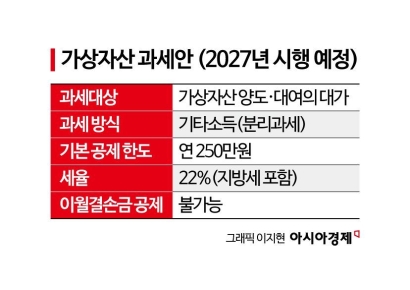 "Stocks Are Not Taxed, but Annual Crypto Gains Over 2.5 Million Won to Be Taxed Next Year... Investors Push Back"
- "Not Jealous of Winning the Lottery"... Entire Village Stunned as 200 Million Won Jackpot of Wild Ginseng Cluster Discovered at Jirisan
- "Even With a 90 Million Won Salary and Bonuses, It Doesn’t Feel Like Much"... A Latecomer Rookie Who Beat 70 to 1 Odds [Scientists Are Disappearing] ③
- "Rather Than Endure a 1.5 Million KRW Stipend, I'd Rather Earn 500 Million in the U.S." Top Talent from SNU and KAIST Are Leaving [Scientists Are Disappearing] ①
- "How Did an Employee Who Loved Samsung End Up Like This?"... Past Video of Samsung Electronics Union Chairman Resurfaces
Kim Hak-gyun, head of the research center at Shin Young Securities, also said, "I believe the primary shock to the stock market related to the novel coronavirus was sufficiently reflected during the adjustment process from late January to early February. Going forward, volatility is expected to increase day by day depending on the news flow."
© The Asia Business Daily(www.asiae.co.kr). All rights reserved.







