Development of Korean Flexible Solar Cells

[Asia Economy Reporter Junho Hwang] Domestic researchers have succeeded in securing flexible 'CIGS thin-film solar cell' technology. This is expected to activate the building-integrated photovoltaic (BIPV) business.
The Photovoltaic Research Laboratory at the Korea Institute of Energy Technology announced on the 20th that it has elucidated the efficiency improvement mechanism of flexible CIGS thin-film solar cells on polymer substrates.
Development of Flexible Solar Cells

The institute increased the applicability of CIGS solar cells by utilizing polymer substrates. They applied low-temperature deposition technology to settle CIGS solar cells on polymer substrates. Additionally, they enhanced efficiency further through an external alkali injection technique that injects alkali elements such as sodium and potassium into the polymer. Through this, the efficiency of flexible thin-film CIGS solar cells was raised to 20.4%. The world’s highest efficiency for flexible thin-film CIGS solar cells is 20.89%.
The institute evaluated that by developing practically usable flexible thin-film CIGS solar cells, they have secured technology that can stand shoulder to shoulder with advanced countries. Recently, solar cell research has shifted from traditional CIGS thin-film solar cells using rigid and heavy glass substrates to applying ultra-light flexible substrates, maximizing applicability while maintaining efficiency. However, only a few research groups mainly in Japan and Europe have possessed or developed this technology.
Utilization of Urban Eco-Friendly Energy Sources

The institute expects this solar cell to contribute to the activation of the urban eco-friendly energy source market, represented by building-integrated photovoltaics (BIPV). CIGS thin-film solar cells can manufacture high-efficiency solar cells with less material usage and simplified processes compared to crystalline silicon solar cells, and they are stable and highly durable. However, research is ongoing to apply them to BIPV due to the recent price decline of silicon photovoltaic modules.
Kim Kihwan, principal researcher at the Korea Institute of Energy Technology and first author of the research paper, said, "This achievement is evaluated as a milestone in establishing a standard process for high-efficiency ultra-light flexible CIGS thin-film solar cells. It is significant that we secured core technology for materials and processes of flexible CIGS thin-film solar cells." Co-corresponding author Yoon Jaeho, principal researcher, predicted, "Using the developed technology, it will be possible to produce new high value-added solar cell products."
Hot Picks Today
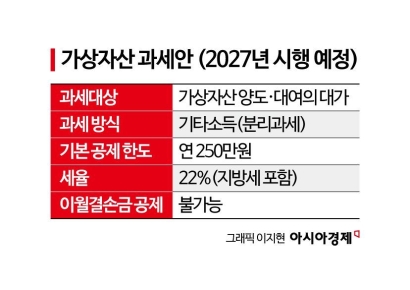 "Stocks Are Not Taxed, but Annual Crypto Gains Over 2.5 Million Won to Be Taxed Next Year... Investors Push Back"
- "Not Jealous of Winning the Lottery"... Entire Village Stunned as 200 Million Won Jackpot of Wild Ginseng Cluster Discovered at Jirisan
- "Even With a 90 Million Won Salary and Bonuses, It Doesn’t Feel Like Much"... A Latecomer Rookie Who Beat 70 to 1 Odds [Scientists Are Disappearing] ③
- "Rather Than Endure a 1.5 Million KRW Stipend, I'd Rather Earn 500 Million in the U.S." Top Talent from SNU and KAIST Are Leaving [Scientists Are Disappearing] ①
- "How Did an Employee Who Loved Samsung End Up Like This?"... Past Video of Samsung Electronics Union Chairman Resurfaces
The research team will continue additional studies on large-area high-speed CIGS thin-film solar cell manufacturing technology, advancement of materials, parts, and equipment technologies related to ultra-light flexible thin-film solar cells, and manufacturing technology for ultra-light flexible high-performance thin-film photovoltaic modules that can be installed on building exterior walls and roofs.
© The Asia Business Daily(www.asiae.co.kr). All rights reserved.







