2 out of 10 Companies Say "Government Policies Are Ineffective"... Worst Performance in 'Regulation'
Hyundai Research Institute '2020 Corporate Management Environment Outlook and Implications'
Most Responses Expect Wage Increase Range of '0~3%' Next Year
Global and Domestic Economies This Year Expected to Be Similar to Last Year
![[Image source=Yonhap News]](http://www.asiae.co.kr/news/img_view.htm?img=2020011410584195243_1578967121.jpg)
[Asia Economy Reporter Shim Nayoung] When asked which area of the current government's economic policies domestic companies think is being handled well, the most common response was 'There is no area being handled well.' The area considered to be handled the worst was 'Regulatory Policy.'
According to the '2020 Corporate Management Environment Outlook and Implications' report released by Hyundai Research Institute on the 16th, 2 out of 10 domestic companies said there is 'no area being handled well' (20.2%) regarding government policies. This was followed by inter-Korean policies (19.1%) and innovative growth (13.0%). Three out of 10 companies answered that regulatory policies (27.3%) are the worst government policies. Real estate market and household loan policies (23.1%) and labor policies (11.2%) were also frequently mentioned as poorly handled policies.
Regarding next year's minimum wage increase, responses of '0~1%' and '2~3%' were both 42.5%. 'Freeze' was 10.4%. As difficulties arising from the implementation of the 52-hour workweek system, 'Increased corporate cost burden such as additional employment' (45.2%) was pointed out. 'Difficulty in product launches and meeting delivery deadlines leading to decreased corporate competitiveness' was 37.5%, and 'Difficulty in securing additional personnel' was 10.6%.
Most companies expected the global economy this year to be at a similar level to last year. 59.6% of responding companies said the global economy this year will be 'similar to 2019,' while 24.8% said it would be 'worse than 2019.'
'Prolonged US-China trade war (62.4%)' was identified as the most concerning global economic risk factor. This was followed by 'Economic slowdown in advanced countries such as the US' (15.6%), 'Instability in the Chinese economy,' and 'Political risks such as the US presidential election,' each with a response rate of 6.4%.

This year, 46.3% of companies expected the domestic economy to be 'at a similar level to last year,' the highest proportion. The highest proportion of companies (48.6%) also forecast the domestic economic growth rate this year to be in the 'low 2% range.'
Companies pointed to 'Export economic slowdown' (24.8%) as the biggest risk factor burdening the domestic economy this year. 'Deterioration of private sector economic sentiment' (15.6%) followed. 'Weakening competitiveness of key industries,' 'Weak consumption,' and 'Investment contraction' each accounted for 12.8%.
The factor most burdensome to corporate management this year was cited as the 'Aftereffects of the US-China trade dispute' (36.4%). 'Weakening industrial competitiveness' (33.6%) and 'Pro-labor policies such as reduced working hours' (11.2%) were also major factors.
Regarding the most urgent measures to strengthen industrial competitiveness, 'Regulatory reform' (50.0%) and 'Strengthening investment such as R&D' (27.4%) were the most common responses.
The report advised, "To recover export conditions, efforts should focus on preventing trade frictions and actively pursuing diversification of export items and markets. Regulations identified as obstacles to investment should be eased to improve the corporate environment and activate investment, thereby enhancing economic vitality in the private sector."
Hot Picks Today
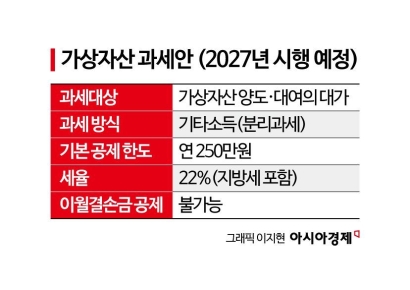 "Stocks Are Not Taxed, but Annual Crypto Gains Over 2.5 Million Won to Be Taxed Next Year... Investors Push Back"
- "Not Jealous of Winning the Lottery"... Entire Village Stunned as 200 Million Won Jackpot of Wild Ginseng Cluster Discovered at Jirisan
- "Rather Than Endure a 1.5 Million KRW Stipend, I'd Rather Earn 500 Million in the U.S." Top Talent from SNU and KAIST Are Leaving [Scientists Are Disappearing] ①
- "How Did an Employee Who Loved Samsung End Up Like This?"... Past Video of Samsung Electronics Union Chairman Resurfaces
- "Even With a 90 Million Won Salary and Bonuses, It Doesn’t Feel Like Much"... A Latecomer Rookie Who Beat 70 to 1 Odds [Scientists Are Disappearing] ③
This survey was conducted from December 9 to 20 last year targeting 109 major domestic companies. The response rate was 100%.
© The Asia Business Daily(www.asiae.co.kr). All rights reserved.







